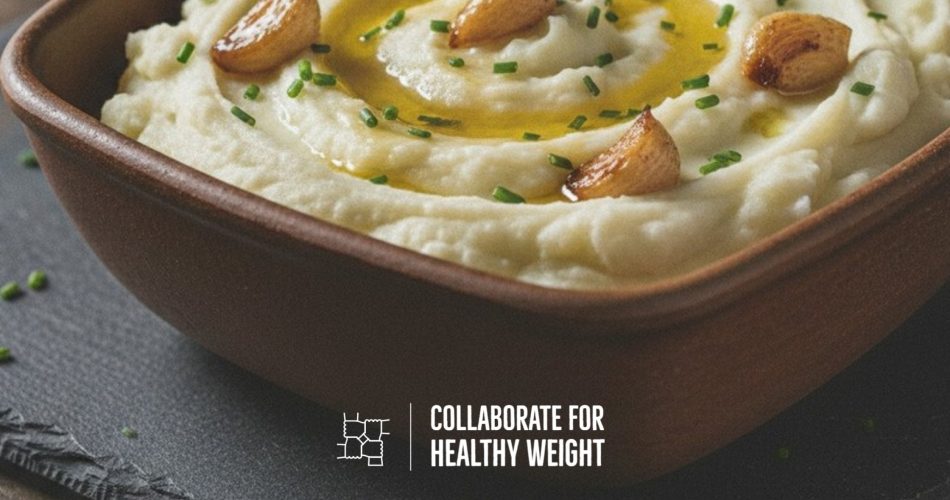
Healthy mashed potatoes start with a simple idea: keep the potatoes and change what goes into the bowl. The 10 lighter versions below use Greek yogurt, cauliflower, roasted garlic, beans, and herbs in place of most of the butter and cream, with 117 to 166 calories per serving. Every recipe has prep and cook times, servings, and a full nutrition table.
A typical restaurant-style mash made with 4 tablespoons of butter, a half cup of whole milk, and a quarter cup of cream comes to about 229 calories and 7.4 grams of saturated fat per serving by our calculation. Most of that comes from the added fat, not the potatoes. If you are planning a full dinner, these recipes slot straight into the healthy Thanksgiving menu for 8.
Jump to: Are They Healthy? | Greek Yogurt Garlic | Cauliflower Potato | Olive Oil Garlic | Red Potato Parmesan | Cottage Cheese Protein | Buttermilk Chive | White Bean Potato | Celery Root Potato | Cauliflower Garlic | Caramelized Onion | Compared | Tips | FAQ
Are Mashed Potatoes Healthy? What the Research Says
Mashed potatoes themselves are not the problem. In a Harvard study of 205,107 adults, eating baked, boiled, or mashed potatoes was not linked to a higher risk of type 2 diabetes, while three weekly servings of french fries were linked to about a 20 percent higher risk. The same study estimated that swapping baked, boiled, or mashed potatoes for whole grains lowered risk by about 4 percent, so a whole-grain side is still a good habit on other days. If you want more background on weight, our guide on whether potatoes make you gain weight covers it.
Potatoes also bring real nutrition. The NIH Office of Dietary Supplements lists potatoes among the top sources of potassium in US diets, and adults are advised to get 2,600 milligrams a day for women and 3,400 milligrams for men. That target does not apply to people whose kidneys or medications limit potassium excretion, so if that is you, ask your doctor before leaning on potato, celery root, and cauliflower sides.
What changes the picture is what you add and how much you serve. MyPlate counts 1 cup of mashed white potatoes as 1 cup from the vegetable group, and adults need roughly 2 to 3 cups of vegetables a day depending on age and sex. A serving here is about ¾ cup, so it fits easily into that total.
10 Healthy Mashed Potatoes Recipes
The nutrition numbers below are estimates per serving, calculated from USDA FoodData Central values for each ingredient using raw ingredient weights, and salt is not counted because it is added to taste. A serving is about ¾ cup. Each ¼ teaspoon of salt adds roughly 575 milligrams of sodium to the whole pot, so add it gradually and taste first.
1. Greek Yogurt and Roasted Garlic Mash: the creamiest swap
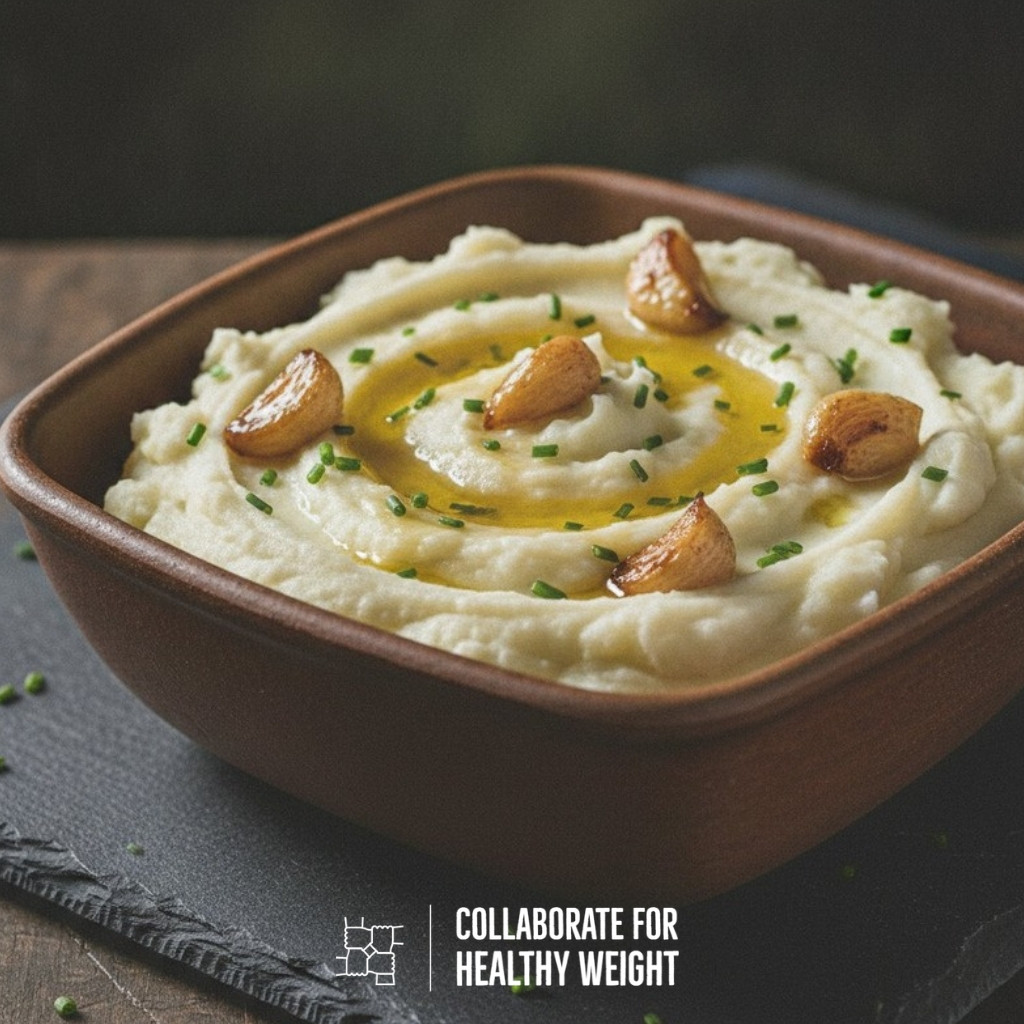
Nonfat Greek yogurt gives mashed potatoes a tangy, creamy body with almost no saturated fat, and roasting the garlic first turns it sweet and mellow. This is the best place to start if you want a familiar mash that tastes rich but lands at 158 calories a serving.
Prep: 15 minutes | Cook: 35 minutes | Total: 50 minutes | Serves: 6
- 2 pounds (900 g) potatoes, peeled or scrubbed and cut into 1-inch chunks
- 6 garlic cloves, left in their skins
- ⅔ cup (150 g) plain nonfat Greek yogurt
- ¼ cup (60 ml) skim milk, warmed
- 1 tablespoon olive oil
- 2 tablespoons chopped fresh chives
- Black pepper and salt to taste (salt is not counted in the nutrition numbers)
- Heat the oven to 400°F. Toss the garlic with the olive oil, wrap it in foil, and roast for 30 to 35 minutes until soft.
- Meanwhile, cover the potatoes with cold water and boil for 15 to 20 minutes until a knife slides in with no resistance. Drain well and return them to the warm pot for 1 minute to steam dry.
- Squeeze the garlic from its skins into the pot. Mash with the yogurt and warm milk until smooth, then fold in the chives and season.
Nutrition per serving (1 of 6):
| Calories | Protein | Carbs | Fat | Sat. fat | Fiber | Sugar | Sodium |
|---|---|---|---|---|---|---|---|
| 158 | 6.2 g | 29 g | 2.5 g | 0.4 g | 3.2 g | 2.6 g | 23 mg |
2. Half-and-Half Cauliflower Potato Mash: half the calories of classic mash
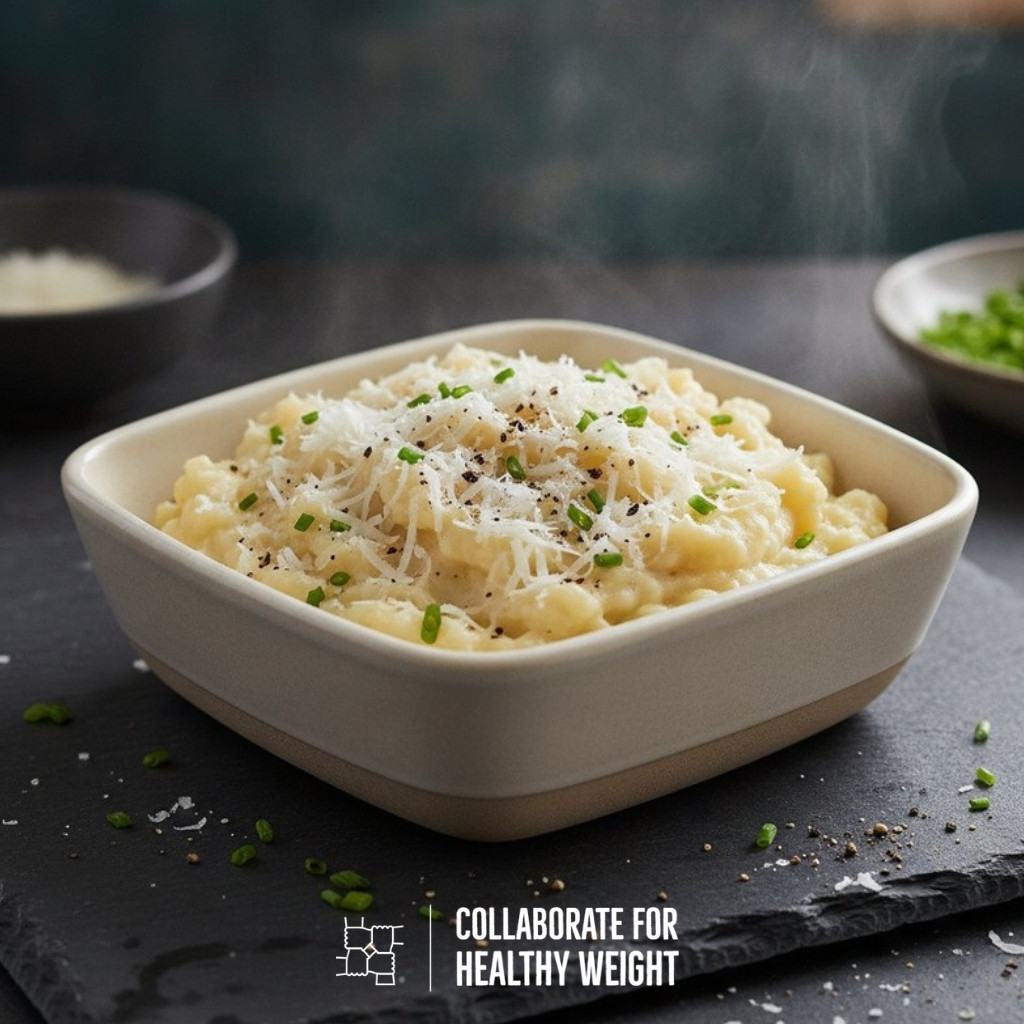
Swapping half the potatoes for cauliflower is the easiest way to lighten a mash without changing how it looks or tastes. Raw cauliflower has about 25 calories per 100 grams in USDA FoodData Central, compared with about 77 for raw potato, and MyPlate counts 1 cup of cauliflower pieces, raw or cooked, as a full cup from the vegetable group.
Prep: 15 minutes | Cook: 25 minutes | Total: 40 minutes | Serves: 6
- 1 pound (450 g) potatoes, peeled and cut into 1-inch chunks
- 1 pound (450 g) cauliflower florets (about 4 cups)
- 1 tablespoon olive oil
- ¼ cup (60 ml) skim milk, warmed
- 4 garlic cloves, minced
- 3 tablespoons grated Parmesan cheese
- Black pepper and salt to taste
- Boil the potatoes for 8 minutes, add the cauliflower, and cook 10 to 12 minutes more until both are very tender. Drain thoroughly.
- Meanwhile, warm the olive oil in a small pan and cook the garlic for 1 minute without browning.
- Mash the vegetables with the garlic oil, milk, and Parmesan. Use a food processor for a smoother texture.
Nutrition per serving (1 of 6):
| Calories | Protein | Carbs | Fat | Sat. fat | Fiber | Sugar | Sodium |
|---|---|---|---|---|---|---|---|
| 117 | 4.4 g | 18 g | 3.5 g | 0.9 g | 3.1 g | 2.6 g | 92 mg |
3. Dairy-Free Olive Oil and Garlic Mash: dairy-free and still silky

This mash uses no milk, butter, or cream at all. A whole head of roasted garlic, good olive oil, and warm chicken broth make it silky, and the result has under 1 gram of saturated fat per serving. Use vegetable broth to keep it fully plant-based.
Prep: 10 minutes | Cook: 45 minutes | Total: 55 minutes | Serves: 6
- 2 pounds (900 g) potatoes, cut into 1-inch chunks
- 1 whole head garlic (about 10 cloves)
- 2 tablespoons olive oil, divided
- ½ cup (120 ml) low-sodium chicken or vegetable broth, warmed
- 1 teaspoon chopped fresh rosemary
- Black pepper and salt to taste
- Heat the oven to 400°F. Slice the top off the garlic head, drizzle with 1 teaspoon of the oil, wrap in foil, and roast for 40 minutes.
- Boil the potatoes for 15 to 20 minutes until tender. Drain and steam dry for 1 minute.
- Squeeze the roasted cloves into the pot and mash with the remaining oil and warm broth, adding the broth gradually until the texture suits you. Stir in the rosemary and season.
Nutrition per serving (1 of 6):
| Calories | Protein | Carbs | Fat | Sat. fat | Fiber | Sugar | Sodium |
|---|---|---|---|---|---|---|---|
| 166 | 3.8 g | 28 g | 4.8 g | 0.7 g | 3.3 g | 1.3 g | 16 mg |
4. Skin-On Red Potato Smash with Parmesan: extra fiber from the skins
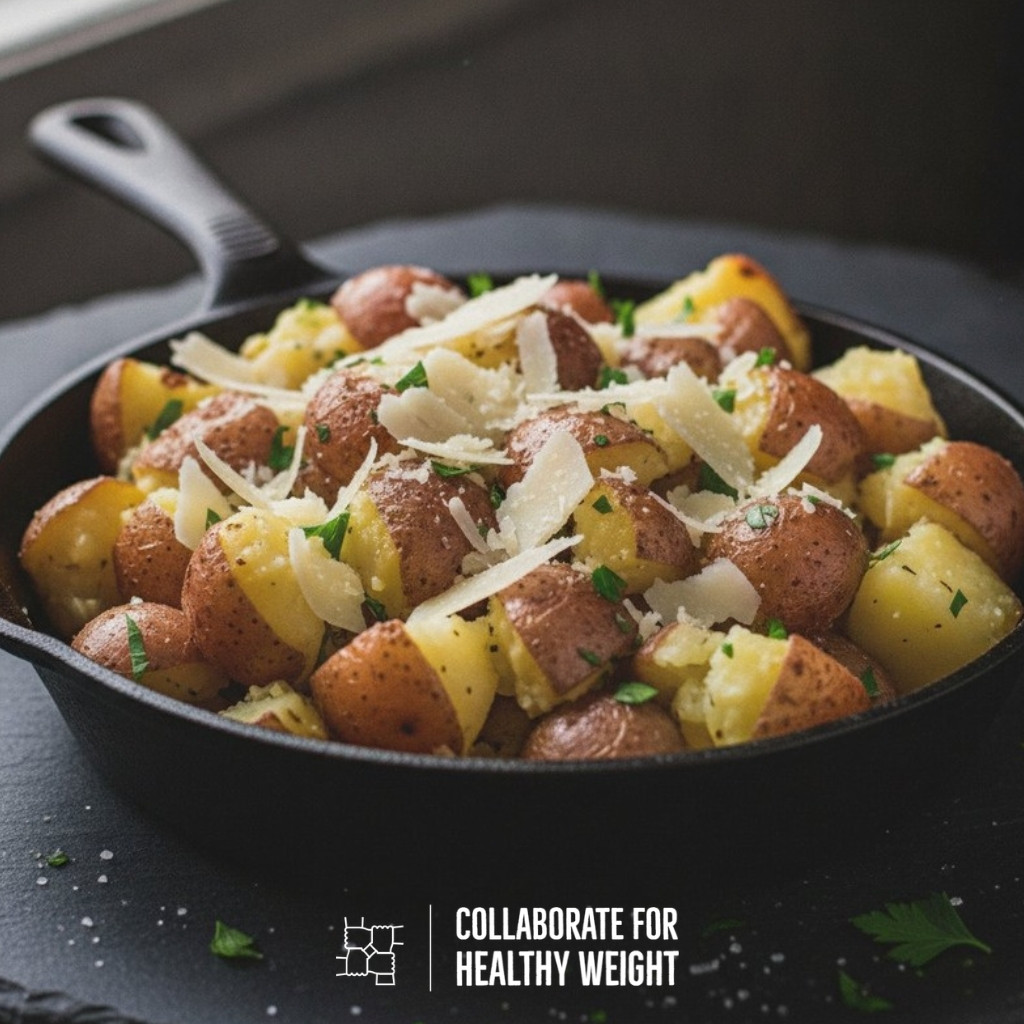
Leaving the skins on saves prep time and keeps more fiber in the bowl. Marshfield Clinic notes that potato skins hold most of the fiber, and red potatoes have thin skins that blend into a rustic, chunky mash. A little Parmesan adds big flavor for few calories.
Prep: 10 minutes | Cook: 30 minutes | Total: 40 minutes | Serves: 6
- 2 pounds (900 g) small red potatoes, scrubbed and halved
- ⅓ cup (30 g) grated Parmesan cheese
- 1 tablespoon olive oil
- ¼ cup (60 ml) skim milk, warmed
- 2 garlic cloves, minced
- Black pepper and salt to taste
- Boil the potatoes for 15 to 20 minutes until fork-tender. Drain and steam dry for 1 minute.
- Add the garlic, olive oil, and milk and smash with a fork or masher, leaving some chunks.
- Stir in the Parmesan, season, and serve right away so the cheese stays creamy.
Nutrition per serving (1 of 6):
| Calories | Protein | Carbs | Fat | Sat. fat | Fiber | Sugar | Sodium |
|---|---|---|---|---|---|---|---|
| 151 | 4.7 g | 25 g | 3.9 g | 1.1 g | 2.6 g | 2.5 g | 122 mg |
5. Cottage Cheese Protein Mash: the highest-protein potato mash

Blending 2% cottage cheese until smooth gives mashed potatoes a creamy texture and the most protein of any potato version here, at 7.4 grams per serving. If you like this idea, the Thanksgiving grocery list for 8 shows where it fits in a full shopping plan.
Prep: 15 minutes | Cook: 25 minutes | Total: 40 minutes | Serves: 6
- 2 pounds (900 g) potatoes, peeled and cut into 1-inch chunks
- 1 cup (225 g) 2% cottage cheese
- ¼ cup (60 ml) skim milk
- 2 garlic cloves, minced
- 2 tablespoons chopped fresh chives
- Black pepper and salt to taste
- Boil the potatoes for 15 to 20 minutes until tender, then drain and steam dry for 1 minute.
- Blend the cottage cheese, milk, and garlic in a food processor or blender until completely smooth.
- Mash the potatoes, fold in the cottage cheese sauce and chives, and season. Warm gently over low heat if needed.
Nutrition per serving (1 of 6):
| Calories | Protein | Carbs | Fat | Sat. fat | Fiber | Sugar | Sodium |
|---|---|---|---|---|---|---|---|
| 151 | 7.4 g | 29 g | 1.0 g | 0.5 g | 3.2 g | 3.3 g | 129 mg |
6. Buttermilk and Chive Mash: the tangy classic
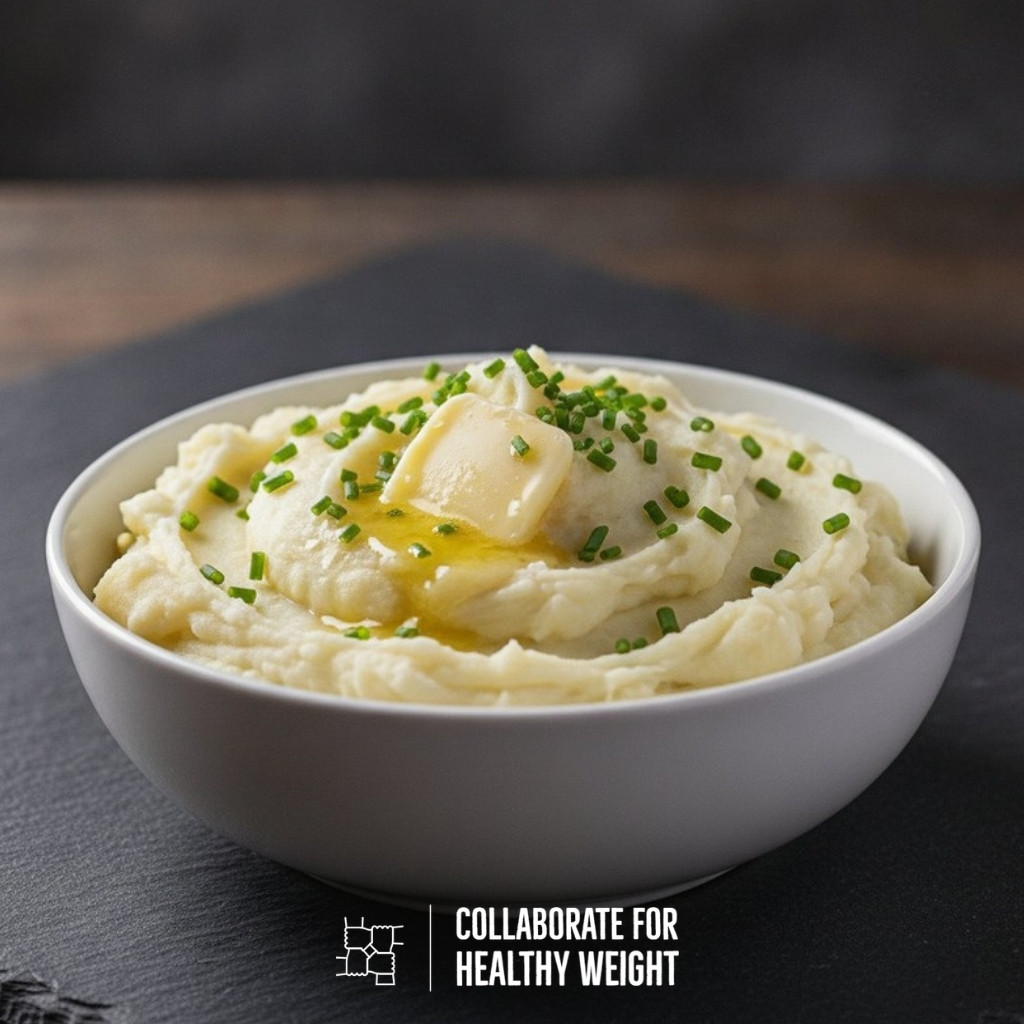
Low-fat buttermilk brings a tangy, old-fashioned flavor, and just 1 tablespoon of butter for the whole batch keeps it tasting like a traditional mash. It has the lowest calorie count of the all-potato versions at 145 per serving.
Prep: 10 minutes | Cook: 25 minutes | Total: 35 minutes | Serves: 6
- 2 pounds (900 g) potatoes, peeled and cut into 1-inch chunks
- ¾ cup (180 ml) low-fat buttermilk, warmed
- 1 tablespoon (14 g) unsalted butter
- 3 tablespoons chopped fresh chives
- Black pepper and salt to taste
- Boil the potatoes for 15 to 20 minutes until tender. Drain and steam dry for 1 minute.
- Mash with the butter first, then add the warm buttermilk a little at a time.
- Fold in the chives and season. Warm the buttermilk before adding it so the potatoes do not cool down.
Nutrition per serving (1 of 6):
| Calories | Protein | Carbs | Fat | Sat. fat | Fiber | Sugar | Sodium |
|---|---|---|---|---|---|---|---|
| 145 | 4.1 g | 28 g | 2.4 g | 1.4 g | 3.2 g | 2.9 g | 54 mg |
7. White Bean and Potato Mash: the highest-fiber mash
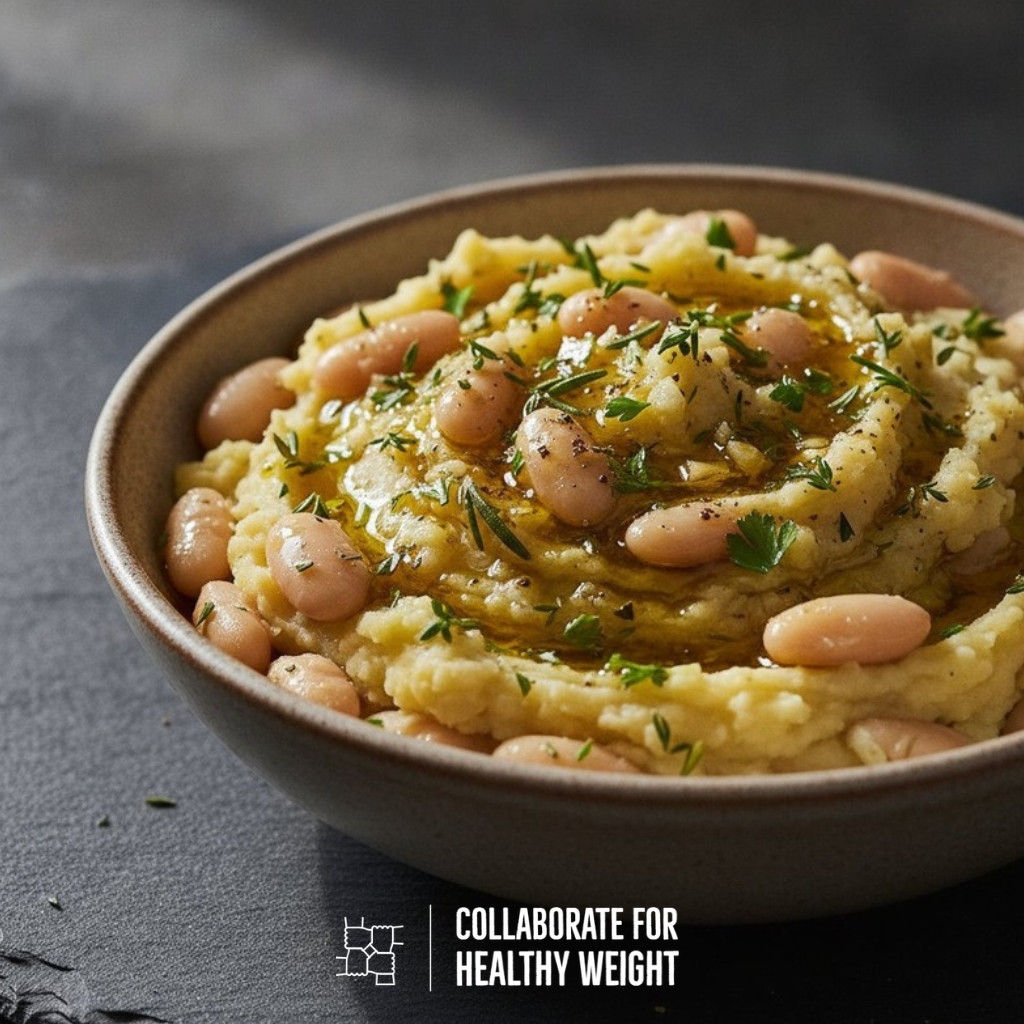
Great northern beans blend into potatoes almost invisibly, adding fiber and protein and cutting the amount of potato by a third. At 4.6 grams of fiber, it has the most fiber of the potato versions. Rinse the beans well, because rinsing canned beans can remove sodium.
Prep: 10 minutes | Cook: 25 minutes | Total: 35 minutes | Serves: 6
- 1⅓ pounds (600 g) potatoes, peeled and cut into 1-inch chunks
- 1¾ cups (300 g) canned low-sodium great northern beans, rinsed and drained
- 4 garlic cloves, minced
- 1 tablespoon olive oil
- ½ cup (120 ml) low-sodium chicken broth, warmed
- Black pepper and salt to taste
- Boil the potatoes for 15 to 20 minutes until tender, adding the beans for the last 3 minutes to warm them. Drain and steam dry for 1 minute.
- Warm the olive oil in a small pan and cook the garlic for 1 minute.
- Mash everything with the garlic oil and broth until smooth, adding broth gradually. Season and serve.
Nutrition per serving (1 of 6):
| Calories | Protein | Carbs | Fat | Sat. fat | Fiber | Sugar | Sodium |
|---|---|---|---|---|---|---|---|
| 160 | 6.3 g | 29 g | 2.7 g | 0.4 g | 4.6 g | 1.6 g | 101 mg |
8. Celery Root and Potato Mash: a nutty, lower-calorie mash
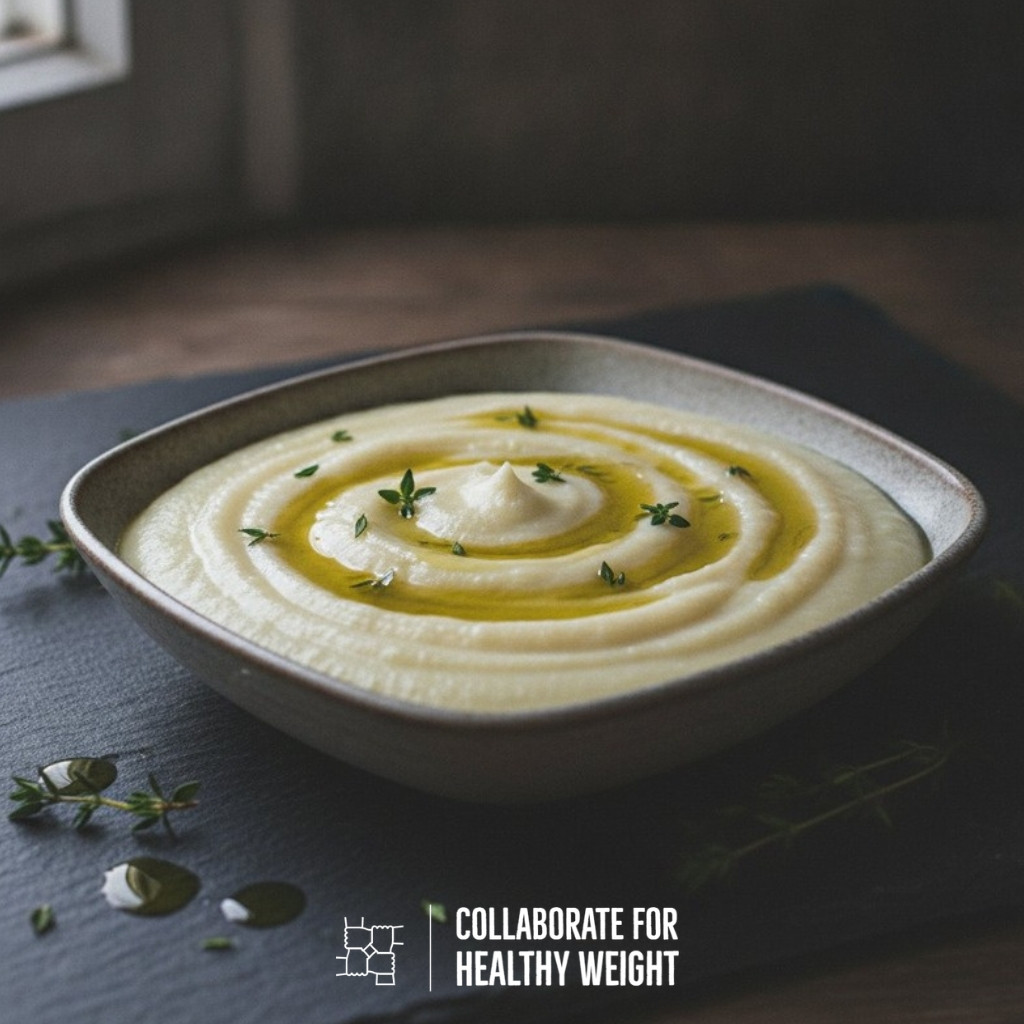
Celery root, also called celeriac, tastes like a mix of celery and parsnip and mashes into a nutty, silky puree. Using equal parts celery root and potato cuts the calories to 117 per serving with a flavor that feels special enough for a holiday table.
Prep: 20 minutes | Cook: 30 minutes | Total: 50 minutes | Serves: 6
- 1 pound (450 g) potatoes, peeled and cut into 1-inch chunks
- 1 pound (450 g) celery root, peeled and cut into 1-inch chunks (1 medium root)
- 1 tablespoon olive oil
- ½ cup (120 ml) skim milk, warmed
- 2 garlic cloves, minced
- Black pepper and salt to taste
- Peel the celery root with a sharp knife, removing all of the tough skin, and cut it into chunks.
- Boil the celery root and potatoes together for 20 to 25 minutes until both are very tender. Drain well.
- Mash with the olive oil, garlic, and warm milk until smooth. A food processor gives the silkiest result.
Nutrition per serving (1 of 6):
| Calories | Protein | Carbs | Fat | Sat. fat | Fiber | Sugar | Sodium |
|---|---|---|---|---|---|---|---|
| 117 | 3.4 g | 21 g | 2.6 g | 0.4 g | 2.9 g | 2.8 g | 88 mg |
9. Potato-Free Cauliflower Garlic Mash: the lowest-carb option
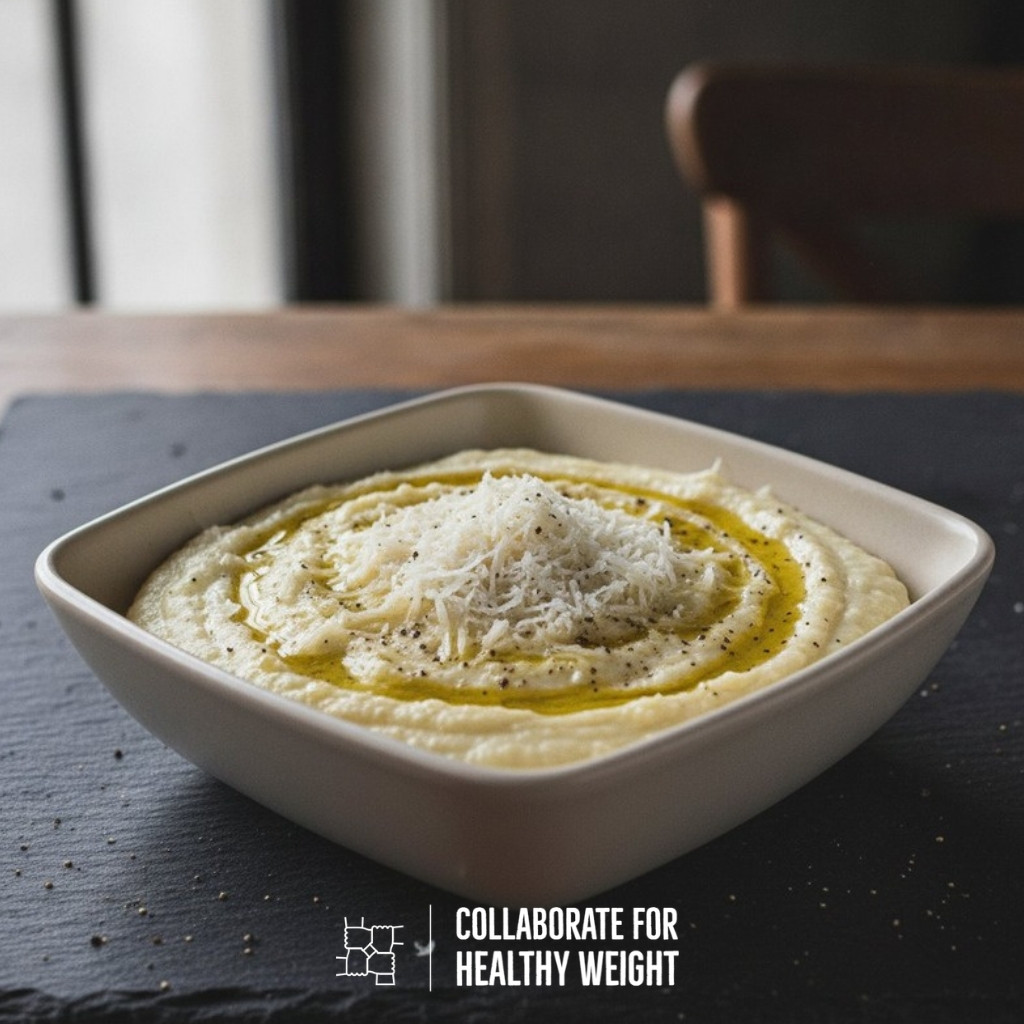
This is the lowest-carb choice here, with 13 grams of carbohydrates per serving and no potato at all. Draining the cauliflower well is the secret, because extra water makes it soupy. It is a good fit if you are following a lower-carb plan.
Prep: 10 minutes | Cook: 15 minutes | Total: 25 minutes | Serves: 4
- 1 large head cauliflower (about 2 pounds or 900 g), cut into florets
- 4 garlic cloves, peeled
- 1 tablespoon olive oil
- ¼ cup (60 g) plain nonfat Greek yogurt
- 3 tablespoons grated Parmesan cheese
- Black pepper and salt to taste
- Steam the cauliflower and garlic for 12 to 15 minutes until very soft. Let them sit in the colander for 5 minutes, then press out extra water with a clean towel.
- Process the cauliflower and garlic with the olive oil and yogurt until smooth.
- Stir in the Parmesan, season, and serve hot.
Nutrition per serving (1 of 4):
| Calories | Protein | Carbs | Fat | Sat. fat | Fiber | Sugar | Sodium |
|---|---|---|---|---|---|---|---|
| 120 | 7.5 g | 13 g | 5.5 g | 1.5 g | 4.6 g | 4.8 g | 164 mg |
10. Caramelized Onion Mash: flavor without butter
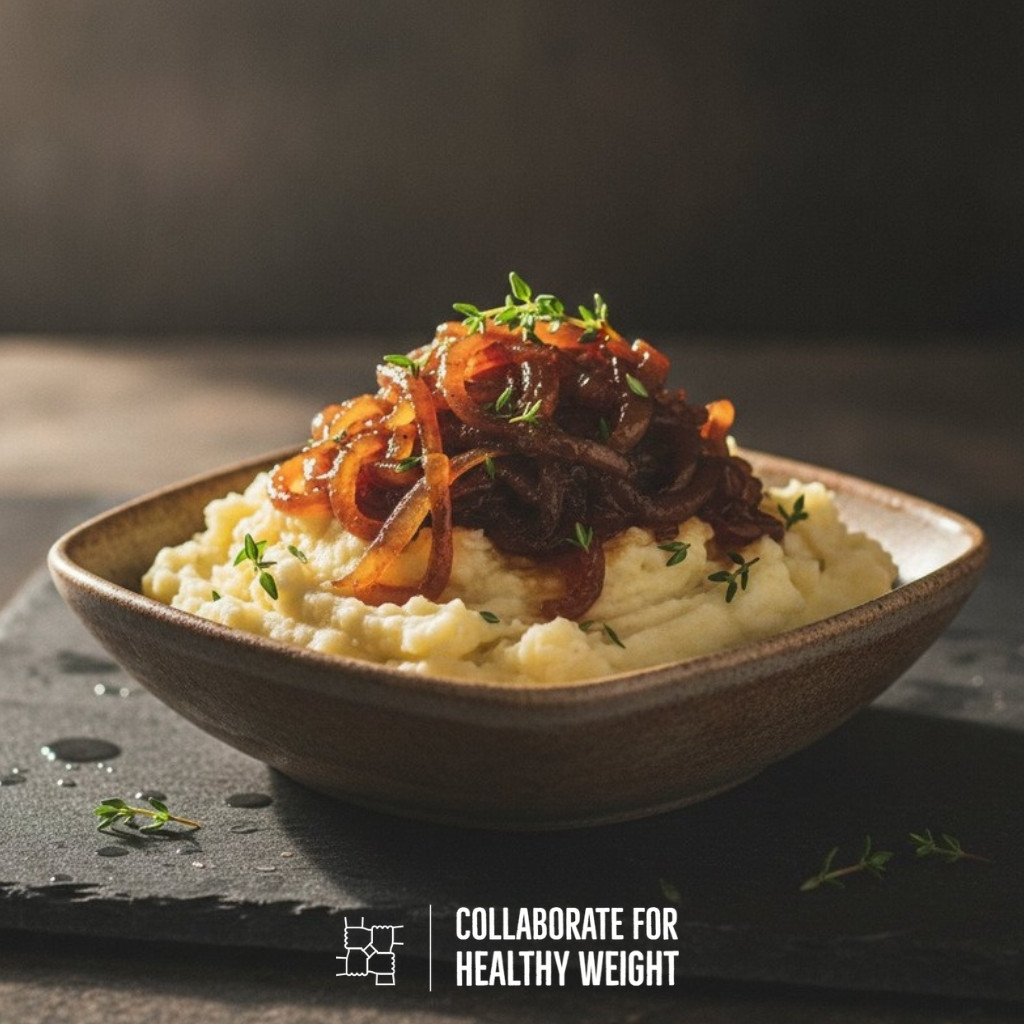
Slowly cooked onions add deep, sweet flavor, so you need no butter or cream. This is the same idea behind lighter recipes like the healthy green bean casserole, which builds flavor with ingredients rather than fat.
Prep: 10 minutes | Cook: 35 minutes | Total: 45 minutes | Serves: 6
- 2 pounds (900 g) potatoes, peeled and cut into 1-inch chunks
- 2 medium yellow onions (about 250 g), thinly sliced
- 1 tablespoon olive oil
- ½ cup (120 ml) skim milk, warmed
- 1 teaspoon fresh thyme leaves
- Black pepper and salt to taste
- Cook the onions in the olive oil over medium-low heat for 25 to 30 minutes, stirring often, until deep golden. Add a splash of water if they stick.
- While the onions cook, boil the potatoes for 15 to 20 minutes until tender. Drain and steam dry for 1 minute.
- Mash the potatoes with the warm milk, then fold in most of the onions and the thyme. Top with the remaining onions.
Nutrition per serving (1 of 6):
| Calories | Protein | Carbs | Fat | Sat. fat | Fiber | Sugar | Sodium |
|---|---|---|---|---|---|---|---|
| 159 | 4.2 g | 31 g | 2.4 g | 0.4 g | 3.9 g | 4.0 g | 19 mg |
All 10 Healthy Mashed Potatoes Compared
Use this table to pick a version by calories, protein, or fiber. The first row is the classic restaurant-style mash described above, so you can see how much each swap saves. Keep the rest of the plate in mind too, since a typical holiday dinner adds up quickly.
| Recipe | Total time | Serves | Calories | Protein | Fiber | Sat. fat |
|---|---|---|---|---|---|---|
| Classic mash (for comparison) | about 35 min | 6 | 229 | 4.1 g | 3.1 g | 7.4 g |
| Greek Yogurt and Roasted Garlic Mash | 50 min | 6 | 158 | 6.2 g | 3.2 g | 0.4 g |
| Half-and-Half Cauliflower Potato Mash | 40 min | 6 | 117 | 4.4 g | 3.1 g | 0.9 g |
| Dairy-Free Olive Oil and Garlic Mash | 55 min | 6 | 166 | 3.8 g | 3.3 g | 0.7 g |
| Skin-On Red Potato Smash with Parmesan | 40 min | 6 | 151 | 4.7 g | 2.6 g | 1.1 g |
| Cottage Cheese Protein Mash | 40 min | 6 | 151 | 7.4 g | 3.2 g | 0.5 g |
| Buttermilk and Chive Mash | 35 min | 6 | 145 | 4.1 g | 3.2 g | 1.4 g |
| White Bean and Potato Mash | 35 min | 6 | 160 | 6.3 g | 4.6 g | 0.4 g |
| Celery Root and Potato Mash | 50 min | 6 | 117 | 3.4 g | 2.9 g | 0.4 g |
| Potato-Free Cauliflower Garlic Mash | 25 min | 4 | 120 | 7.5 g | 4.6 g | 1.5 g |
| Caramelized Onion Mash | 45 min | 6 | 159 | 4.2 g | 3.9 g | 0.4 g |
Every version cuts saturated fat from 7.4 grams to between 0.4 and 1.5 grams. The half-and-half cauliflower and celery root versions have the fewest calories among the potato mashes, the cottage cheese mash has the most protein among them, and the white bean mash has the most fiber. The cauliflower-only mash has more protein per serving than any potato version, but it also makes only 4 servings from a large head, so the portions are not identical.
How to Make Mashed Potatoes Healthier (Any Recipe)
These rules work for your own family recipe too. Cleveland Clinic’s lighter mash swaps full-fat dairy for fat-free cream cheese, reduced-fat sour cream, and skim milk, and relies on garlic, chives, and paprika for flavor, which brings it to about 160 calories per serving. Marshfield Clinic suggests topping mash with plain Greek yogurt instead of heavier extras, and pairing it with a lean protein and an unsaturated fat to slow the rise in blood sugar.
- Replace some butter and cream, not all flavor. Greek yogurt, buttermilk, skim milk, and cottage cheese each give creaminess with much less saturated fat.
- Keep the skins on. Red or Yukon Gold potatoes have thin skins that mash in easily and keep more fiber.
- Season with garlic, herbs, and acid. The American Heart Association suggests onions, garlic, spices, citrus juice, and vinegar in place of some or all of the salt, and says to cook starches like pasta and rice without added salt, an approach that carries over to potato cooking water.
- Steam the potatoes dry. Return drained potatoes to the warm pot for a minute so they absorb milk and yogurt instead of water.
- Warm your liquids. Cold milk or yogurt cools the mash and makes you add more fat to get a creamy feel.
- Watch the portion and the toppings. Gravy, cheese, and bacon can add more calories than the mash itself, as you can see in the lighter high-protein stuffing recipes guide.
One more trick is worth knowing for make-ahead cooks. In a small trial of 30 women with overweight or obesity, baked russet potatoes chilled for five days and eaten cold produced lower insulin and GIP responses than hot boiled potatoes, although the overall glucose response was the same. The trial tested cold potatoes, not reheated mash, so do not count on a blood sugar benefit from leftovers. Refrigerate leftover mash promptly and reheat it until steaming hot.
Frequently Asked Questions About Healthy Mashed Potatoes
Are mashed potatoes healthy?
Yes, they can be, depending on what you add and how much you eat. Potatoes provide potassium, vitamin C, and fiber, and the large Harvard cohort study found no link between mashed potatoes and type 2 diabetes. A version made with yogurt, milk, and olive oil has far less saturated fat than one made with butter and cream.
How do you make mashed potatoes healthier?
Use less butter and cream, and replace them with Greek yogurt, buttermilk, skim milk, or cottage cheese. Keep the skins on, season with roasted garlic and fresh herbs, and swap in cauliflower or celery root for part of the potatoes.
How many calories are in healthy mashed potatoes?
The 10 versions here range from 117 to 166 calories per serving of about three-quarters of a cup, compared with about 229 for a classic butter and cream mash made with the same potatoes. The exact number depends on your portion and ingredients.
What can you use instead of butter and cream in mashed potatoes?
Plain nonfat Greek yogurt, low-fat buttermilk, skim milk, blended cottage cheese, low-sodium broth, and a tablespoon or two of olive oil all work. Roasted garlic and caramelized onions add richness without any dairy fat.
Is cauliflower mash lower in calories than mashed potatoes?
Yes. Raw cauliflower has about 25 calories per 100 grams in USDA data, versus about 77 for raw potato. The half-and-half mash with cauliflower and potato has about 117 calories per serving, and the potato-free cauliflower mash has about 120 calories in a smaller batch of 4 servings with 13 grams of carbohydrates.
Can you make healthy mashed potatoes ahead of time?
Yes. Make them up to a day ahead, cool them quickly, and refrigerate in a covered container. Reheat gently on the stove or in the microwave with a splash of milk or broth, stirring until steaming hot.
What is the best potato for mashed potatoes?
Yukon Gold and red potatoes give a naturally buttery, creamy texture with thin skins you can leave on. Russets mash fluffier but are drier, so they need a bit more liquid. Waxy potatoes can turn gluey if you overwork them, so mash by hand rather than with a blender.
The Bottom Line
Healthy mashed potatoes do not require giving up comfort food. Start with the Greek yogurt and roasted garlic mash if you want the closest match to the classic, try the half-and-half cauliflower mash to cut calories, and choose the cottage cheese or white bean version when you want more protein or fiber. Keep the portion near three-quarters of a cup, season with garlic and herbs, and the potatoes can stay on the holiday table.

Nutrition figures are approximations based on USDA FoodData Central values and will vary with brands, portions, and potato varieties. This article is for general information and is not a substitute for advice from a registered dietitian or physician.