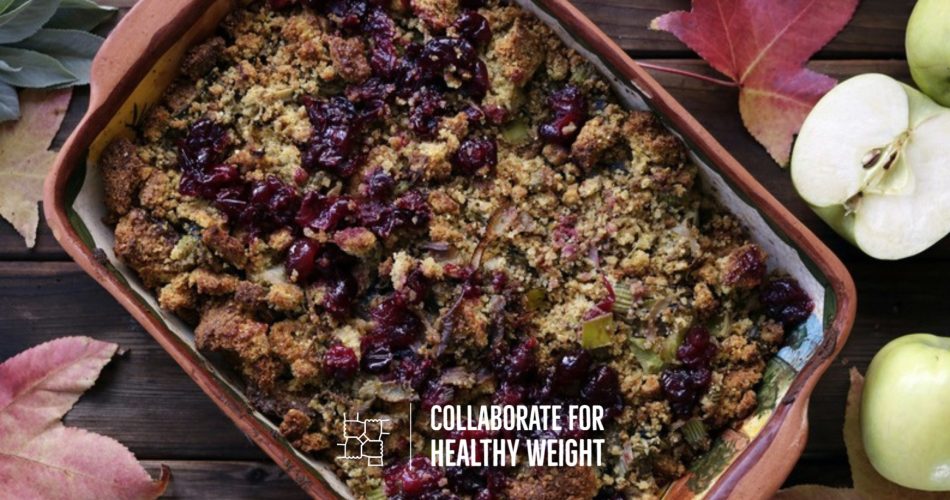
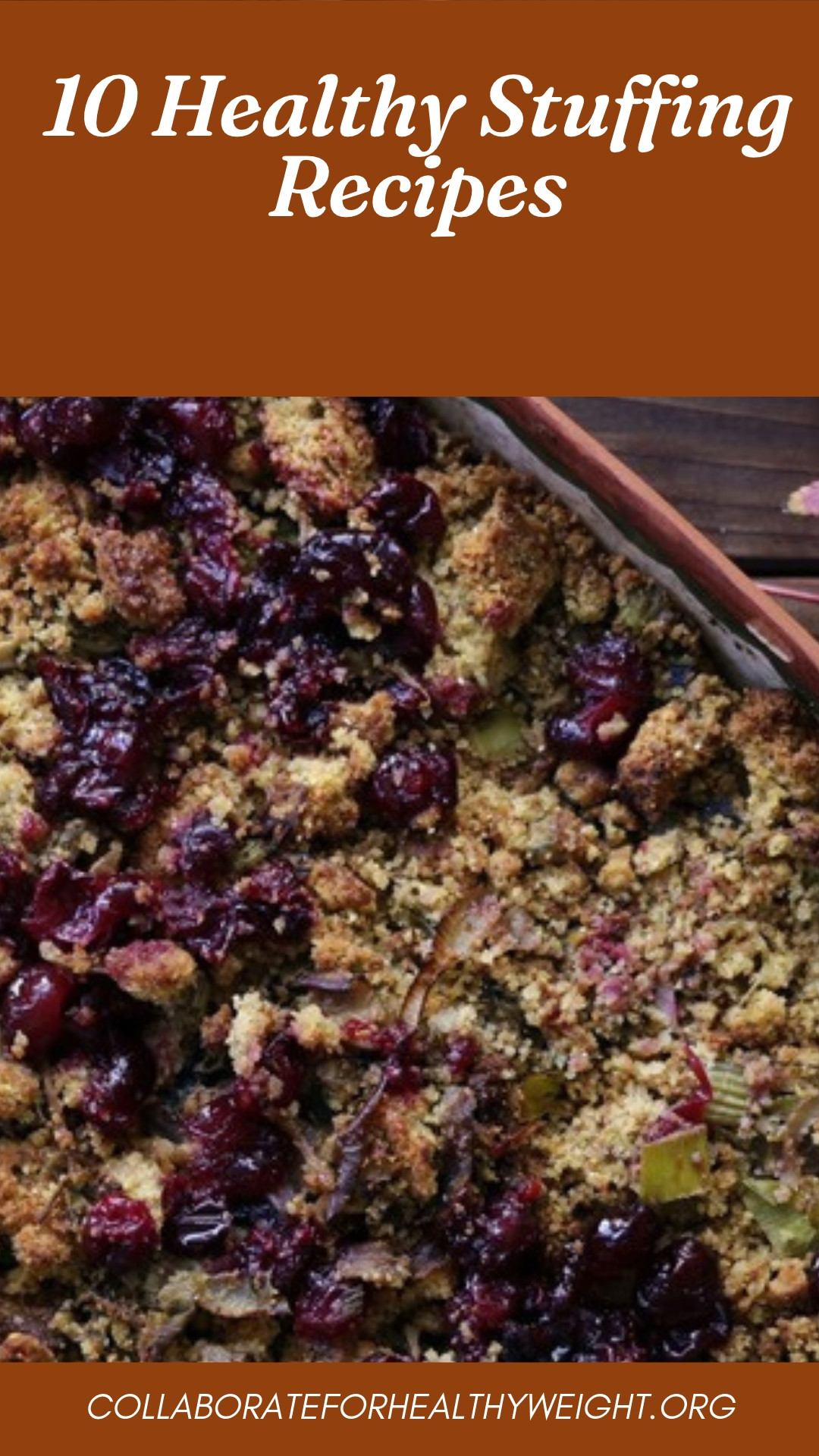
Healthy stuffing recipes can keep everything people love about the Thanksgiving side, the toasty edges, the sage and onion, the soft center, while cutting back on butter, refined bread, and salt. Most traditional recipes get their richness from a stick of butter and a loaf of white bread. Swapping part of that for vegetables, whole grains, beans, lentils, or lean turkey changes the numbers without changing the point of the dish.
The 10 versions below start from ingredients you can find at any grocery store, and each one has a per-serving calorie and protein count calculated from USDA data. Some are built around whole-wheat bread, some are gluten-free, one has no bread at all, and a few add enough protein to make stuffing a real part of the plate instead of a side you eat on the way to the turkey.
You will also find a food safety section, since stuffing is one of the dishes people most often get wrong, plus make-ahead and leftover tips so Thursday goes smoothly.
How the Numbers WorkBread-Based RecipesWhole-Grain and Gluten-Free RecipesLow-Carb and Portion-ControlledHealthier SwapsComparison TableFood SafetyMake-Ahead TipsFAQ
Healthy Stuffing Recipes: Calories and Protein Compared
Traditional stuffing made from a boxed dry mix and prepared with butter or margarine comes in at about 195 calories and 12 grams of fat per 100 grams, with under 3 grams of protein, according to USDA data for prepared stuffing mix. That is a lot of calories for very little protein or fiber, and homemade versions with extra butter and sausage can run higher.
Whole-wheat bread is the easiest upgrade. USDA data for commercial whole-wheat bread lists about 12.4 grams of protein and 6 grams of fiber per 100 grams, noticeably more than a boxed mix provides. The recipes below build on that and then add vegetables, beans, lentils, wild rice, quinoa, or lean turkey.
Every recipe makes 8 servings of about 3/4 cup unless noted, and the numbers below add up the USDA values for each ingredient before baking. Brands, bread slices, and broth vary, so treat the figures as close estimates. Each recipe uses low-sodium broth and a modest amount of olive oil in place of most of the butter, and you can season to taste with salt at the table.
Lighter Bread-Based Stuffing Recipes
1. Classic Whole-Wheat Herb Stuffing
This is the closest thing to the stuffing you grew up with, only lighter. Cube about 300 grams (roughly 10 slices) of whole-wheat bread and toast it in a 300°F oven for 20 minutes until dry. Cook 200 grams of chopped celery and 150 grams of chopped onion in 1 tablespoon of olive oil until soft, then stir in 2 teaspoons of dried sage, 1 teaspoon of thyme, and black pepper. Toss with the bread, 1 beaten egg, and about 1 1/2 cups of low-sodium chicken or vegetable broth. Bake covered at 350°F for 30 minutes, then uncovered for 15 minutes.
Per serving: about 140 calories, 6.7 grams of protein, and 3 grams of fiber. The egg helps bind it so you do not need extra butter, and the bread supplies most of the protein.
2. Turkey Sausage and Apple Stuffing
This is the higher-protein version for people who want sausage in the stuffing. Brown 1 pound of lean ground turkey with 2 teaspoons of sage, 1 teaspoon of fennel seed, and 1/2 teaspoon each of garlic powder and black pepper. Mix it with 240 grams of toasted whole-wheat bread cubes, one diced apple, celery, onion, an egg, and about 1 1/4 cups of low-sodium broth. Bake at 350°F for 35 to 40 minutes.
Per serving: about 210 calories, 17 grams of protein, and 3 grams of fiber, using USDA data for cooked ground turkey at about 27 grams of protein per 100 grams. That is more than double the protein of the classic version, which makes it a good choice if stuffing is your main side. For more ways to use lean turkey, see the lean turkey meatball recipes.
3. Mushroom and White Bean Stuffing
Mushrooms give stuffing a deep, savory flavor with almost no fat, and white beans add protein and creaminess. Sauté 300 grams of sliced mushrooms with onion, celery, and thyme in 1 tablespoon of olive oil until the liquid cooks off. Fold in 240 grams of drained, rinsed canned cannellini beans, 240 grams of toasted whole-wheat bread cubes, and about 1 cup of low-sodium broth. Bake at 350°F for 30 minutes covered and 10 minutes uncovered.
Per serving: about 153 calories and 8 grams of protein. Fiber is at least 3 grams from the bread and vegetables, and the beans add more on top of that.
4. Butternut Squash and Sage Sourdough Stuffing
Roasted butternut squash adds natural sweetness, so the dish needs less added fat. Roast 400 grams of squash cubes at 400°F for 25 minutes. Toast 250 grams of sourdough cubes, then combine with the squash, sautéed onion and celery, fresh sage, 1 egg, and about 1 1/4 cups of broth. Bake at 350°F for 30 minutes covered and 10 uncovered.
Per serving: about 157 calories and 5.7 grams of protein. USDA data for butternut squash shows about 45 calories per 100 grams, so the squash adds bulk and color for very little. If you want more protein, stir in 1/2 cup of chopped, toasted walnuts or serve it beside a turkey-based main. For more ways to use squash, see the healthy butternut squash soup recipes.
5. Cranberry Apple Stuffing (Mayo Clinic Style)
The Mayo Clinic’s stuffing with cranberries recipe is a good model of how far lighter stuffing can go. It uses 10 slices of toasted whole-wheat bread, low-sodium chicken broth, celery, onion, fresh cranberries, a chopped apple with the skin on, water chestnuts, and herbs, and it contains no added fat.
Per 1/2-cup serving (serves 6): 148 calories, 6 grams of protein, 5 grams of fiber, 2 grams of fat, and 217 milligrams of sodium, according to the recipe. The Mayo Clinic notes that baking stuffing in its own dish, instead of in the bird, keeps calories and fat lower, and that adding more broth or water instead of butter is the way to make it moister.
Whole-Grain and Gluten-Free Stuffing Recipes
6. Wild Rice, Cranberry, and Pecan Stuffing
Wild rice has a nutty chew that stands up well to sage and onion, and this version is naturally gluten-free if you use gluten-free broth. Combine 600 grams (about 3 1/2 cups) of cooked wild rice with sautéed celery and onion, 40 grams of chopped pecans, 40 grams of dried cranberries, 1 tablespoon of olive oil, poultry seasoning, and about 1/2 cup of broth. Bake at 350°F for 25 minutes until the top crisps.
Per serving: about 161 calories, 4 grams of protein, and 2.6 grams of fiber. USDA data for cooked wild rice lists about 4 grams of protein and 1.8 grams of fiber per 100 grams. Pecans are calorie-dense at about 690 calories per 100 grams, so measure them rather than pouring.
7. Quinoa, Apple, and Sage Stuffing
Quinoa offers more protein than most grains and cooks in 15 minutes. Mix 600 grams of cooked quinoa with a diced apple, sautéed celery and onion, 30 grams of chopped walnuts, 1 tablespoon of olive oil, 1 teaspoon of sage, 1 egg, and 1/2 cup of broth. Bake at 350°F for 30 minutes.
Per serving: about 164 calories, 5.3 grams of protein, and 3.3 grams of fiber. Cooked quinoa has about 4.4 grams of protein per 100 grams, and the egg and walnuts add a little more. If you need it gluten-free, check that your broth and seasonings are labeled that way.
8. Lentil and Mushroom Stuffing
Lentils are the best way to get a lot of fiber and protein into stuffing without making it taste like a bean dish. Sauté 250 grams of mushrooms with onion, celery, carrot, and thyme. Combine with 300 grams of cooked lentils, 160 grams of toasted whole-wheat bread cubes, 1 egg, and about 1 cup of broth. Bake at 350°F for 35 minutes.
Per serving: about 151 calories, 8.6 grams of protein, and 5.3 grams of fiber, about as much fiber as the Mayo Clinic version in a larger portion. USDA data for cooked lentils shows about 9 grams of protein and 7.9 grams of fiber per 100 grams. For more ways to cook with them, see the high-protein lentil recipes for weight loss.
Low-Carb and Portion-Controlled Stuffing
9. Cauliflower Mushroom “Stuffing”
This version has no bread at all, which makes it the lowest-calorie option here. Pulse 700 grams of cauliflower into small crumbs and cook with 200 grams of chopped mushrooms, celery, and onion in 1 tablespoon of butter until the moisture evaporates. Stir in 30 grams of grated Parmesan, sage, thyme, 2 beaten eggs, and 1/4 cup of broth. Bake at 375°F for 30 minutes until set and golden on top.
Per serving: about 88 calories, 5.5 grams of protein, 7.4 grams of carbohydrate, and 2.4 grams of fiber. It will not taste exactly like bread stuffing, but the herbs and browned top deliver the same flavors. For more cauliflower ideas, see the high-protein cauliflower rice bowl recipes.
10. Egg and Spinach Stuffing Muffins
Muffin cups give you built-in portion control and a lot more crispy edges. Whisk 3 whole eggs and 4 egg whites with 150 grams of chopped spinach, 100 grams each of sautéed onion and celery, 30 grams of grated Parmesan, and 1/2 cup of broth. Fold in 240 grams of toasted whole-wheat bread cubes, spoon into 12 greased muffin cups, and bake at 375°F for 20 to 25 minutes.
Per serving (2 muffins, makes 6): about 202 calories, 13 grams of protein, and 3.5 grams of fiber. They reheat well and work as a breakfast side the next morning. For more ways to plan ahead, see the 2-hour meal prep guide.
How to Make Any Stuffing Recipe Healthier
If your family has a recipe you do not want to replace, a few swaps keep the dish familiar while improving the numbers. These come from the recipes above and from the Mayo Clinic’s approach to lighter stuffing.
- Use whole-wheat bread for at least half the bread. It brings more protein and fiber than the refined bread in a boxed mix, based on the USDA figures above.
- Add vegetables first. Celery, onion, mushrooms, carrots, and spinach add volume and fiber for few calories, so each serving is bigger without being heavier.
- Cut the butter, not the moisture. The Mayo Clinic suggests adding more broth or water instead of butter or fat when you want a moister result.
- Choose low-sodium broth. It lets you control the salt, and a sprinkle at the table goes further than salt mixed into every bite.
- Add fruit instead of sugar. A chopped apple or fresh cranberries add sweetness and fiber, and the high-protein apple recipes have more ideas for using fall apples.
- Measure the extras. Pecans, walnuts, sausage, and dried cranberries are the calorie-dense parts of the dish, so a measured handful goes further than a pour.
- Bake it separately. The Mayo Clinic notes that stuffing cooked in its own dish has fewer calories and less fat than stuffing cooked inside a bird, and it is also the safer method according to the USDA.
Healthy Stuffing Recipes Comparison Table
| Recipe | Calories | Protein | Best For |
|---|---|---|---|
| 1. Classic whole-wheat herb | 140 | 6.7 g | Traditional taste, lighter |
| 2. Turkey sausage and apple | 210 | 17 g | Most protein |
| 3. Mushroom and white bean | 153 | 8 g | Vegetarian, savory |
| 4. Butternut squash sourdough | 157 | 5.7 g | Sweet and savory |
| 5. Cranberry apple (Mayo Clinic) | 148 (1/2 cup) | 6 g | Fruit, no added fat |
| 6. Wild rice cranberry pecan | 161 | 4 g | Gluten-free |
| 7. Quinoa apple sage | 164 | 5.3 g | Gluten-free, extra protein |
| 8. Lentil and mushroom | 151 | 8.6 g | Fiber and protein |
| 9. Cauliflower mushroom | 88 | 5.5 g | Lowest calorie, low-carb |
| 10. Egg and spinach muffins | 202 | 13 g | Portion control, breakfast |
Stuffing Food Safety
Stuffing needs a bit more care than most side dishes, because the center can stay under a safe temperature even when the meat is done. The USDA Food Safety and Inspection Service says stuffing should reach a safe minimum internal temperature of 165°F, checked with a food thermometer in the center, and it recommends cooking stuffing separately for safe, uniform doneness.
Other points from the same guidance:
- Bake stuffing in a dish in an oven set no lower than 325°F
- Keep it moist, since heat kills bacteria faster in moist conditions
- If you do stuff a whole bird, pack it loosely and let the bird rest 20 minutes before scooping out the stuffing
- Never stuff a turkey that will be deep-fried
- Refrigerate leftovers within 2 hours and use them within 3 to 4 days
- Reheat leftover stuffing to 165°F, and do not reheat it in a slow cooker
All 10 recipes here are made to bake in a separate dish or muffin tin, which also gives you the crisp top that stuffing cooked in a bird cannot get.
Make-Ahead and Leftover Tips for Stuffing
Thanksgiving goes better when the stuffing is mostly done before the day. The USDA advises against refrigerating uncooked stuffing, so the safest way to get ahead is to prep the parts separately and combine them just before baking.
- Dry the bread early. Toast the cubes up to two days ahead and store them in an airtight container.
- Cook the vegetables the day before. Sauté the celery, onion, and mushrooms, then chill them in a covered container.
- Keep wet and dry apart. Mix broth and eggs with the bread only when you are ready to bake.
- Freeze if needed. The USDA says uncooked stuffing can be frozen, and it should then be cooked from frozen, without thawing, until it reaches 165°F.
- Portion leftovers. Slice the baked dish into single servings, chill within 2 hours, and reheat to 165°F.
Stuffing is also easy to overeat in a meal full of rich foods. For a bigger-picture plan, the holiday weight gain guide covers how to enjoy the holiday meal without a rebound.
FAQ
Is stuffing healthy?
It depends on how it is made. Traditional stuffing from a dry mix has about 195 calories and 12 grams of fat per 100 grams, according to USDA data, but versions with whole-wheat bread, vegetables, beans, or lentils can have much more fiber and protein for fewer calories.
What is the difference between stuffing and dressing?
The two names usually describe the same dish. Stuffing is traditionally cooked inside the bird and dressing in a separate dish, though many cooks use the words interchangeably.
How can I add protein to stuffing?
Add lean ground turkey, white beans, lentils, eggs, or nuts. The turkey sausage version here has about 17 grams of protein per serving, and the lentil version has about 8.6 grams with about 5 grams of fiber.
Can I make stuffing without bread?
Yes. Wild rice, quinoa, and cauliflower all work as the base. The cauliflower version has about 88 calories per serving, and the wild rice and quinoa versions are naturally gluten-free if you check the broth.
What temperature should stuffing reach?
The USDA says stuffing should reach 165°F measured in the center with a food thermometer, whether you cook it in a dish or in the bird.
How long can leftover stuffing stay in the fridge?
Refrigerate it within 2 hours of cooking and use it within 3 to 4 days, according to the USDA. Reheat it to 165°F before eating.
The Bottom Line
Healthy stuffing recipes do not need to taste like a diet food. Swapping butter-heavy white bread for whole-wheat bread, vegetables, beans, lentils, wild rice, or lean turkey gives you more fiber and protein, and most of these versions land between 140 and 210 calories per serving.
Pick one or two to bake in a separate dish, check that the center reaches 165°F, and do the bread and vegetable prep ahead of time. For a main dish that fits the same plate, the lean turkey meatball recipes are a good place to start.
This article is for general informational purposes only and is not medical advice. Nutrition values are calculated from USDA FoodData Central and the Mayo Clinic recipe and are approximate, since brands, portion sizes, and ingredients vary. Check labels for allergens and consult your doctor or a registered dietitian about your own dietary needs.