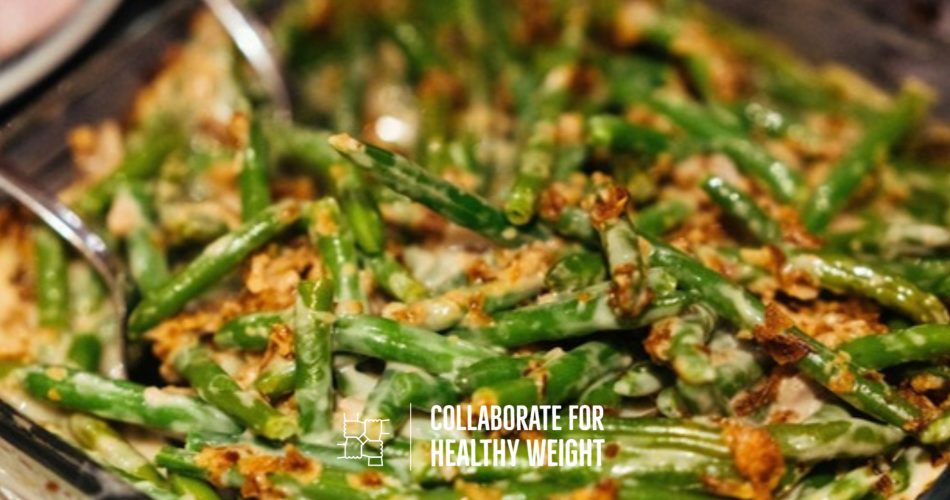
A healthy green bean casserole keeps the creamy sauce and the crunchy topping that make the Thanksgiving classic so comforting, but builds them from real ingredients instead of a can of condensed soup and a tub of fried onions. The result is a side dish with more fiber, less sodium, and, depending on the version, a lot more protein.
The traditional recipe is simple and fast, which is why it has lasted. It is also a good example of how a vegetable dish can turn heavy. Green beans themselves are light and high in fiber, and the weight comes from the sauce and the topping.
The 8 versions below fix that in different ways. Some use a homemade white sauce, some replace the cream with Greek yogurt, cottage cheese, or white beans, one turns the casserole into a main dish with chicken, and one is built for lower carbs. Each includes a per-serving calorie, protein, fiber, and sodium count calculated from USDA data.
Classic ComparedLighter Homemade VersionsHigher-Protein VersionsDairy-Free and Lower-CarbHealthier SwapsComparison TableMake-Ahead TipsFAQ
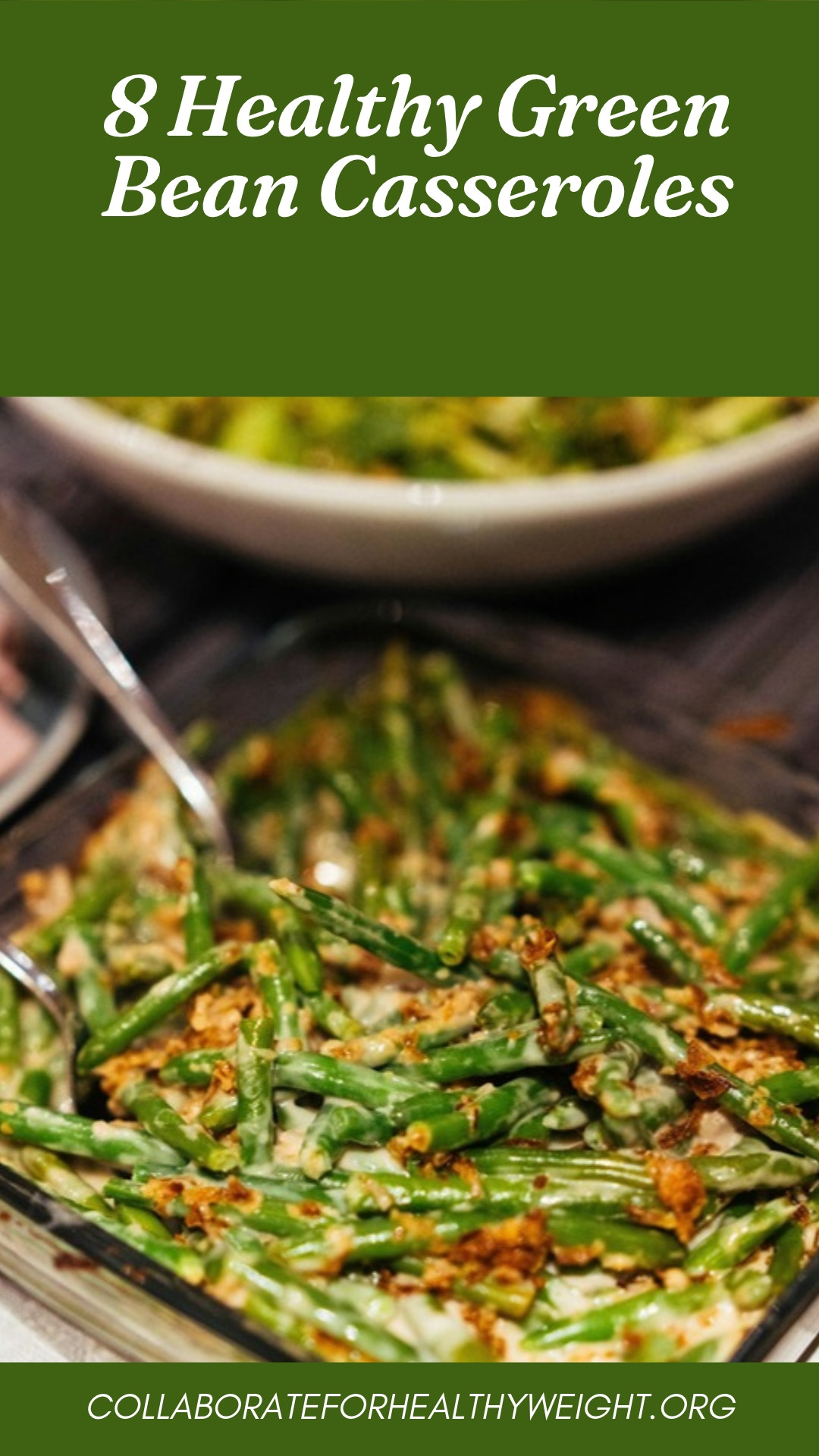
Healthy Green Bean Casserole: How the Classic Compares
The Campbell’s classic recipe combines one can of condensed cream of mushroom soup, 1/2 cup of 2% milk, 1 teaspoon of soy sauce, 4 cups of cooked green beans, and 1 1/3 cups of French fried onions. The company lists 151 calories, 10 grams of fat, 3 grams of saturated fat, 2 grams of fiber, 3 grams of protein, and 513 milligrams of sodium per serving, based on 6 servings.
The can of soup is the main driver of sodium. USDA data for condensed cream of mushroom soup lists 697 milligrams of sodium and 5.5 grams of fat per 100 grams, while the same data shows only 1.3 grams of protein. Replacing it with a sauce you make yourself lets you control the salt and the fat, and it opens the door to adding protein.
Green beans are the easy part. USDA data for raw green beans shows about 1.8 grams of protein, 7 grams of carbohydrate, and 2.7 grams of fiber per 100 grams. USDA data for frozen green beans are nearly the same, so use whichever is easier, and skip canned beans unless you rinse them well.
Every version below makes 6 servings from 1 pound (450 grams) of green beans, so a serving is about 1/6 of the dish. The numbers add up the USDA values for each ingredient, before baking and before any salt you add, so treat them as close estimates. Sodium is added up the same way and assumes low-sodium broth, unsalted cooked chickpeas, and rinsed canned white beans. Because the recipes are built from whole ingredients, some are lower in calories than the classic and a few are higher, but each improves on it in sodium, protein, or fiber. For the full holiday picture, see the healthy stuffing recipes that pair with this dish.
Lighter Homemade Sauce Green Bean Casserole Recipes
1. Classic Homemade Green Bean Casserole
This is the closest match to the original and the best starting point. It follows the structure of the Mayo Clinic Care Network’s holiday green bean casserole, which replaces canned soup with a homemade white sauce made from skim milk, flour, mushrooms, and herbs, and tops it with browned onions and whole-grain bread crumbs.
Trim and cut 450 grams of green beans and boil them 8 to 10 minutes, then drain. Cook 100 grams of sliced onion in 1 teaspoon of olive oil until golden, and set it aside. In the same pan, cook 225 grams of sliced mushrooms and a clove of garlic in 2 teaspoons of oil, stir in 3 tablespoons of flour and 1/2 teaspoon of thyme, and slowly add 1 1/2 cups of skim milk until thick. Combine the sauce with the beans, top with the onions and 30 grams of fresh whole-grain bread crumbs, and bake at 350°F for about 15 minutes until golden.
Per serving: about 117 calories, 5.8 grams of protein, 3.1 grams of fat, 16 grams of carbohydrate, 3 grams of fiber, and 60 milligrams of sodium. The Mayo Clinic notes that the homemade white sauce significantly cuts sodium compared with canned soup, and that skim milk lowers the fat.
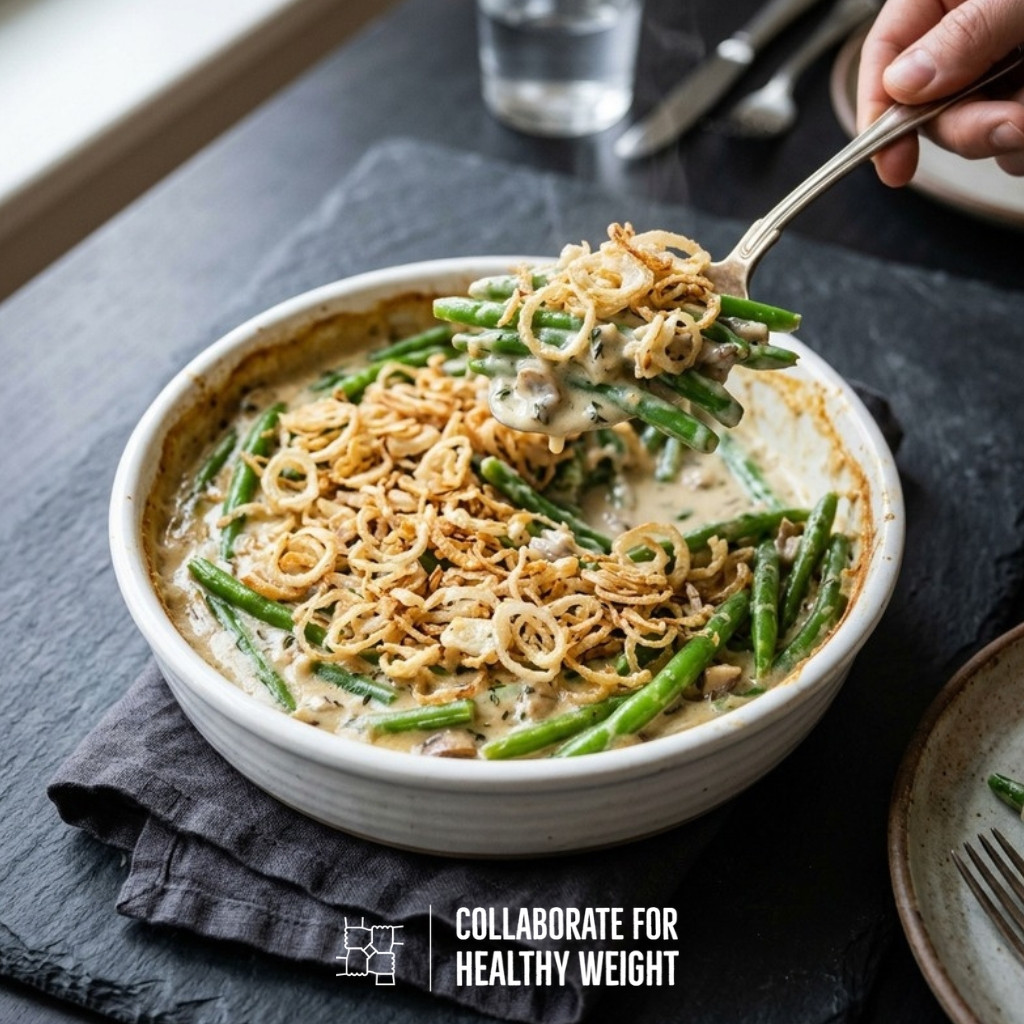
2. Baked Crispy Shallot Green Bean Casserole
The crunchy topping is why most people love this dish, and you can get it without frying. Slice 100 grams of shallots very thin, toss with 2 teaspoons of olive oil and 20 grams of dry bread crumbs, and spread on a baking sheet. Bake at 400°F for 12 to 15 minutes, stirring once, until deeply golden.
Make the sauce as in the first recipe, using 300 grams of mushrooms, 1 tablespoon of oil, 16 grams of flour, 1 cup of skim milk, and 1/2 cup of low-sodium chicken broth. Fold in the beans, bake for 15 minutes, and top with the shallots at the end so they stay crisp.
Per serving: about 126 calories, 5.9 grams of protein, 4.1 grams of fat, and 3.2 grams of fiber. Shallots have a sweeter, deeper flavor than packaged fried onions, and baking them uses a fraction of the oil.
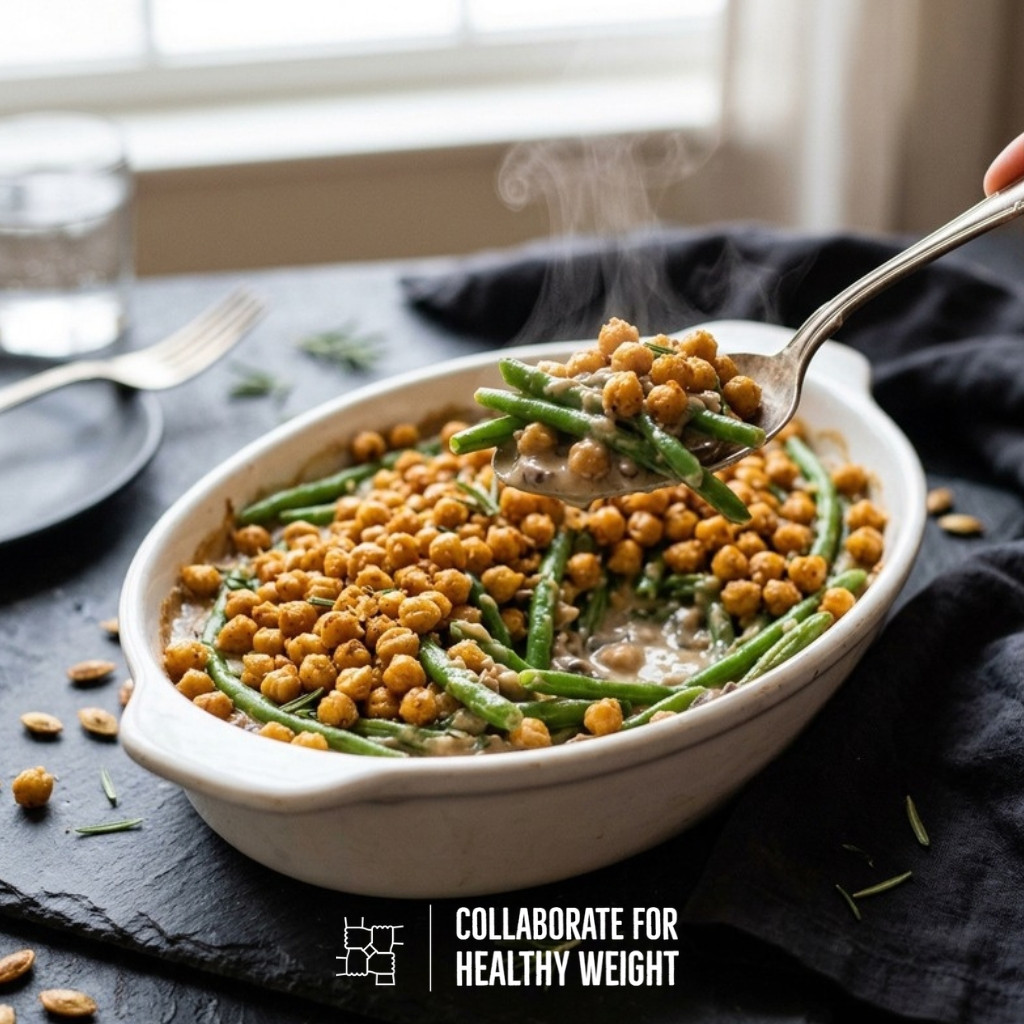
3. Crispy Chickpea Green Bean Casserole
Roasted chickpeas make a crunchy topping that adds protein and fiber. Drain and dry 150 grams of cooked chickpeas, toss them with 2 teaspoons of olive oil and smoked paprika, and roast at 425°F for 20 to 25 minutes until crisp. Make the white sauce by cooking 100 grams of onion and 300 grams of mushrooms in 2 teaspoons of oil, stirring in 24 grams of flour, and adding 300 grams of skim milk, then stir in the beans and bake for 15 minutes. Add the chickpeas on top at the end.
Per serving: about 151 calories, 7.5 grams of protein, and 4.7 grams of fiber, the most fiber in this list. USDA data for cooked chickpeas shows about 8.9 grams of protein and 7.6 grams of fiber per 100 grams. For more ways to cook with them, see the high-protein chickpea recipes.
Higher-Protein Green Bean Casserole Recipes
4. Greek Yogurt Green Bean Casserole
Greek yogurt gives the sauce a creamy, slightly tangy base with far more protein than milk. Cook 300 grams of sliced mushrooms and 100 grams of chopped onion in 2 teaspoons of olive oil, stir in 16 grams of flour, and add 1/2 cup of low-sodium chicken broth. Simmer until thick, take the pan off the heat, and stir in 150 grams of plain nonfat Greek yogurt and 20 grams of grated Parmesan. Folding the yogurt in off the heat keeps it from curdling.
Combine with the beans, top with 30 grams of bread crumbs, and bake at 375°F for 20 minutes.
Per serving: about 125 calories, 8.3 grams of protein, 3.4 grams of fat, and 3 grams of fiber. USDA data for plain nonfat Greek yogurt shows about 10.3 grams of protein per 100 grams, which is why it works so well in place of cream.
5. Cottage Cheese Green Bean Casserole
Blended cottage cheese makes a smooth, rich sauce with no flour at all. Blend 250 grams of 2% cottage cheese with 1/2 cup of low-sodium broth, 20 grams of Parmesan, and a clove of garlic until smooth. Sauté 250 grams of mushrooms and 100 grams of onion in 2 teaspoons of olive oil, stir in the blended sauce and the beans, and top with 30 grams of bread crumbs. Bake at 375°F for 20 to 25 minutes.
Per serving: about 133 calories, 9.7 grams of protein, 4.2 grams of fat, and 3 grams of fiber. USDA data for 2% cottage cheese shows 11 grams of protein per 100 grams. Cottage cheese also contains sodium, about 245 milligrams per serving here, so use low-sodium broth and taste before you add any salt. The cottage cheese dip recipes show more ways to use it.
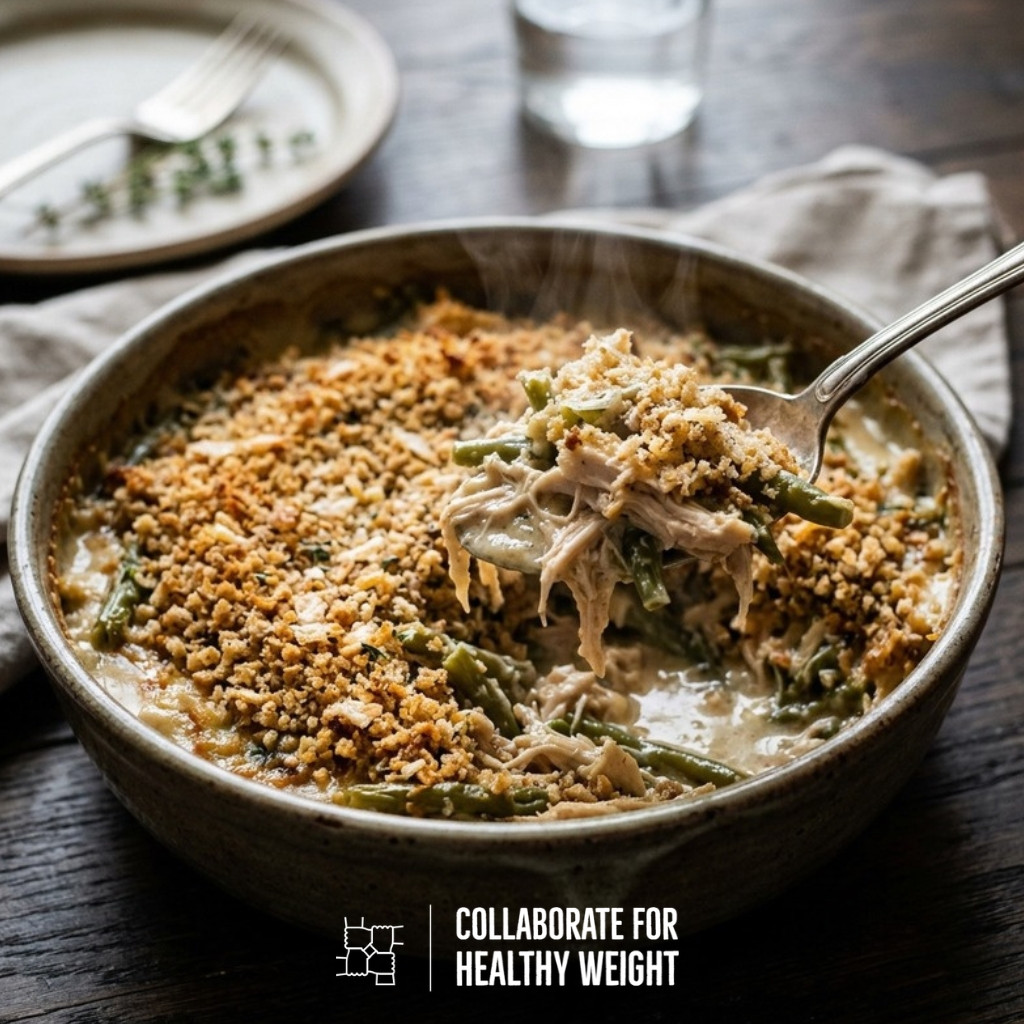
6. Chicken and Green Bean Casserole
This turns the side into a one-dish dinner. Cube 400 grams of boneless, skinless chicken breast, brown it in 2 teaspoons of olive oil, and set it aside. Make a sauce from 250 grams of mushrooms, 100 grams of onion, 16 grams of flour, and 1 cup of skim milk, and stir in 20 grams of Parmesan. Combine with the beans and chicken, top with 30 grams of bread crumbs, and bake at 375°F for 25 minutes until the chicken reaches 165°F.
Per serving: about 194 calories, 21.4 grams of protein, 4.9 grams of fat, and 3 grams of fiber. USDA data for raw chicken breast lists about 22.5 grams of protein per 100 grams. It is the only version here that works as a main course. For more chicken dinners, see the air fryer chicken breast recipes.
Dairy-Free and Lower-Carb Green Bean Casserole
7. Creamy White Bean Green Bean Casserole (Dairy-Free)
Blended white beans make a thick, creamy sauce with no milk, cream, or butter. Blend 240 grams of drained, rinsed canned cannellini beans with 1 cup of low-sodium broth, a clove of garlic, and a pinch of black pepper until smooth. Sauté 300 grams of mushrooms and 100 grams of onion in 1 tablespoon of olive oil, stir in the sauce and the green beans, and top with 30 grams of bread crumbs. Bake at 375°F for 20 minutes.
Per serving: about 145 calories, 7.6 grams of protein, 3.8 grams of fat, and about 5 grams of fiber. Check the bread crumb label if you need to avoid dairy, since some brands include milk.
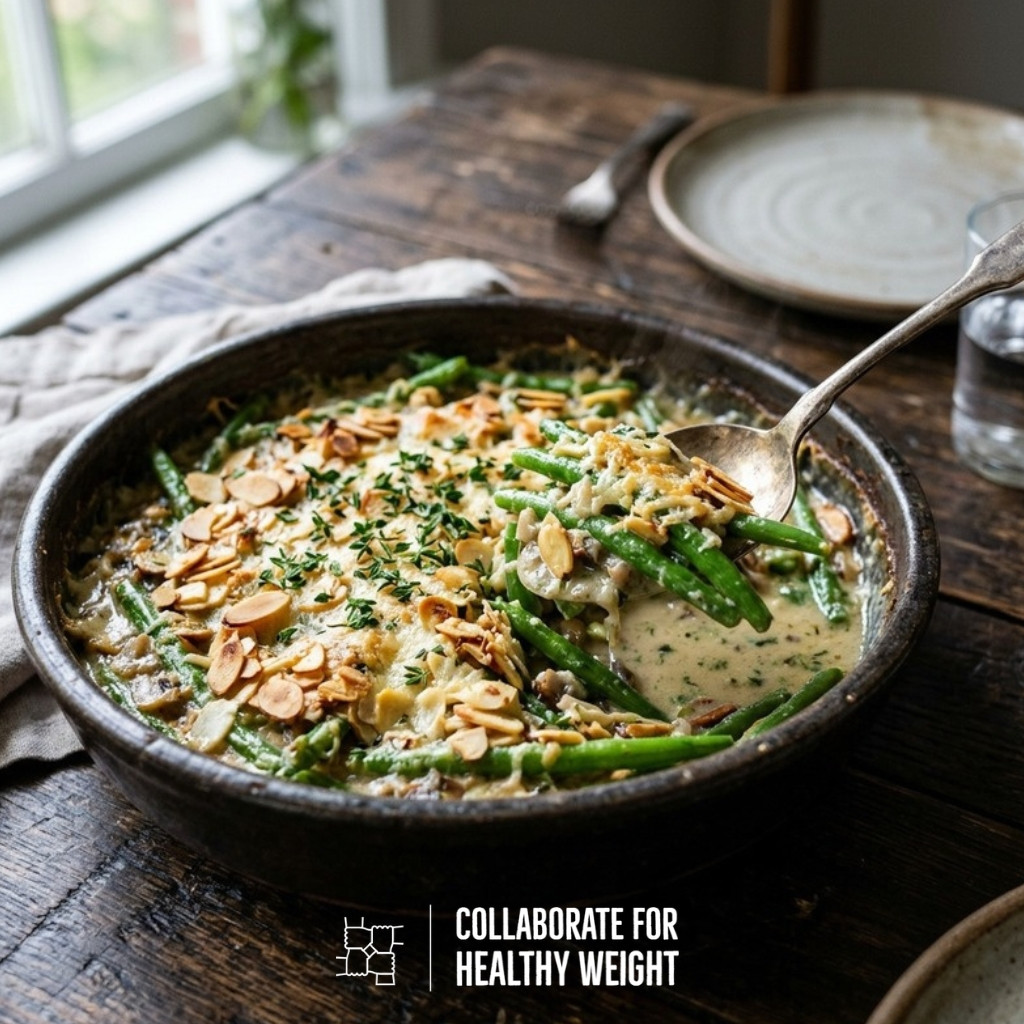
8. Almond Parmesan Green Bean Casserole (Lower-Carb)
Almonds and Parmesan make a crunchy, savory crust with no bread crumbs. Cook 300 grams of mushrooms and 100 grams of onion in 2 teaspoons of olive oil, then stir in 60 grams of cream cheese, 100 grams of Greek yogurt, and 100 grams of low-sodium broth until smooth. Toss the beans in the sauce, and top with 40 grams of chopped almonds and 30 grams of grated Parmesan. Bake at 375°F for 20 to 25 minutes.
Per serving: about 174 calories, 9 grams of protein, 10.2 grams of fat, 11.5 grams of carbohydrate, and 3.7 grams of fiber. This is the lowest-carb version, with about 5 grams less carbohydrate per serving than the homemade classic, but it is also higher in fat because of the nuts and cream cheese. For more lower-carb dishes, see the easy low-carb casserole recipes.
How to Make Any Green Bean Casserole Healthier
If your family has a recipe you do not want to replace, a few changes improve it without changing how it looks on the table.
- Replace the canned soup first. It is the largest source of sodium. A white sauce made from skim milk, flour, and mushrooms is the swap the Mayo Clinic recommends.
- Bake the topping, do not fry it. Thin shallots or onions with a little oil and bread crumbs crisp up in the oven.
- Add more mushrooms. They add savory flavor and bulk for few calories, so you can use less sauce.
- Use Greek yogurt or cottage cheese for creaminess. Both add protein where cream would only add fat.
- Keep the beans crisp-tender. Overcooked beans turn soft and need more sauce to taste good.
- Season at the end. Taste the finished dish before adding salt, since broth, cheese, and bread crumbs all contain sodium.
- Pair it with lean protein. Green beans add volume and fiber, and the most filling vegetables list covers more vegetables that work the same way.
Green Bean Casserole Comparison Table
| Version | Calories | Protein | Fiber | Sodium | Best For |
|---|---|---|---|---|---|
| Classic (Campbell’s, for comparison) | 151 | 3 g | 2 g | 513 mg | Traditional |
| 1. Classic homemade | 117 | 5.8 g | 3 g | 60 mg | Closest to original |
| 2. Baked crispy shallot | 126 | 5.9 g | 3.2 g | 60 mg | Crunchy topping |
| 3. Crispy chickpea | 151 | 7.5 g | 4.7 g | 35 mg | Most fiber, lowest sodium |
| 4. Greek yogurt | 125 | 8.3 g | 3 g | 120 mg | Creamy, higher protein |
| 5. Cottage cheese | 133 | 9.7 g | 3 g | 245 mg | No flour, higher protein |
| 6. Chicken | 194 | 21.4 g | 3 g | 155 mg | Main dish |
| 7. White bean | 145 | 7.6 g | 5 g | 140 mg | Dairy-free |
| 8. Almond Parmesan | 174 | 9 g | 3.7 g | 140 mg | Lower-carb |
Sodium for the homemade versions is calculated from USDA data before any added salt, and assumes low-sodium broth, unsalted cooked chickpeas, and rinsed canned white beans.
Make-Ahead Tips for Green Bean Casserole
Thanksgiving day oven space is tight, so a casserole that comes together early helps.
- Blanch the beans the day before. Boil them for a few minutes, cool them in cold water, and refrigerate in a covered container.
- Make the sauce ahead. Cook the mushroom sauce, cool it, and refrigerate it separately from the beans.
- Prep the topping separately. Keep crispy shallots, chickpeas, or almonds in an airtight container at room temperature, and add them just before baking so they stay crunchy.
- Combine on the day. Mix the beans and sauce in the baking dish, bake until bubbly, and add the topping for the last 10 minutes.
A holiday meal can add up quickly, and a lighter side makes room for the dishes you care about most. The holiday weight gain guide explains how to keep the season in balance.
FAQ
Is green bean casserole healthy?
The green beans are, but the classic recipe adds a can of condensed soup and fried onions. Campbell’s lists 513 milligrams of sodium and 10 grams of fat per serving. A homemade sauce and baked topping bring both down, and the versions here come in at roughly 35 to 245 milligrams of sodium per serving before any added salt.
What can I use instead of cream of mushroom soup?
A white sauce made from mushrooms, flour, and skim milk is the standard swap, and it is what the Mayo Clinic uses. Greek yogurt, blended cottage cheese, and blended white beans also work.
How do I make green bean casserole higher in protein?
Use Greek yogurt or cottage cheese for the sauce, top it with roasted chickpeas, or add cubed chicken breast. The chicken version here has about 21 grams of protein per serving.
Can I use frozen green beans?
Yes. USDA data shows frozen and fresh green beans are nearly the same in protein, carbohydrate, and fiber. Thaw and drain them well so the casserole does not turn watery.
How do I keep the topping crispy?
Bake it separately and add it for the last 10 minutes, or just before serving. Covering the dish traps steam and softens it.
Can I make green bean casserole ahead of time?
You can prepare the beans and sauce a day ahead and keep the topping separate. Combine and bake on the day.
The Bottom Line
A healthy green bean casserole does not need canned soup or a tub of fried onions. A homemade sauce, a baked topping, and a little extra protein give you a side that tastes familiar, with about 117 to 194 calories per serving in these versions and up to 21 grams of protein.
Choose the version that fits your table, prep the sauce and beans ahead, and keep the topping crisp until the end. For the rest of the meal, the healthy stuffing recipes are a good next step.
This article is for general informational purposes only and is not medical advice. Nutrition values are calculated from USDA FoodData Central and the manufacturer and Mayo Clinic recipe pages, and are approximate, since brands, portion sizes, and ingredients vary. Check labels for allergens and consult your doctor or a registered dietitian about your own dietary needs.