
Normal waist size for women and men is a waist under 35 inches (88 cm) for women and under 40 inches (102 cm) for men, the cutoffs the American Heart Association and the National Heart, Lung, and Blood Institute use to flag abdominal obesity. Risk starts to rise earlier, at 31.5 inches (80 cm) for women and 37 inches (94 cm) for men, and the cutoffs drop again for adults of Asian descent. This guide gives you the numbers by level and ethnicity, shows how today’s average American waist compares, and explains how to measure and lower yours.
No official “normal” exists, only thresholds where risk climbs. A large study cited by Mayo Clinic pooled 11 cohorts with more than 600,000 people and found that risk rose steadily with waist size and held at every BMI level, including a normal BMI. That makes the tape measure a useful second check next to the scale.
Jump to: Waist Size Chart | Average Waist | By Ethnicity | How to Measure | What a Large Waist Means | Why It Grows | How to Lower It | FAQ
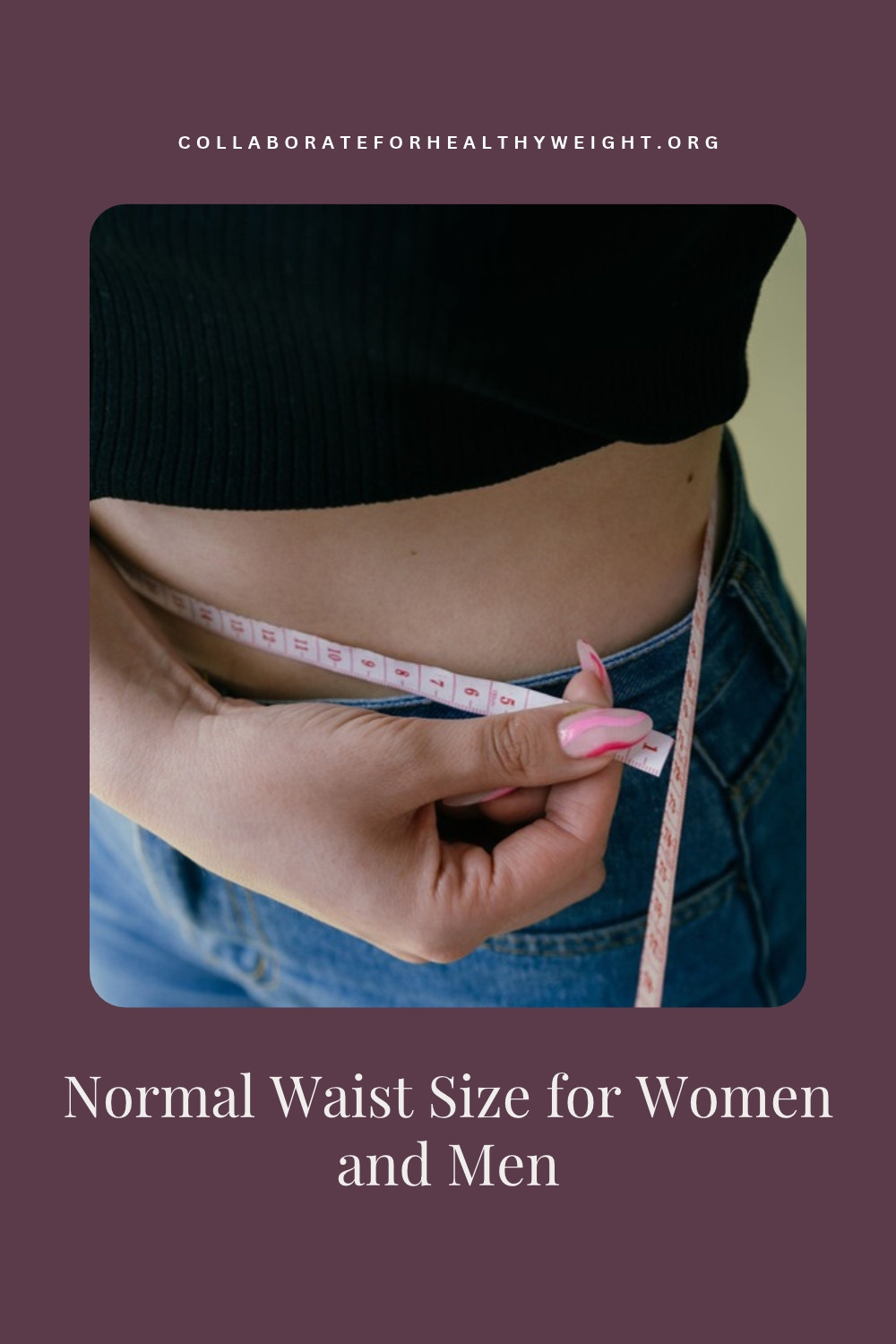
Normal Waist Size Chart for Women and Men
The thresholds below come from Table 2 of the 2009 joint statement on the metabolic syndrome in Circulation, which lists the cutoffs recommended by the World Health Organization (WHO), the AHA, and other groups. Inches are converted from centimeters and rounded to one decimal.
| Level | Women | Men |
|---|---|---|
| Increased risk starts (WHO) | 31.5 in (80 cm) | 37.0 in (94 cm) |
| Higher risk (WHO) and the US cutoff for abdominal obesity | 34.6 in (88 cm) | 40.2 in (102 cm) |
The WHO lists two steps for Caucasian adults: increased risk at 80 cm for women and 94 cm for men, and still higher risk at 88 and 102 cm. The US cutoffs sit at the second step. A waist below the first step is the safest zone, between the steps carries extra risk, and above the second step is the range doctors flag as abdominal obesity. For the same cutoffs expressed as a ratio of your waist to your hips, see the normal waist-to-hip ratio chart.
How the Average American Waist Compares
The CDC National Center for Health Statistics reports an average waist of 40.6 inches for men and 38.5 inches for women aged 20 and older, from measurements taken between August 2021 and August 2023. Set beside the US cutoffs, the typical adult is already past the line.
| Group | Average waist, US adults 20 and older | US cutoff for abdominal obesity | Average compared with cutoff |
|---|---|---|---|
| Women | 38.5 in (98 cm) | 34.6 in (88 cm) | About 3.9 inches above |
| Men | 40.6 in (103 cm) | 40.2 in (102 cm) | About 0.4 inch above |
The trend has been upward for years. A JAMA study of 32,816 US adults found that mean waist circumference rose from 95.5 cm in 1999 to 2000 to 98.5 cm in 2011 to 2012, and that abdominal obesity (a waist above 102 cm for men or 88 cm for women) rose from 46.4% to 54.2% of adults. It rose from 37.1% to 43.5% in men and from 55.4% to 64.7% in women. Waist size is worth tracking on its own, since BMI alone does not show where you carry fat. Your own BMI is easy to check with the normal BMI chart by age and sex.
Normal Waist Size by Ethnicity
The same waist can carry different risk in different groups. The joint statement lists population-specific cutoffs, shown below. Note that the lower numbers apply to Asian adults, who reach metabolic risk at a smaller waist.
| Population (organization) | Women | Men |
|---|---|---|
| United States (AHA/NHLBI) | 34.6 in (88 cm) | 40.2 in (102 cm) |
| Europid (IDF) | 31.5 in (80 cm) | 37.0 in (94 cm) |
| Middle East, Mediterranean, Sub-Saharan Africa (IDF) | 31.5 in (80 cm) | 37.0 in (94 cm) |
| Asian (IDF and WHO) | 31.5 in (80 cm) | 35.4 in (90 cm) |
| Ethnic Central and South American (IDF) | 31.5 in (80 cm) | 35.4 in (90 cm) |
The statement adds that recent AHA and NHLBI guidelines identify 94 cm for men and 80 cm for women as optional cutoffs for people with increased insulin resistance. Harvard Health says Native Americans, Hispanics, and people living in India and South Asia have a higher likelihood of abdominal obesity and diabetes, and that white men and Black women tend to carry more visceral fat than Black men and white women. If you belong to a group with a lower cutoff, treat the lower number as your target. The signs of insulin resistance guide covers what to watch for.
How to Measure Your Waist
- Stand up and relax with your stomach bare.
- Place the tape just above your hip bone, level all the way around. Mayo Clinic and Harvard Health both use this landmark.
- Keep it snug, without pressing into your skin.
- Breathe out and read the number. Do not suck in your stomach or hold your breath.
- Repeat once or twice and use the same method each time.
Other groups use a slightly different spot. The British Heart Foundation, for example, places the tape halfway between the bottom of your ribs and the top of your hips. The exact spot matters less than being consistent, since the change over weeks tells you more than a single number. If you want the measurement as a share of your height, the waist to height ratio chart turns your tape reading into a ratio and lists the waist limit for every height.
What a Large Waist Means for Your Health
In the pooled Mayo Clinic analysis, men with a waist of 43 inches or more had about a 50% higher risk of death than men under 35 inches, and women with a waist of 37 inches or more had about an 80% higher risk than women at 27 inches or less. Every additional 2 inches was linked to roughly 7% higher risk in men and 9% in women, and the researchers found no single clinical cutpoint, meaning risk climbs on a slope rather than at a cliff. The pattern held at every BMI level.
Harvard Health says belly fat matters because visceral fat, the deep fat around your organs, is tied to higher cardiovascular and type 2 diabetes risk. A large waist is also one of five criteria for the metabolic syndrome. The joint statement says any three of five risk factors make the diagnosis: a high waist, triglycerides of 150 mg/dL or more, low HDL (below 40 mg/dL in men or 50 mg/dL in women), blood pressure of 130/85 or higher, and fasting glucose of 100 mg/dL or more. The metabolic syndrome diet grocery list shows how to build meals around all five.
Why Your Waist Grows
Mayo Clinic lists several causes of belly fat:
- Calories: eating and drinking more than you burn.
- Age and muscle: muscle loss with age, especially without physical activity, slows calorie burning.
- Genetics: your genes affect both your weight and where your body stores fat.
- Smoking: smokers tend to weigh less but carry more of their weight around the belly.
- Alcohol: heavy drinking of any type can increase belly fat.
If you are past menopause, the menopausal belly fat diet and grocery list covers food choices for that stage, and how chronic stress and cortisol affect weight gain explains another common driver.
How to Reduce Your Waist Size
Mayo Clinic says crunches strengthen your abdominal muscles but do not reduce belly fat on their own, and that the causes above (calories, muscle loss, alcohol, smoking) are the levers to work on. Spot exercises are not the answer; overall habits are.
- Train the whole body. The best exercises for belly fat guide lays out a routine that does not depend on crunches.
- Protect muscle while you lose fat. A high-protein foods list makes it easier to hit protein at each meal.
- Set a pace you can keep. Realistic weight loss goals keep you away from crash plans.
- Track more than the scale. A smaller waist is one of the non-scale victories that often show up first. Pair it with the normal body fat percentage by age chart for a fuller picture.
Frequently Asked Questions About Waist Size
What is a healthy waist size for a woman?
A woman’s waist under 35 inches (88 cm) is below the US cutoff for abdominal obesity. Risk begins to rise at about 31.5 inches (80 cm) under the WHO’s lower step, and adults of Asian descent use 80 cm as the cutoff.
What is a healthy waist size for a man?
A man’s waist under 40 inches (102 cm) is below the US cutoff. WHO’s lower step for increased risk is 37 inches (94 cm), and the Asian cutoff is 35.4 inches (90 cm).
Is a 40-inch waist bad?
For a man it sits right at the US cutoff, and for a woman it is above the 35-inch cutoff. Mayo Clinic says a waist of more than 40 inches (102 cm) signals excess belly fat in men. It is a prompt to check blood pressure, blood sugar, and cholesterol, not a diagnosis on its own.
Is waist size more important than weight?
They answer different questions. The pooled Mayo Clinic analysis found that waist size predicted risk at every BMI level, including normal BMI, so a larger waist adds information that weight does not show. Use both, along with the ideal weight chart by height and age.
Does waist size change with age?
It often does. Mayo Clinic notes that muscle loss with age, especially without physical activity, slows calorie burning, so a stable lifestyle can still come with a growing waist. The CDC average is 40.6 inches for men and 38.5 for women across all adults 20 and older.
How fast can you lose inches from your waist?
It varies from person to person, and no source gives a reliable timeline. Measure at the same spot once a month and judge the trend, not a single reading.
The Bottom Line
A normal waist is under 35 inches (88 cm) for women and 40 inches (102 cm) for men by US standards, with risk rising from about 31.5 and 37 inches and lower cutoffs for Asian adults. The average American adult is already above those lines, and risk climbs on a slope rather than at a single number. Measure your waist the same way each month, pair it with your BMI and blood tests, and use steady activity, enough protein, and fewer sugary drinks to move it down. If your waist is over the cutoff, ask your doctor about screening for blood pressure, blood sugar, and cholesterol.
This article is for informational purposes only and is not a substitute for professional medical advice, diagnosis, or treatment. Please consult your doctor to interpret your measurements and overall health risk.