Normal hemoglobin levels for adults are about 13.8 to 17.2 g/dL in men and 12.1 to 15.1 g/dL in women, and normal hematocrit is about 41% to 50% in men and 36% to 44% in women, according to MedlinePlus and Cleveland Clinic. Children and pregnant women have different cutoffs, and every lab sets its own range, so this guide puts the charts from several medical sources side by side.
Hemoglobin is the protein in red blood cells that carries oxygen, and hematocrit is the percentage of your blood made up of red blood cells. Both are usually measured in a complete blood count (CBC), and both are most often checked when anemia is suspected. If a result comes back low, the foods that help with anemia guide covers what to eat.
Jump to: Hemoglobin Chart | Hematocrit Chart | Anemia Cutoffs by Age | Low Levels | High Levels | The Blood Test | Eating for Healthy Blood | FAQ
Normal Hemoglobin Levels Chart
Hemoglobin is reported in grams per deciliter (g/dL). The three sources below use slightly different adult ranges, and MedlinePlus notes that normal values vary slightly between laboratories, so the range printed on your own report is the one to use.
| Group | MedlinePlus (g/dL) | Mayo Clinic (g/dL) | Cleveland Clinic (g/dL) |
|---|---|---|---|
| Adult men | 13.8 to 17.2 | 13.2 to 16.6 | 14.0 to 17.5 |
| Adult women | 12.1 to 15.1 | 11.6 to 15 | 12.3 to 15.3 |
| Adults, sex not split | Not given | Not given | 12 to 17.4 |
| Infants | 9.5 to 14 | Not given | Not given |
| Newborns | 14 to 24 | Not given | Not given |
The sources reviewed here do not give separate hemoglobin ranges for older adults, so the chart has no separate older-adult row. Cleveland Clinic hemoglobin test page says levels may vary with age, race and sex, which is one more reason to compare your result with your own lab’s range.
Normal Hematocrit Levels Chart
Hematocrit is reported as a percentage. Cleveland Clinic says the lab spins the blood sample in a centrifuge to separate its parts and calculates the percentage that is red blood cells. The Mayo Clinic hematocrit page says typical ranges vary substantially with race, age and sex and lists no figures for children.
| Group | Cleveland Clinic | Mayo Clinic |
|---|---|---|
| Men | 41% to 50% | 41% to 50% |
| Women | 36% to 44% | 36% to 47% |
| Infants | 32% to 42% | Not given |
| Newborns | 45% to 61% | Not given |
Hemoglobin Cutoffs for Anemia by Age
The charts above are typical lab ranges. For age-specific cutoffs, the World Health Organization 2024 guideline gives the hemoglobin level at which anemia is defined for each age group and for pregnancy. The guideline lists values in g/L, and the table below converts them to g/dL by dividing by 10.
| Age group | No anemia (g/dL) | Mild | Moderate | Severe |
|---|---|---|---|---|
| 6 to 23 months | 10.5 or higher | 9.5 to 10.4 | 7.0 to 9.4 | Below 7.0 |
| 24 to 59 months | 11.0 or higher | 10.0 to 10.9 | 7.0 to 9.9 | Below 7.0 |
| 5 to 11 years | 11.5 or higher | 11.0 to 11.4 | 8.0 to 10.9 | Below 8.0 |
| 12 to 14 years (girls and boys) | 12.0 or higher | 11.0 to 11.9 | 8.0 to 10.9 | Below 8.0 |
| Women 15 to 65 (not pregnant) | 12.0 or higher | 11.0 to 11.9 | 8.0 to 10.9 | Below 8.0 |
| Men 15 to 65 | 13.0 or higher | 11.0 to 12.9 | 8.0 to 10.9 | Below 8.0 |
| Pregnancy, first trimester | 11.0 or higher | 10.0 to 10.9 | 7.0 to 9.9 | Below 7.0 |
| Pregnancy, second trimester | 10.5 or higher | 9.5 to 10.4 | 7.0 to 9.4 | Below 7.0 |
| Pregnancy, third trimester | 11.0 or higher | 10.0 to 10.9 | 7.0 to 9.9 | Below 7.0 |
Pregnancy has its own cutoffs because blood volume changes. Cleveland Clinic adds that pregnancy can lower hematocrit because the body carries more fluid, so plasma rises relative to red cells. The guideline table does not include altitude or smoking adjustments, and it does not list cutoffs for adults over 65.
If you are pregnant, the 7-day pregnancy meal plan and the pregnancy diet grocery list by trimester are a starting point for meals.
What Low Hemoglobin and Hematocrit Mean
Low hemoglobin or low hematocrit is called anemia. Cleveland Clinic low hemoglobin page explains that it can mean the body is not making enough red blood cells or that they are being destroyed faster than they are made, and says fatigue and weakness are common. Cleveland Clinic hemoglobin test page adds pale skin, dizziness, shortness of breath, and cold hands and feet. MedlinePlus lists these causes:
- Blood loss: bleeding, including heavy periods or bleeding in the digestive tract.
- Nutrition: too little iron, folate, vitamin B12, or vitamin B6 in the diet, or malnutrition.
- Bone marrow problems: leukemia, other cancers, drug toxicity, radiation therapy, infection, or bone marrow disorders.
- Other causes: chronic illness or chronic kidney disease, destruction of red blood cells (hemolysis), pregnancy, and too much water in the body.
Mayo Clinic also names liver disease, an underactive thyroid, and thalassemia. If iron is the issue, a ferritin test shows your iron stores, and the charts for normal ferritin levels in women and normal ferritin levels in men explain those results. Low vitamin B12 is another cause, covered in the normal vitamin B12 levels guide. For symptoms to watch for, see the signs of iron deficiency in women and in men.
Cleveland Clinic low hemoglobin page says a low hemoglobin level may not be a cause for alarm, but your provider should explain what your results mean. Treatment targets the underlying cause, so do not start iron supplements on your own without knowing the cause.
What High Hemoglobin and Hematocrit Mean
Cleveland Clinic high hemoglobin page gives these hemoglobin levels as high:
| Group | Hemoglobin above (g/dL) |
|---|---|
| Adult men | 16.5 |
| Adult women | 16 |
| Children | 16.6 |
| Infants | 18 |
MedlinePlus says high hemoglobin is most often caused by low blood oxygen over a long period, and lists polycythemia vera, cigarette smoking, dehydration, right-sided heart failure, kidney tumors, congenital heart disease, and pulmonary fibrosis. The Cleveland Clinic page names carbon monoxide poisoning, heart disease, obstructive sleep apnea, smoking, and testosterone use for high hematocrit, and says living at high altitude can raise it without necessarily being a concern. MedlinePlus notes hemoglobin rises for several weeks at higher altitude.
Dehydration is a listed cause of high results on both tests. Because blood oxygen is part of the picture, the guide to normal resting blood oxygen (SpO2) levels is a useful companion. Treatment depends on the cause, and Cleveland Clinic high hemoglobin page says it may include phlebotomy, in which a provider removes extra red blood cells. See your provider if you have a high result.
How the Blood Test Works
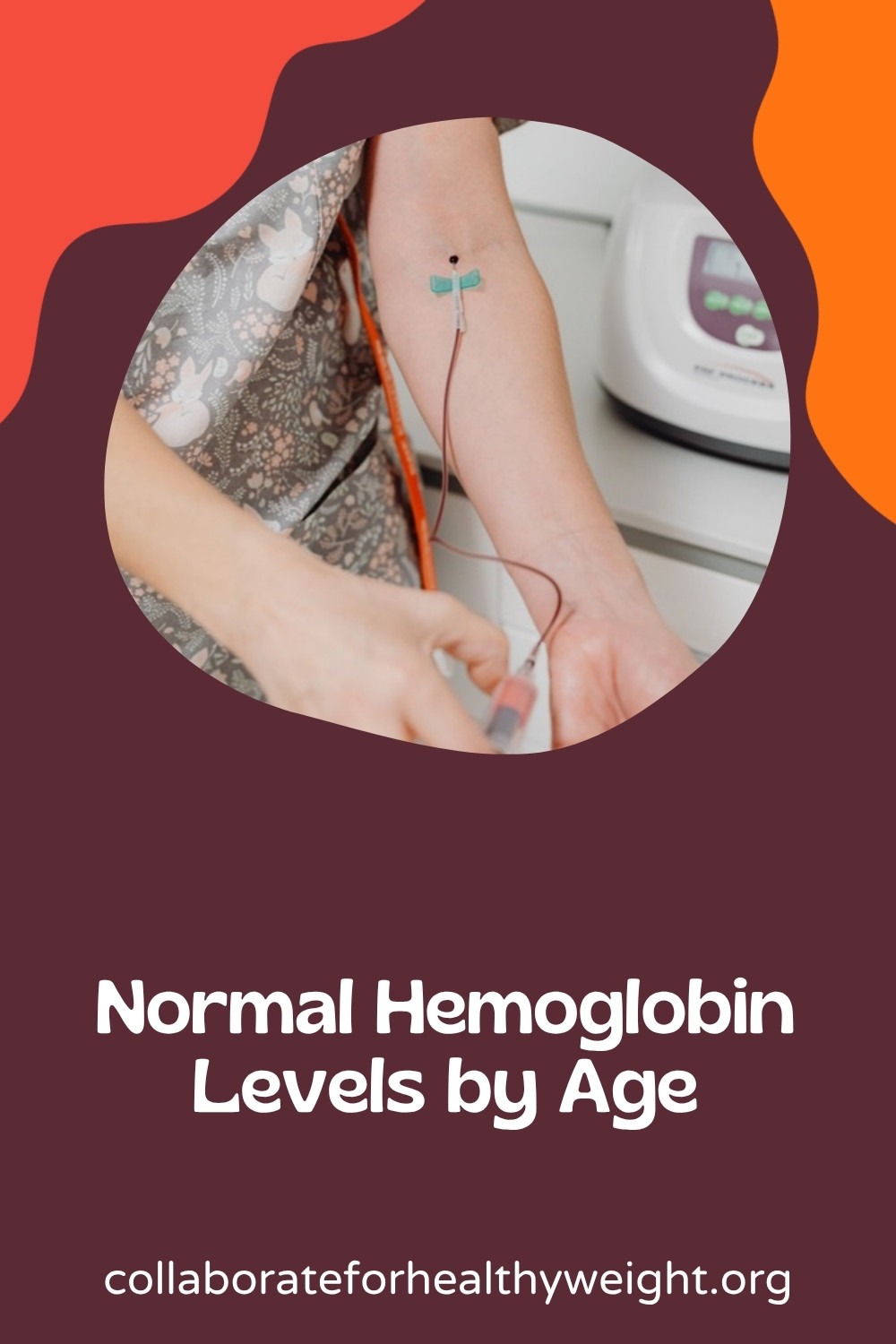
A hemoglobin or hematocrit test uses a blood sample from a vein in the arm, or sometimes a finger prick. Cleveland Clinic hemoglobin test page says a heel stick may be used for newborns or infants. MedlinePlus says no special preparation is necessary. Mayo Clinic adds that if other tests are ordered with it, you may be asked to fast, so follow your care team’s instructions. Cleveland Clinic says results usually take 24 hours to a few days.
Both are usually part of a CBC. Neither number says why a value is off, so your provider may order more tests to find the cause.
Eating for Healthy Blood
Cleveland Clinic low hemoglobin page says eating a vitamin-rich diet can help maintain your red blood cells, and names red meat, organ meats like liver, fish, leafy greens, lentils, beans, peas, nuts, and dried berries. The guides below cover iron foods, absorption, and a shopping list.
- Start with iron-rich foods. The 26 foods high in iron list shows serving sizes.
- Help your body absorb it. See the foods that boost iron absorption and the foods to avoid with anemia.
- Shop for it. The anemia diet grocery list turns the advice into a store trip.
Diet fixes a low result only when a nutrient shortage is the cause. Blood loss, chronic disease, and other causes need their own treatment, so check with your doctor first.
Frequently Asked Questions About Hemoglobin and Hematocrit
What is a normal hemoglobin level for women?
MedlinePlus lists 12.1 to 15.1 g/dL, Mayo Clinic lists 11.6 to 15 g/dL, and Cleveland Clinic lists 12.3 to 15.3 g/dL. The WHO anemia cutoff for non-pregnant women is 12.0 g/dL.
What is a normal hemoglobin level for men?
MedlinePlus lists 13.8 to 17.2 g/dL, Mayo Clinic lists 13.2 to 16.6 g/dL, and Cleveland Clinic lists 14.0 to 17.5 g/dL. The WHO anemia cutoff for men is 13.0 g/dL.
What is a normal hematocrit level?
Cleveland Clinic lists 41% to 50% for men and 36% to 44% for women. Mayo Clinic lists 41% to 50% for men and 36% to 47% for women.
What hemoglobin level is considered anemia?
It depends on age, sex, and pregnancy. The WHO cutoffs are 12.0 g/dL for non-pregnant women, 13.0 g/dL for men, 11.5 g/dL for ages 5 to 11, and 11.0 g/dL in the first and third trimesters of pregnancy.
Do you need to fast for a hemoglobin test?
Usually not. MedlinePlus says no special preparation is necessary. If other blood tests are ordered with it, you may be asked to fast, so follow your provider’s instructions.
Can dehydration or altitude change the result?
Yes. MedlinePlus and Cleveland Clinic both list dehydration and high altitude as reasons for higher readings. Cleveland Clinic adds that time of day and hydration can affect hemoglobin.
The Bottom Line
Normal hemoglobin is roughly 12 to 15 g/dL in women and 13 to 17 g/dL in men, and normal hematocrit is roughly 36% to 47% in women and 41% to 50% in men, but every lab uses its own range. Children and pregnant women have lower anemia cutoffs, and high altitude, smoking, and dehydration can push results up. Compare your result with your lab’s printed range, ask what a flagged value means, and let your doctor look for the cause before you change your diet or take supplements.
This article is for informational purposes only and is not a substitute for professional medical advice, diagnosis, or treatment. Please consult your doctor to interpret your blood test results.