
The foods to avoid for joint pain and arthritis are mostly the ones linked to body-wide inflammation: sugary drinks, refined carbs, fried foods, red and processed meat, and too much alcohol or salt. About 54 million U.S. adults live with arthritis, according to the CDC, and food will not replace your treatment plan, but what you eat can support it.
This guide covers 12 foods and food habits worth limiting, what the evidence says about each, and a simple swap so you are never left with an empty plate. It also covers the nightshade and dairy question, where the science is much less settled than the internet suggests.
Jump to: Soda and Other Sugary Drinks | Added Sugar and Sweets | Refined Carbohydrates | Fried Foods | Red Meat | Processed Meat | Alcohol | Ultra-Processed Packaged Snacks | High-Sodium Foods | Margarine, Shortening, and Lard | Charred or Well-Done Grilled Meat | Your Personal Trigger Foods | Quick reference | Nightshades, Dairy, and Gluten: What Is Actually Proven? | How to Start Without Overhauling Your Whole Diet | FAQ | The Bottom Line
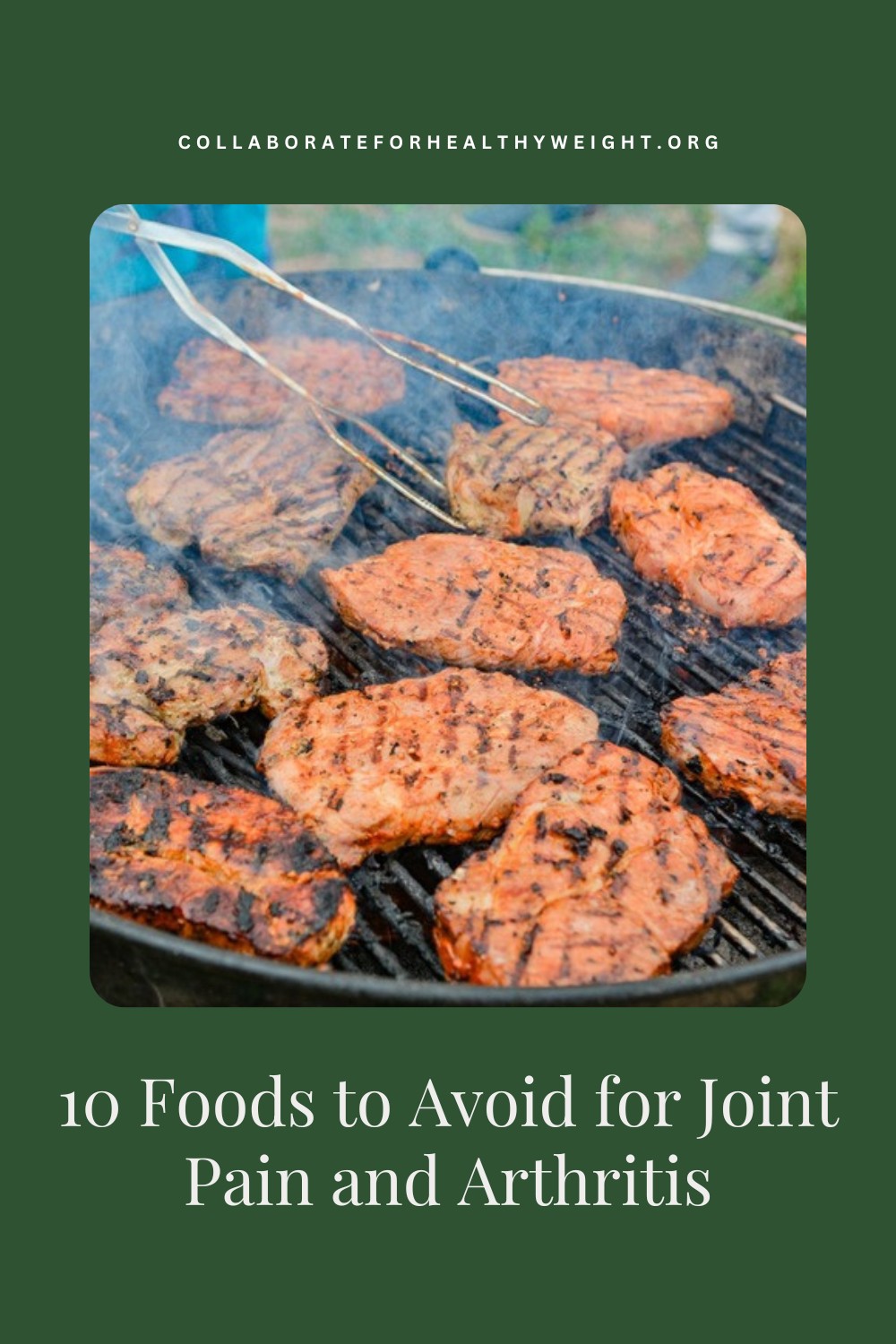
12 Foods to Avoid for Joint Pain and Arthritis
Arthritis is an umbrella term for more than 100 conditions, so a food that bothers one person may do nothing for another. The list below follows the foods that Harvard Health and the Arthritis Foundation flag most often. Where the research is mixed, I say so.
1. Soda and Other Sugary Drinks
Sugar-sweetened beverages are one of the clearest dietary signals for inflammation. Harvard Health lists soda and other sugar-sweetened drinks among the foods that promote it. A large study of women in the Nurses’ Health Study, published in the American Journal of Clinical Nutrition, linked regular sugar-sweetened soda intake to a higher risk of developing rheumatoid arthritis. That kind of study shows an association, not proof of cause, but it is a good reason to cut back.
Swap for: Sparkling water with citrus, unsweetened iced tea, or plain water with mint.
2. Added Sugar and Sweets
Candy, pastries, sweetened yogurt, and sugary cereals deliver a lot of sugar with little else. Excess sugar also adds calories, and extra body weight is its own problem for joints (see the weight section in the FAQ).
Swap for: Fresh berries, a baked apple with cinnamon, or plain yogurt with fruit.
3. Refined Carbohydrates
Harvard Health names refined carbohydrates such as white bread and pastries among the foods linked to more inflammation. White rice, white pasta, and most crackers behave the same way: the fiber is stripped out and they digest quickly.
Swap for: Oats, quinoa, brown rice, and 100% whole-grain bread.
4. Fried Foods
French fries, fried chicken, and doughnuts are on Harvard Health’s list of foods that promote inflammation. Deep frying also adds a large amount of fat and calories to an otherwise simple food.
Swap for: Oven-baked or air-fried versions, or roasted vegetables with olive oil.
5. Red Meat
Burgers and steaks appear on Harvard Health’s list of foods to limit for inflammation. You do not need to give up meat entirely. Eating red meat less often and in smaller portions is a realistic goal.
Swap for: Fish, skinless poultry, beans, or lentils a few times a week.
6. Processed Meat
Hot dogs, sausage, bacon, and deli meats are also on Harvard’s list, and they tend to be high in sodium too, which makes them a double concern for people with arthritis.
Swap for: Home-roasted turkey or chicken sliced for sandwiches, or canned salmon or sardines.
7. Alcohol
The Arthritis Foundation advises people with rheumatoid arthritis to limit alcohol, particularly when taking medications such as methotrexate, and to ask their doctor what amount, if any, is safe. If you have gout, alcohol (beer especially) is a common flare trigger, which our guide to foods to avoid for gout covers in detail.
Swap for: Alcohol-free sparkling drinks, or kombucha or herbal tea in a nice glass.
8. Ultra-Processed Packaged Snacks
The Arthritis Foundation notes that cookies, chips, and similar snacks can be high in unhealthy fats linked with inflammation. They also tend to stack refined flour, sugar, salt, and fat in one bag.
Swap for: Fresh fruit, a small handful of nuts, or raw vegetables with hummus.
9. High-Sodium Foods
Canned soups, frozen dinners, and restaurant food are often loaded with salt. The Arthritis Foundation advises holding the salt when possible, partly because fluid retention can raise blood pressure and because corticosteroids used for rheumatoid arthritis can make the body retain sodium.
Swap for: Low-sodium or no-salt-added versions, fresh or frozen vegetables, and herbs, garlic, lemon, or spices for flavor.
10. Margarine, Shortening, and Lard
Harvard Health includes margarine, shortening, and lard among the foods that promote inflammation. They show up in a lot of baked goods and packaged snacks, so check labels for “partially hydrogenated oil.”
Swap for: Extra virgin olive oil, avocado, or nut butter.
11. Charred or Well-Done Grilled Meat
High-heat cooking creates compounds called advanced glycation end products (AGEs). Research on dietary AGEs suggests they can boost inflammation, although human trials have been mixed, so treat this as a sensible precaution rather than a hard rule.
Swap for: Marinate meat, cook at lower temperatures, and favor poaching, steaming, or slow cooking.
12. Your Personal Trigger Foods
Some people notice flares after specific foods, such as dairy, gluten, or nightshade vegetables. The evidence for these as general triggers is thin, but your own experience still counts. A structured elimination trial (below) is the only reliable way to find out.
Swap for: Do not cut a whole food group on a hunch. Test one food at a time, and keep what does not bother you.
Quick Reference: Foods to Limit and Easy Swaps
| Limit | Main Concern | Swap For |
|---|---|---|
| Soda and sugary drinks | Inflammation, RA risk link | Sparkling water, unsweetened tea |
| Added sugar and sweets | Extra calories, weight gain | Berries, baked fruit |
| Refined carbs | Inflammation | Oats, quinoa, brown rice |
| Fried foods | Inflammation, extra fat | Baked or air-fried |
| Red meat | Inflammation | Fish, poultry, beans |
| Processed meat | Inflammation, sodium | Home-roasted chicken, canned fish |
| Alcohol | Medication interactions, gout flares | Alcohol-free sparkling drinks |
| Packaged snacks | Unhealthy fats, sugar, salt | Fruit, nuts, veggies and hummus |
| High-sodium foods | Fluid retention, blood pressure | Fresh foods, herbs and spices |
| Margarine, shortening, lard | Inflammation | Olive oil, avocado |
| Charred meat | AGEs (evidence mixed) | Marinated, gently cooked meat |
| Personal triggers | Individual, not proven | Elimination trial |
Nightshades, Dairy, and Gluten: What Is Actually Proven?
Tomatoes, peppers, eggplant, and potatoes are often blamed for arthritis flares. The Arthritis Foundation’s page on nightshades and arthritis says there is little scientific evidence on either side, and that mouse studies conflict. So there is no reason to ban them for everyone. If you suspect them, the Arthritis Foundation suggests avoiding them for two weeks, then reintroducing one at a time, about three days apart, while you watch your symptoms.
The same logic applies to dairy and gluten. Unless you have a diagnosed allergy, intolerance, or celiac disease, there is no strong evidence that they cause joint pain in most people. Keep what your body tolerates, because dairy and whole grains also provide nutrients you need.
How to Start Without Overhauling Your Whole Diet
- Pick the two items from the list you eat most often and change only those for two weeks.
- Replace rather than remove: every swap above is something you can buy on your next shopping trip.
- Build meals around the foods that help. Our list of 14 foods that help with joint pain and inflammation is a good place to start.
- Keep a short food and symptom note for a few weeks to spot your own patterns.
- Read our overview of foods to avoid for inflammation and our guide to reducing inflammation in the body for the broader picture.
- Stay active with gentle movement. Our low-impact workouts for bad knees are easy on the joints.
Frequently Asked Questions
Can diet alone control arthritis?
No. Diet is a supporting strategy alongside the medication, physical therapy, and other care your doctor or rheumatologist prescribes. Never stop or change a medication because of a diet change.
Is the advice different for osteoarthritis, rheumatoid arthritis, and gout?
The general approach overlaps: less sugar, refined carbs, fried food, and processed meat. Gout has its own triggers, mainly alcohol, sugary drinks, and high-purine foods, so see our gout food guide. With rheumatoid arthritis, alcohol and salt can interact with medications, so ask your doctor.
Can weight loss reduce joint pain?
Yes, especially for knees. The Arthritis Foundation, citing a study in Arthritis & Rheumatism, says each pound lost removes about four pounds of pressure from the knees. It also reports that losing 10 to 20 percent of body weight eased pain more than losing 5 percent, and that fat tissue releases pro-inflammatory chemicals. Details are in its weight loss and arthritis guide.
Do I have to give up all of these foods?
No. The goal is to eat them less often and in smaller amounts. A pattern that is mostly vegetables, fruit, whole grains, fish, beans, and olive oil matters more than any single meal.
How long until I notice a difference?
There is no set timeline, and responses vary. Give any change a few weeks while you track symptoms, and share the results with your doctor.
The Bottom Line
The best-supported foods to limit for joint pain and arthritis are sugary drinks, refined carbs, fried foods, red and processed meat, margarine and shortening, and, depending on your condition and medication, alcohol and salt. Swap rather than strip, test suspected triggers one at a time, and keep your treatment plan front and center. A few steady changes beat a perfect diet you cannot keep.
This article is for informational purposes only and is not a substitute for professional medical advice. Please consult your healthcare provider or a registered dietitian before making significant changes to your diet, especially if you have arthritis or another medical condition or take medication.