Eating well during pregnancy is less about eating for two and more about getting more of a few specific nutrients: folate, iron, choline, and calcium, in particular, without the foods that carry food safety risks. This 7-day pregnancy meal plan is built around those priorities, with a grocery list that fits one shopping trip. Daily menus land between 2,086 and 2,447 calories, with 620 to 1069 micrograms of folate (DFE), 786 to 1,165 milligrams of calcium, and 49 to 62 grams of fiber, and every food is cooked, pasteurized, or washed so the week works from the first trimester onward.
The NIH Office of Dietary Supplements lists 600 micrograms of dietary folate equivalents (DFE) a day for pregnant women and says folic acid taken before and early in pregnancy helps prevent neural tube defects such as spina bifida. It lists 27 milligrams of iron and, in its choline fact sheet, 450 milligrams of choline a day. On calories, Mayo Clinic says no extra calories are needed in the first trimester, and that an extra 300 calories a day might be enough in the second and third trimesters for someone who starts at a healthy weight.
Your 7-Day Pregnancy Meal Plan: Folate, Iron, Choline, and Calcium
Jump to: Key Rules | Daily Menus | Day 1 | Day 2 | Day 3 | Day 4 | Day 5 | Day 6 | Day 7 | Weekly Summary | Why It Works | Food Safety | Grocery List | Meal Prep | FAQ
The plan averages about 2,223 calories, 121 grams of protein, 54 grams of fiber, 755 micrograms of folate (DFE), 19 milligrams of iron, 1,006 milligrams of calcium, and 574 milligrams of choline a day. It is written as a general second or third trimester template and not for any one person, so scale portions to your own appetite, weight gain, and your provider’s advice. Figures were calculated from USDA FoodData Central (SR Legacy) values using the weights listed in each meal. Cooked weights are used for meat, fish, rice, quinoa, pasta, beans, lentils, and cooked vegetables. Sodium is not counted, and vitamin and mineral values depend on brands and ripeness.
Key Rules for Eating Well During Pregnancy
- Take the prenatal vitamin your provider recommends. The NIH says all women who could become pregnant should get 400 micrograms of folic acid a day from supplements, fortified foods, or both, on top of folate from food, with an upper limit of 1,000 micrograms of folic acid a day for adults unless a provider says otherwise. The folate figures in this plan are from food only, so they come on top of what a prenatal supplies.
- Do not count on food alone for iron. The plan averages 19 milligrams against the NIH target of 27, and the NIH says pregnant women should talk with a provider and take an iron supplement if recommended. Iron from plants is absorbed less well than iron from meat, poultry, and seafood, and the NIH notes that vitamin C foods such as citrus, strawberries, sweet peppers, tomatoes, and broccoli improve absorption, so those show up beside beans and lentils here.
- Eat fish two to three times a week, from the low-mercury list. The FDA advises 2 to 3 servings a week from its Best Choices list, with a serving about 4 ounces, and the plan uses salmon on Day 2, shrimp on Day 4, and canned light tuna on Day 6. Skip king mackerel, marlin, orange roughy, shark, swordfish, Gulf of Mexico tilefish, and bigeye tuna.
- Get 1,000 milligrams of calcium. The NIH lists 1,000 milligrams a day for pregnant women 19 to 50 and 1,300 for pregnant teens. Milk, yogurt, cheese, tofu made with calcium, kale, broccoli, and canned fish with bones are all good sources.
- Include eggs for choline. The NIH lists meat, eggs, poultry, fish, and dairy among the choline sources, and eggs carry the most per serving here. Cook them until the whites and yolks are firm.
- Limit caffeine. Mayo Clinic says your provider might advise no caffeine or a limit of under 200 milligrams a day, about two small cups of brewed coffee, and that no amount of alcohol has been proved safe during pregnancy. Neither is counted in the totals.
- Build fiber up gradually. The plan is high in fiber from beans, lentils, oats, fruit, and vegetables. If you usually eat much less, add the beans and oats over a few days and drink plenty of water. If constipation is a problem, see foods that help with constipation for more ideas.
7-Day Pregnancy Meal Plan: Daily Menus
Day 1: Oatmeal with Walnuts, Chicken Chickpea Salad, and Sirloin with Roasted Sweet Potato
- Breakfast: Warm walnut oatmeal. Cook 3/4 cup rolled oats (60 g) in 1 cup 1% pasteurized milk (240 g). Top with 1 small sliced banana (100 g), 7 walnut halves (15 g), and 1 tablespoon chia seeds (10 g). Serve with 1 hard-boiled egg (50 g), cooked until the yolk is firm.
- Lunch: Chicken chickpea salad. Top 2 cups chopped romaine (80 g) with 2 oz cooked chicken breast (55 g), 2/3 cup chickpeas (100 g), 1/2 sliced cucumber (80 g), and 1 small tomato (80 g). Dress with 1 tablespoon olive oil (12 g) and 1 tablespoon lemon juice (15 g), and serve with 2 slices whole-wheat bread (70 g).
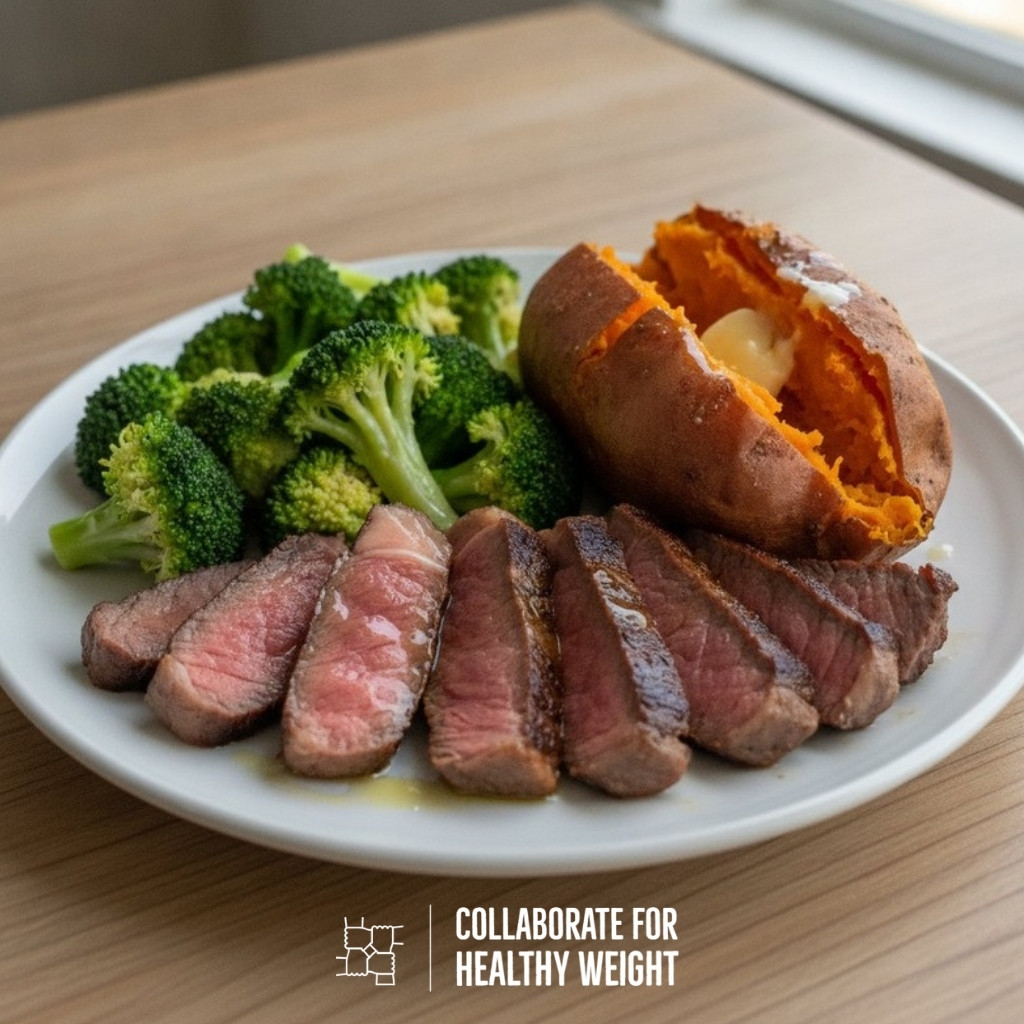
- Dinner: Sirloin steak with roasted sweet potato and broccoli. Cook 3 oz top sirloin (85 g cooked weight) to at least 145°F and serve with 1 large roasted sweet potato (250 g) and 1 cup steamed broccoli (150 g), using 2 teaspoons olive oil (10 g).
- Snack: 1/2 cup plain nonfat Greek yogurt (120 g) with 2/3 cup blueberries (100 g) and 20 almonds (25 g), plus 1 small orange (130 g).
| Nutrient | Amount |
|---|---|
| Calories | 2,086 |
| Protein | 118 g |
| Fiber | 49 g |
| Folate | 674 mcg DFE |
| Iron | 17 mg |
| Calcium | 1,084 mg |
| Choline | 596 mg |
Day 2: Spinach Scramble, Lentil Kale Soup, and Baked Salmon with Quinoa
- Breakfast: Spinach scramble. Scramble 3 eggs (150 g) in a nonstick pan until firm with 2 cups baby spinach (60 g) and 1 sliced small tomato (100 g). Serve with 2 slices whole-wheat toast (70 g) topped with 1/3 avocado (60 g), and 1 small orange (130 g).
- Lunch: Lentil kale soup. Simmer 3/4 cup cooked lentils (150 g) with 1 medium carrot (80 g), 1/3 cup chopped onion (50 g), 1 cup chopped kale (60 g), and 2 teaspoons olive oil (10 g) in a little water. Serve with 2 slices whole-wheat bread (70 g) and 2/3 cup cooked brown rice (100 g).
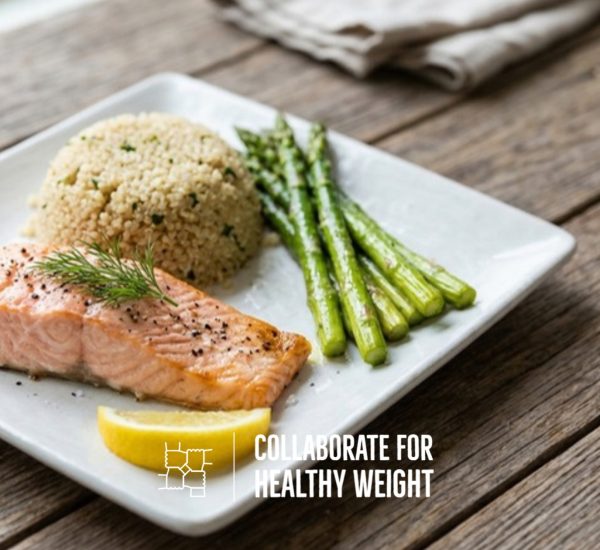
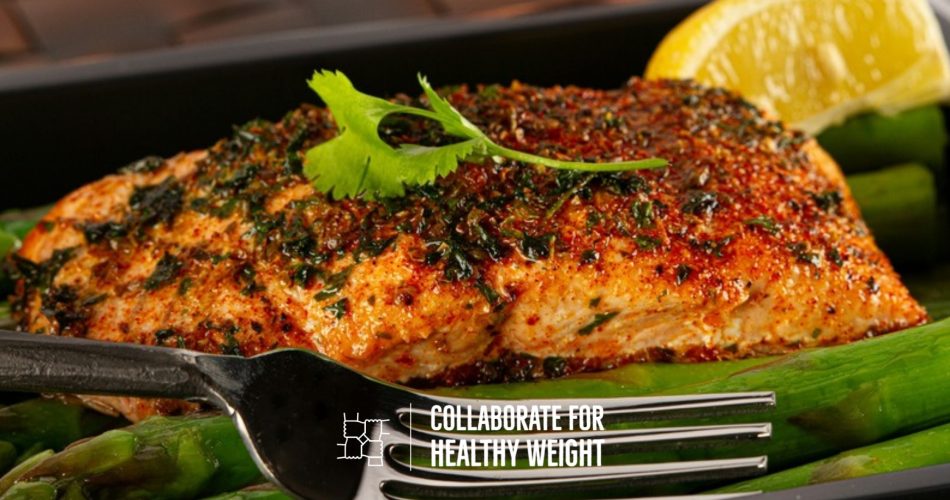
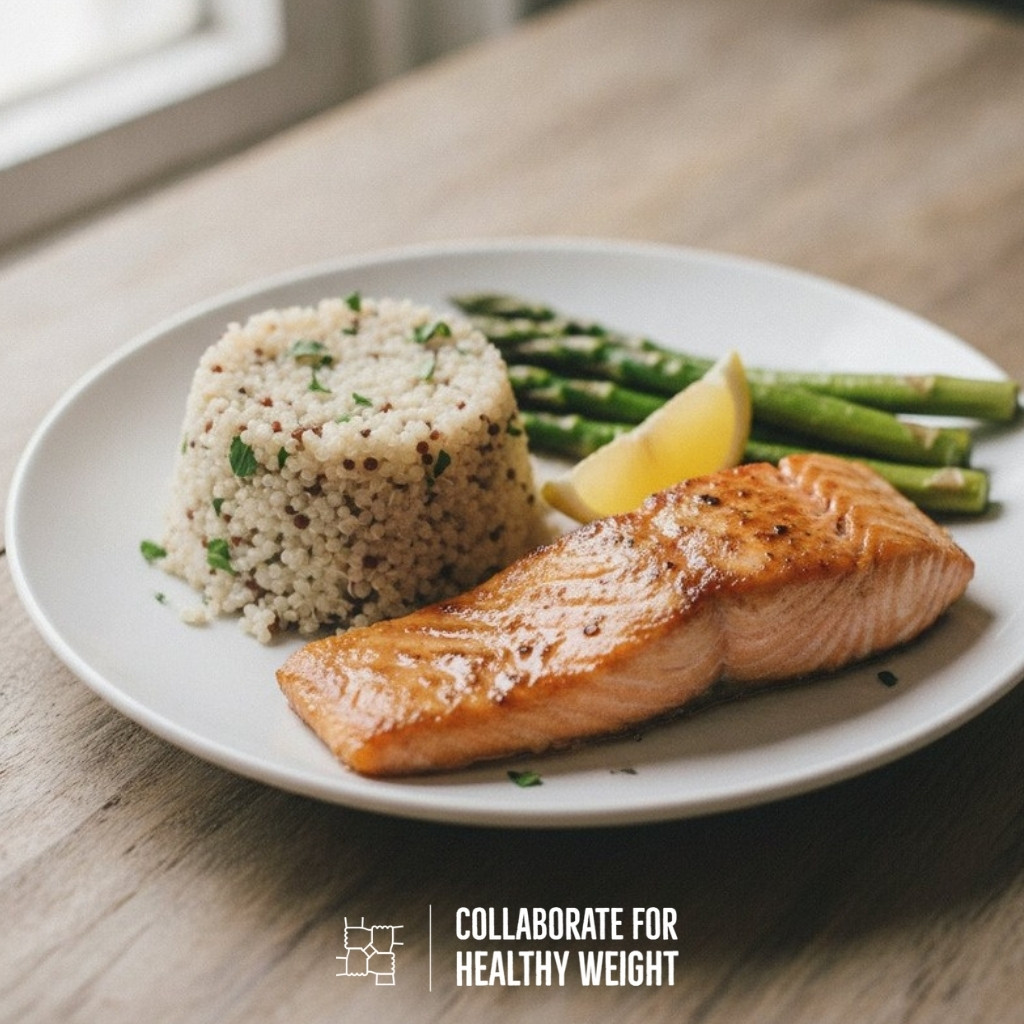
- Dinner: Baked salmon with quinoa and asparagus. Bake a 4 oz salmon fillet (113 g cooked weight) until it reaches 145°F, and plate it with 1 cup cooked quinoa (170 g) and about 10 roasted asparagus spears (150 g), using 2 teaspoons olive oil (10 g).
- Snack: 1/2 cup plain nonfat Greek yogurt (120 g) with 2/3 cup raspberries (80 g) and 25 almonds (30 g), plus 1 small banana (100 g).
| Nutrient | Amount |
|---|---|
| Calories | 2,163 |
| Protein | 113 g |
| Fiber | 56 g |
| Folate | 1069 mcg DFE |
| Iron | 21 mg |
| Calcium | 993 mg |
| Choline | 710 mg |
Day 3: Cottage Cheese Oatmeal, White Bean Chicken Salad, and Beef and Kidney Bean Chili
- Breakfast: Cottage cheese oatmeal. Cook 1/2 cup rolled oats (50 g) in water and top with 1/2 cup pasteurized low-fat cottage cheese (100 g), 1 medium diced pear (150 g), 20 almonds (25 g), and 1 1/2 tablespoons ground flaxseed (12 g).
- Lunch: White bean chicken salad. Combine 2 oz cooked chicken breast (55 g), 1/2 cup white beans (120 g), 2 cups baby spinach (60 g), and 1 small tomato (80 g). Dress with 1 tablespoon olive oil (12 g) and 1 tablespoon lemon juice (15 g), and serve with 2 slices whole-wheat bread (70 g).
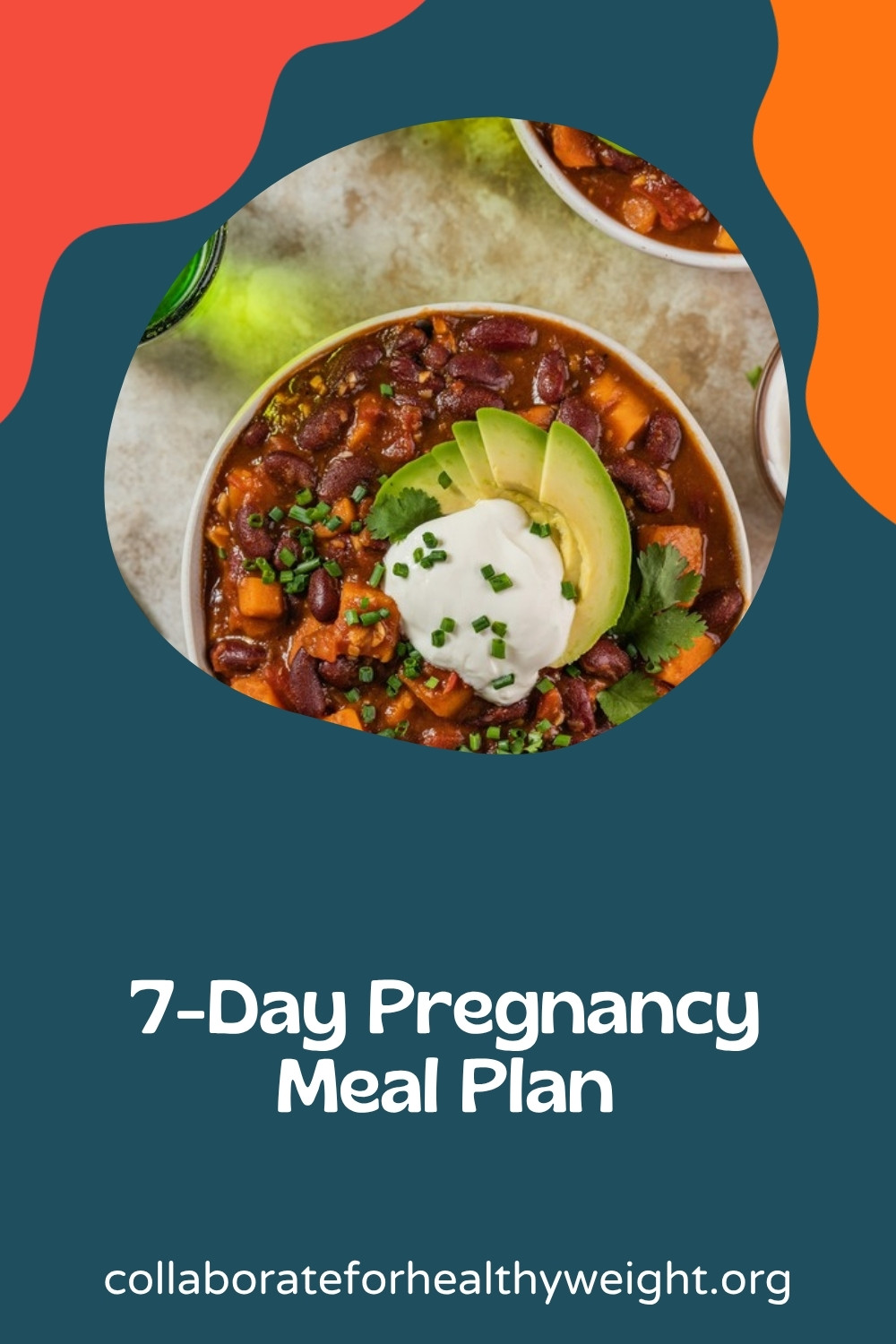
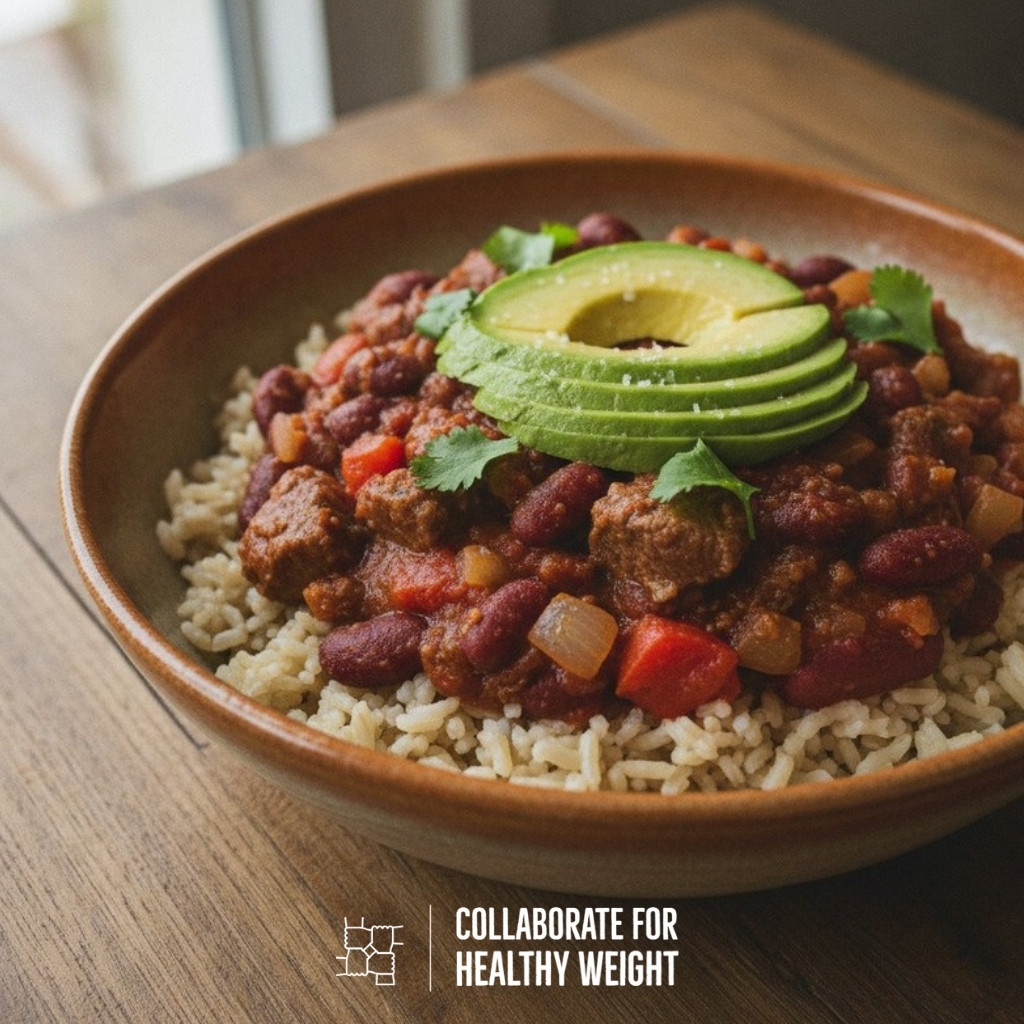
- Dinner: Beef and kidney bean chili. Brown 3 oz lean ground beef (85 g cooked weight) to 160°F in 2 teaspoons olive oil (8 g), then simmer with 1/2 cup kidney beans (100 g), 1 cup chopped tomatoes (200 g), 1/2 cup chopped onion (60 g), and 1/2 chopped red bell pepper (80 g), seasoned with chili powder and cumin. Serve over 2/3 cup cooked brown rice (120 g) with 1/3 avocado (60 g).
- Snack: 1/4 cup hummus (60 g) with 1 large carrot (100 g) and sliced cucumber (60 g), plus 1 small orange (130 g), 5 walnut halves (15 g), and 3/4 cup 1% pasteurized milk (200 g).
| Nutrient | Amount |
|---|---|
| Calories | 2,236 |
| Protein | 118 g |
| Fiber | 57 g |
| Folate | 704 mcg DFE |
| Iron | 21 mg |
| Calcium | 1,027 mg |
| Choline | 417 mg |
Day 4: Peanut Butter Banana Oatmeal, Burrito Bowl, and Shrimp Tomato Pasta
- Breakfast: Peanut butter banana oatmeal. Cook 3/4 cup rolled oats (70 g) in 1 cup 1% pasteurized milk (250 g), then stir in 1 1/2 tablespoons peanut butter (25 g) and top with 1 sliced banana (120 g).
- Lunch: Burrito bowl. Combine 2/3 cup black beans (120 g), about 1 cup cooked brown rice (170 g), 2 oz cooked chicken breast (55 g), 1/2 small red bell pepper (60 g), and 1 small tomato (80 g). Top with 1/3 avocado (60 g).
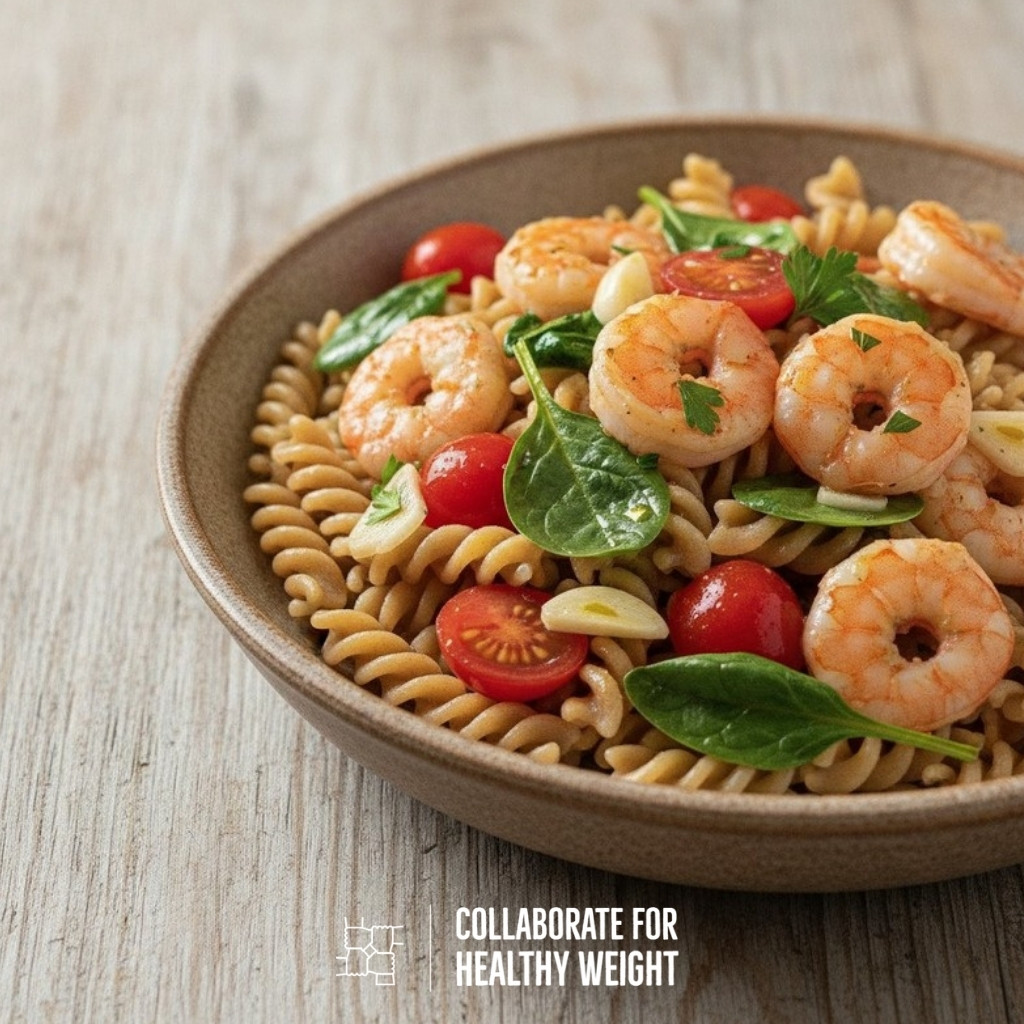
- Dinner: Shrimp and tomato whole-wheat pasta. Saute 4 oz shrimp (113 g cooked weight) until opaque in 1 tablespoon olive oil (14 g) with garlic, 1 cup chopped tomato (150 g), and 2 cups baby spinach (60 g). Toss with 1 3/4 cups cooked whole-wheat pasta (250 g).
- Snack: 1 medium apple (150 g) and 1/4 cup walnut pieces (25 g) with 1/3 cup plain nonfat Greek yogurt (100 g).
| Nutrient | Amount |
|---|---|
| Calories | 2,183 |
| Protein | 117 g |
| Fiber | 49 g |
| Folate | 620 mcg DFE |
| Iron | 16 mg |
| Calcium | 786 mg |
| Choline | 440 mg |
Day 5: Egg and Black Bean Plate, Turkey Hummus Sandwich, and Sheet-Pan Chicken
- Breakfast: Egg and black bean plate. Scramble 3 eggs (150 g) until firm and serve with 1/2 cup black beans (100 g), 1 small tomato (80 g), 1/3 avocado (50 g), 2 slices whole-wheat toast (70 g), and 1 small orange (130 g).
- Lunch: Turkey hummus sandwich. Layer 1 1/2 oz home-roasted turkey breast (40 g), reheated until steaming hot if it was made ahead, with 3 tablespoons hummus (50 g), 1 cup baby spinach (30 g), 3 tomato slices (60 g), and sliced cucumber (60 g) between 2 slices whole-wheat bread (70 g). Serve with 1 medium apple (150 g) and 1/2 cup chickpeas (80 g).
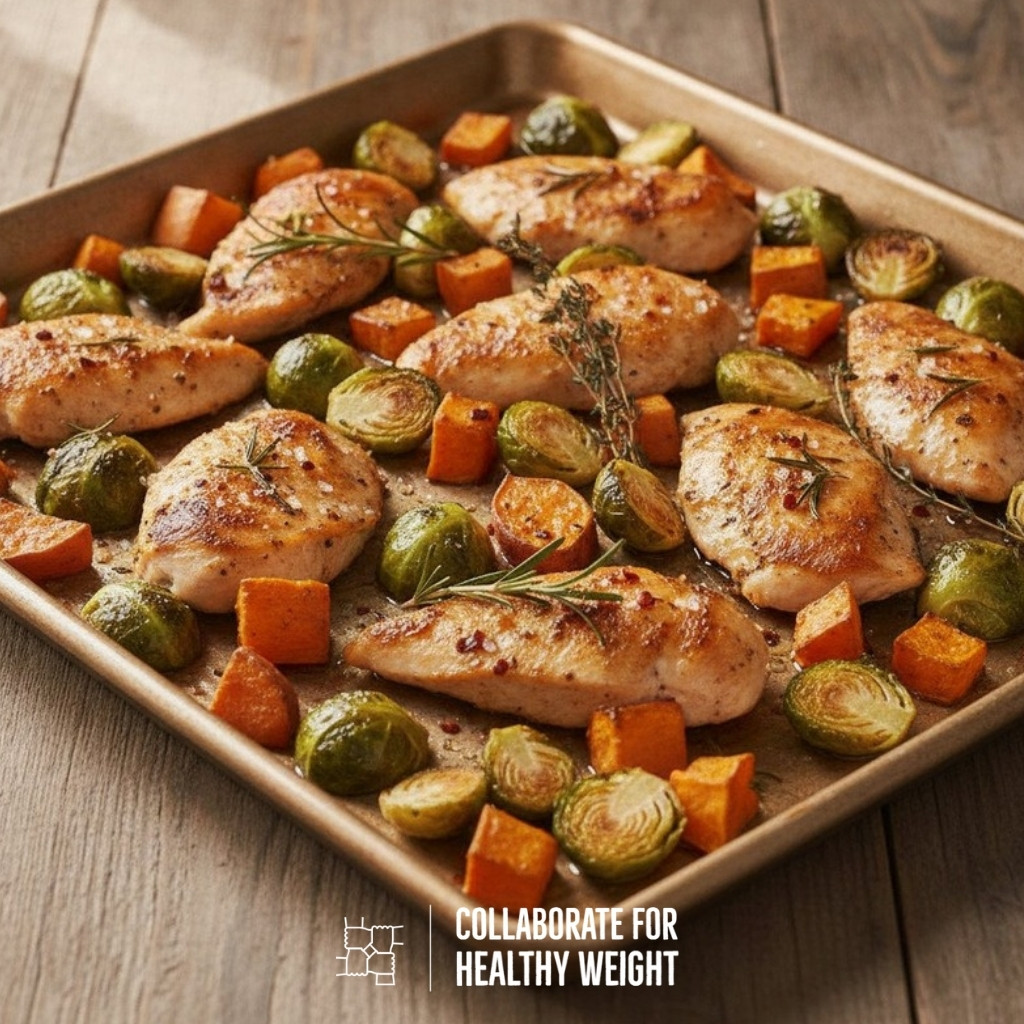
- Dinner: Sheet-pan chicken with Brussels sprouts and sweet potato. Roast 2 1/2 oz chicken breast (70 g cooked weight) to 165°F with 1 1/2 cups Brussels sprouts (150 g) and 1 large cubed sweet potato (250 g) in 1 tablespoon olive oil (12 g).
- Snack: 1/3 cup plain nonfat Greek yogurt (100 g) with 6 medium strawberries (100 g) and 20 almonds (25 g), plus 1 small banana (100 g) and 3/4 cup 1% pasteurized milk (200 g).
| Nutrient | Amount |
|---|---|
| Calories | 2,178 |
| Protein | 122 g |
| Fiber | 57 g |
| Folate | 781 mcg DFE |
| Iron | 19 mg |
| Calcium | 1,151 mg |
| Choline | 725 mg |
Day 6: Yogurt Oat Bowl, Tuna Quinoa Bowl, and Turkey Burger with Sweet Potato Wedges
- Breakfast: Yogurt oat bowl. Mix 1/3 cup plain nonfat Greek yogurt (100 g) with 2/3 cup rolled oats (60 g) and 1 tablespoon chia seeds (12 g), and let it soak overnight in the fridge. Top with 2/3 cup blueberries (100 g), 16 almonds (20 g), 5 walnut halves (15 g), and 1 kiwi (80 g). Serve with 1 hard-boiled egg (50 g).
- Lunch: Tuna quinoa bowl. Flake one 4 oz serving of canned light tuna in water (113 g, drained) over 3/4 cup cooked quinoa (150 g), 3/4 cup chickpeas (120 g), 1 1/2 cups chopped romaine (60 g), 1/2 sliced cucumber (80 g), and 1/2 cup cooked green peas (80 g). Dress with 2 teaspoons olive oil (10 g) and 1 tablespoon lemon juice (15 g).
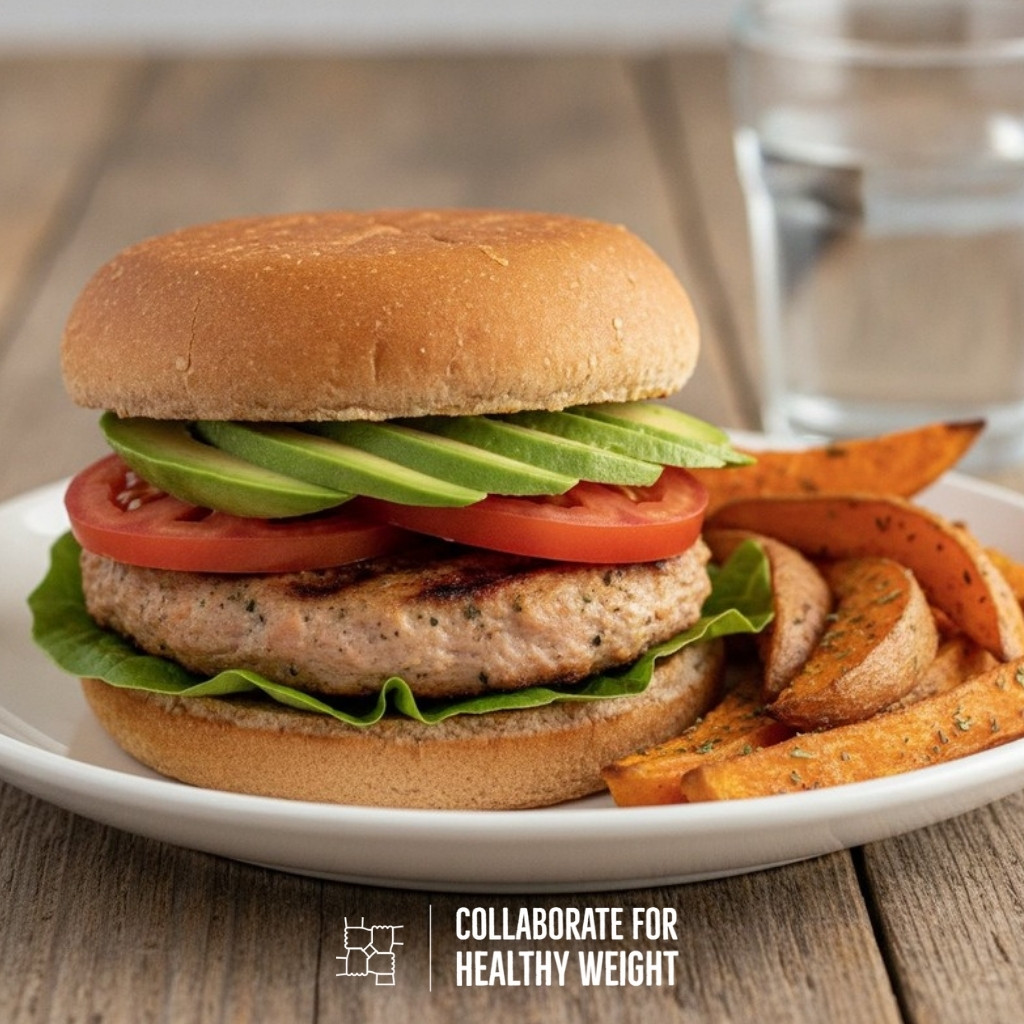
- Dinner: Turkey burger with sweet potato wedges. Cook a patty from 2 1/2 oz lean ground turkey breast (70 g cooked weight) to 165°F and serve it on 2 slices whole-wheat bread (70 g) with 2 tomato slices (60 g), 1 lettuce leaf (40 g), and 1/3 avocado (50 g). Roast 1 large sweet potato (250 g) cut into wedges in 2 teaspoons olive oil (10 g).
- Snack: 1 small pear (120 g) with 20 almonds (25 g), and 2/3 cup pasteurized orange juice (150 g).
| Nutrient | Amount |
|---|---|
| Calories | 2,447 |
| Protein | 129 g |
| Fiber | 62 g |
| Folate | 726 mcg DFE |
| Iron | 22 mg |
| Calcium | 837 mg |
| Choline | 431 mg |
Day 7: Avocado Egg Toast, Chicken Lentil Soup, and Chicken with Brown Rice and Mushrooms
- Breakfast: Avocado egg toast. Cook 2 eggs (100 g) until the whites and yolks are firm and serve on 2 slices whole-wheat toast (70 g) spread with 1/3 avocado (60 g). Add 1/3 cup pasteurized low-fat cottage cheese (80 g), 6 medium strawberries (100 g), and 1 small banana (100 g).
- Lunch: Chicken lentil soup. Simmer 3/4 cup cooked lentils (150 g) with 1 1/2 oz diced cooked chicken breast (40 g), 1 cup chopped kale (60 g), 1/2 cup chopped tomato (100 g), 1/4 cup chopped onion (40 g), 1 small carrot (50 g), and 2 teaspoons olive oil (10 g) in water. Serve with 2 slices whole-wheat bread (70 g).
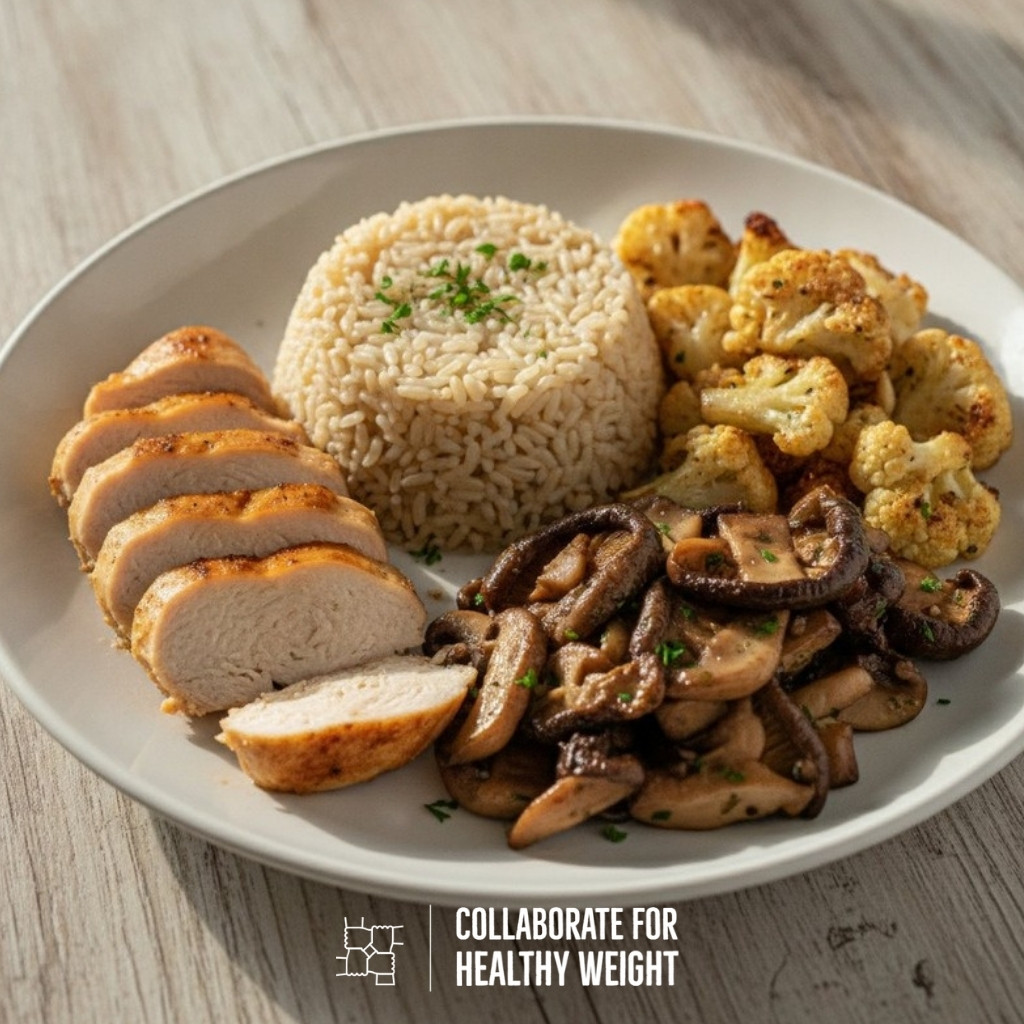
- Dinner: Chicken with brown rice, cauliflower, and mushrooms. Serve 2 1/2 oz cooked chicken breast (70 g) with 1 1/4 cups cooked brown rice (200 g), 1 1/3 cups roasted cauliflower (150 g), and 1/2 cup sauteed mushrooms (60 g), using 1 tablespoon olive oil (12 g).
- Snack: Blend 1 medium banana (120 g), 2 tablespoons peanut butter (30 g), 1/3 cup rolled oats (30 g), and 3/4 cup 1% pasteurized milk (200 g) into a smoothie, and have 1 oz part-skim mozzarella (28 g) on the side.
| Nutrient | Amount |
|---|---|
| Calories | 2,267 |
| Protein | 128 g |
| Fiber | 50 g |
| Folate | 714 mcg DFE |
| Iron | 18 mg |
| Calcium | 1,165 mg |
| Choline | 698 mg |
Weekly Nutrition Summary
| Day | Calories | Protein | Fiber | Folate (mcg DFE) | Iron (mg) | Calcium (mg) | Choline (mg) |
|---|---|---|---|---|---|---|---|
| Day 1 | 2,086 | 118 g | 49 g | 674 | 17 | 1,084 | 596 |
| Day 2 | 2,163 | 113 g | 56 g | 1069 | 21 | 993 | 710 |
| Day 3 | 2,236 | 118 g | 57 g | 704 | 21 | 1,027 | 417 |
| Day 4 | 2,183 | 117 g | 49 g | 620 | 16 | 786 | 440 |
| Day 5 | 2,178 | 122 g | 57 g | 781 | 19 | 1,151 | 725 |
| Day 6 | 2,447 | 129 g | 62 g | 726 | 22 | 837 | 431 |
| Day 7 | 2,267 | 128 g | 50 g | 714 | 18 | 1,165 | 698 |
| Average | 2,223 | 121 g | 54 g | 755 | 19 | 1,006 | 574 |
Compared with the NIH targets, the weekly averages for folate (755 vs 600 mcg DFE), calcium (1,006 vs 1,000 mg), and choline (574 vs 450 mg) are covered from food, while iron (19 vs 27 mg) is not, which is why the supplement conversation matters. A few days dip below the choline target (417 milligrams on the lowest day) and the calcium target (786 milligrams), so treat the targets as weekly averages. Protein ranges from 113 to 129 grams a day, which is generous, so smaller or less active women can trim the meat, fish, yogurt, and cottage cheese portions by a quarter to a third. Calories sit near a second trimester level, and in the first trimester you may want to scale portions down while keeping the same foods.
Why This Meal Plan Works for Pregnancy
Folate From Beans, Greens, and Eggs
Lentils, chickpeas, black beans, kidney beans, asparagus, spinach, Brussels sprouts, avocado, oranges, and eggs all carry folate, and the NIH lists asparagus, Brussels sprouts, spinach, oranges, and kidney beans among the foods that naturally contain it. Folic acid is added to enriched bread, pasta, and rice in the United States, so label reading matters. For more ideas, see the guide to foods high in vitamin B12, which pairs with folate in the diet.
Iron, With Vitamin C Alongside
Lean beef, chicken, turkey, shrimp, lentils, beans, and spinach share the load, and most iron-rich meals are paired with tomatoes, peppers, broccoli, oranges, or strawberries. For a longer list, see foods high in iron.
Choline and Calcium for the Baby’s Growth
Eggs, meat, poultry, fish, and dairy do most of the work for choline, and yogurt, milk, cottage cheese, mozzarella, kale, broccoli, almonds, and canned fish carry the calcium. See foods high in choline and foods high in calcium for more sources, and foods high in omega-3 and foods high in vitamin D for two nutrients to discuss with your provider.
Weight Gain and Appetite
Mayo Clinic lists recommended total gain for a single pregnancy as 25 to 35 pounds for a healthy pre-pregnancy weight, 28 to 40 for underweight, 15 to 25 for overweight, and 11 to 20 for obesity, and says your provider should set your own target. If nausea makes the full menus hard, see foods that help with nausea and choose smaller, more frequent meals from the same list.
Food Safety Notes for the Week
Mayo Clinic advises avoiding raw or undercooked seafood, meat, poultry, and eggs, refrigerated patés and meat spreads, hot dogs and lunch meats unless steaming hot, unpasteurized dairy and juice, soft cheeses such as brie, feta, and blue cheese unless labeled pasteurized, and raw sprouts, and washing all raw fruits and vegetables well. This plan follows those rules: eggs are cooked firm, meat and fish are cooked through, the turkey is home-roasted or reheated until steaming, dairy and juice are pasteurized, and there are no sprouts, soft cheeses, or raw fish. For a fuller list, see foods to avoid during pregnancy. After the baby arrives, the same pattern adapts well with the guides to foods that support postpartum recovery and foods to avoid while breastfeeding.
7-Day Pregnancy Meal Plan Grocery List
Quantities cover one person for the week, with a small cushion for rounding. Meat and fish amounts are converted from the cooked weights in the menus.
Produce
- Bananas: 6 medium
- Apples: 2 medium
- Pears: 2 to 3 small to medium
- Oranges: 4 small
- Kiwi: 1
- Blueberries: 1 pint (about 1 1/3 cups needed)
- Raspberries: 1 small container (2/3 cup needed)
- Strawberries: 1 small container (12 berries needed)
- Avocados: 3 medium
- Tomatoes: 7 medium
- Cucumbers: 2 medium
- Romaine: 1 small head or bag
- Baby spinach: 1 bag (8 to 10 oz)
- Kale: 1 small bunch
- Broccoli: 1 large crown
- Asparagus: 1 small bunch (10 spears needed)
- Brussels sprouts: 1 small container (8 oz)
- Cauliflower: 1 small head
- Red bell peppers: 2 medium
- Carrots: 4 medium
- Mushrooms: 1 small container (4 oz)
- Sweet potatoes: 3 large
- Yellow onions: 2 medium
- Garlic: 1 head
- Lemons: 2
Meat, Fish, and Eggs
- Boneless, skinless chicken breast: 1 lb (about 12 oz cooked needed)
- Lean ground beef (93%): 4 oz raw
- Lean ground turkey breast: 4 oz raw
- Turkey breast for home roasting or reheating: 2 oz
- Top sirloin steak: 1 small steak (4 oz raw)
- Salmon fillet: 1 (about 5 oz raw, 4 oz cooked)
- Peeled shrimp: 5 oz
- Canned light tuna in water: 1 can (5 oz)
- Eggs: 1 dozen (10 needed)
Dairy and Refrigerated (pasteurized)
- Plain nonfat Greek yogurt: 1 large tub (about 1 1/2 cups needed)
- Low-fat cottage cheese: 1 small tub (8 oz)
- 1% milk: 1 half-gallon (about 5 1/2 cups needed)
- Part-skim mozzarella: 1 small block (1 oz needed)
- Hummus: 1 small tub (8 oz)
- Pasteurized orange juice: 1 small carton (2/3 cup needed)
Canned and Dry Goods
- Canned chickpeas: 2 cans (15 oz each)
- Canned black beans: 1 can (15 oz)
- Canned white beans: 1 can (15 oz)
- Canned kidney beans: 1 can (15 oz)
- Dry lentils: 1 small bag (3/4 cup dry needed)
- Frozen green peas: 1 small bag (1/2 cup needed)
- Rolled oats: 1 canister (about 3 cups needed)
- Brown rice: 1 small bag (about 1 1/2 cups dry needed)
- Quinoa: 1 small bag (2/3 cup dry needed)
- Whole-wheat pasta: 1 box (about 4 oz dry needed)
- Whole-wheat bread: 1 loaf (18 slices needed)
Nuts, Seeds, and Pantry
- Almonds: 1 small bag (about 1 cup)
- Walnuts: 1 small bag (about 2/3 cup)
- Chia seeds: 1 small bag (2 tbsp needed)
- Ground flaxseed: 1 small bag (1 1/2 tbsp needed)
- Peanut butter: 1 jar (3 1/2 tbsp needed)
- Extra-virgin olive oil: 1 bottle (about 9 tbsp needed)
- Black pepper, chili powder, cumin, and salt-free seasoning
Meal Prep Tips for the Week
- Cook the grains once. Make the brown rice and quinoa on Sunday. They appear in most lunches and dinners.
- Cook the chicken in one batch. About 12 ounces of cooked chicken breast are used across Days 1, 3, 4, 5, and 7. Roast it together, cool it quickly, refrigerate it within two hours, and reheat leftovers until steaming.
- Batch the beans and lentils. Cook the lentils in one pot. Canned beans only need rinsing, which also lowers the sodium.
- Prep the breakfasts. Hard-boil the eggs for Days 1 and 6 together, and assemble the Day 6 yogurt oat bowl the night before.
- Wash produce well. Rinse all fruits and vegetables under running water before cutting, including melons and anything you eat with the skin on.
- Portion the snacks. Bag nuts and hummus in the amounts listed so the snack totals stay accurate.
Frequently Asked Questions About the 7-Day Pregnancy Meal Plan
Can I follow this meal plan in the first trimester?
Yes, with smaller portions. Mayo Clinic says no extra calories are needed in the first trimester, and this plan averages about 2,223, which is closer to second and third trimester needs. Keep the same foods and trim grains, oils, and nuts, and if nausea is an issue, split the meals into smaller ones.
Do I still need a prenatal vitamin?
Ask your provider, but the NIH says folic acid before and early in pregnancy helps prevent neural tube defects, and the plan averages only 19 milligrams of iron against a target of 27. This plan covers folate from food and does not replace the supplement your provider recommends.
Is the tuna in this plan safe?
Canned light tuna is on the FDA’s Best Choices list, where 2 to 3 servings a week of about 4 ounces are suggested. Albacore (white) tuna and yellowfin are on the Good Choices list, limited to one serving a week, and bigeye is on the avoid list, so check the can.
What can I swap if I do not eat fish?
Replace the salmon, shrimp, and tuna with chicken, turkey, eggs, or calcium-set tofu. You will lose the fish servings, so ask your provider whether an omega-3 or DHA supplement makes sense.
How can I lower the sodium?
Rinse canned beans and tuna, choose no-salt-added tomatoes and broth, and season with garlic, lemon, vinegar, and herbs. If your provider has asked you to watch sodium or blood pressure, ask for a target and adjust the canned items.
Should I check with my provider first?
Yes. Talk to your obstetric provider or a registered dietitian before changing how you eat, especially if you have gestational diabetes, anemia, high blood pressure, food allergies, or a multiple pregnancy, since targets and portions change in those cases.
The Bottom Line
This 7-day pregnancy meal plan averages 2,223 calories, 755 micrograms of folate, 1,006 milligrams of calcium, and 574 milligrams of choline a day from a short grocery list of eggs, poultry, low-mercury fish, beans, lentils, dairy, whole grains, and vegetables. It meets the folate, calcium, and choline targets from food and falls short on iron, so the supplement conversation is worth having. Shop from the list, cook the grains and chicken once, keep everything cooked and pasteurized, and talk to your provider about your own calorie, iron, and vitamin needs.
Nutrition values were calculated from USDA FoodData Central (SR Legacy) using the weights listed in each meal. Brands, ripeness, and cooking methods change the actual amounts, and sodium is not included in the totals.
This article is for educational purposes and is not a substitute for advice from your obstetric provider or a registered dietitian. Talk to a healthcare professional before changing how you eat or starting any supplement, especially if you have a medical condition or a high-risk pregnancy.