Gallstones form when bile contains too much cholesterol or bilirubin, and eating habits that keep the gallbladder from working too hard can make symptoms easier to manage. This 7-day gallbladder diet meal plan uses five meals a day built around lean protein, fish, vegetables, fruit, beans, and whole grains, with a grocery list for one shopping trip and daily totals for calories, fat, saturated fat, and fiber. Menus land between 1,759 and 1,881 calories, with 36 to 47 grams of fat and 34 to 48 grams of fiber a day.
The NIDDK names being overweight and losing weight very quickly as gallstone risk factors, and says to choose healthy fats such as olive oil and fish oil while limiting refined carbohydrates, sugar, and fried foods. Harvard Health adds that a low-fat diet will not dissolve stones you already have, but it may reduce gallbladder contractions and the chance of painful attacks. The Cleveland Clinic recommends a diet low in fat, especially saturated fat, and high in fiber. This is a general template, so a doctor or registered dietitian should tailor it to your own symptoms and health history.
Your 7-Day Gallbladder Diet Meal Plan: Low-Fat, High-Fiber Meals for Gallstones
Jump to: Key Rules | Daily Menus | Day 1 | Day 2 | Day 3 | Day 4 | Day 5 | Day 6 | Day 7 | Weekly Summary | After Gallbladder Removal | Foods to Limit | Grocery List | Meal Prep | FAQ
The plan averages about 1,827 calories, 127 grams of protein, 41 grams of fat, 8 grams of saturated fat, 43 grams of fiber, and 249 grams of carbohydrate a day. Fat supplies roughly 20 percent of the calories. None of the sources gives a daily gram target for fat or fiber, so these totals are the results of the menus, not clinical targets. Figures were calculated from USDA FoodData Central (SR Legacy) values using the weights listed in each meal. Cooked weights are used for meat, fish, grains, beans, and vegetables. USDA lists no saturated fat value for raw pears, so pears count as zero. Sodium is not counted, and nutrient values vary by brand.
Key Rules for a Gallbladder-Friendly Diet
- Keep fat low and mostly unsaturated. The Cleveland Clinic says to minimize saturated fat, and the NIDDK points to olive oil and fish oil as healthy fats. The menus use 1 to 2 teaspoons of olive oil per cooked meal, a small handful of almonds, a little hummus, and fish, and skip butter, cream, and fried food.
- Choose lean protein. Skinless chicken and turkey, white fish, egg whites, beans, lentils, and fat-free or low-fat dairy fill the protein slots. Salmon appears once for its omega-3 fats.
- Build every meal around fiber. The NIDDK eating and nutrition guidance lists fruits, vegetables, beans, peas, and whole grains such as brown rice, oats, and whole wheat bread as the foods to eat more of.
- Limit fried foods, refined carbs, and sugar. Pastries, white bread, sugary drinks, and fast food are the foods both the NIDDK and Cleveland Clinic say to cut back on.
- Do not crash diet. Harvard Health says to lose weight slowly and avoid crash diets, and the NIDDK warns that very low-calorie diets can raise gallstone risk. This plan sits near maintenance calories on purpose.
- Eat five smaller meals. The plan uses breakfast, a mid-morning snack, lunch, a mid-afternoon snack, and dinner. Smaller, more frequent meals are the Mayo Clinic advice after gallbladder removal, and they keep any single meal from being heavy in fat.
- Cook with little fat. Bake, roast, steam, poach, or sear in a nonstick pan with a measured teaspoon of olive oil instead of pouring it.
- Raise fiber gradually. This plan is high in fiber. If you usually eat much less, halve the beans and lentils for the first week and build up, because too much fiber too fast can cause gas and cramping.
7-Day Gallbladder Diet Meal Plan: Daily Menus
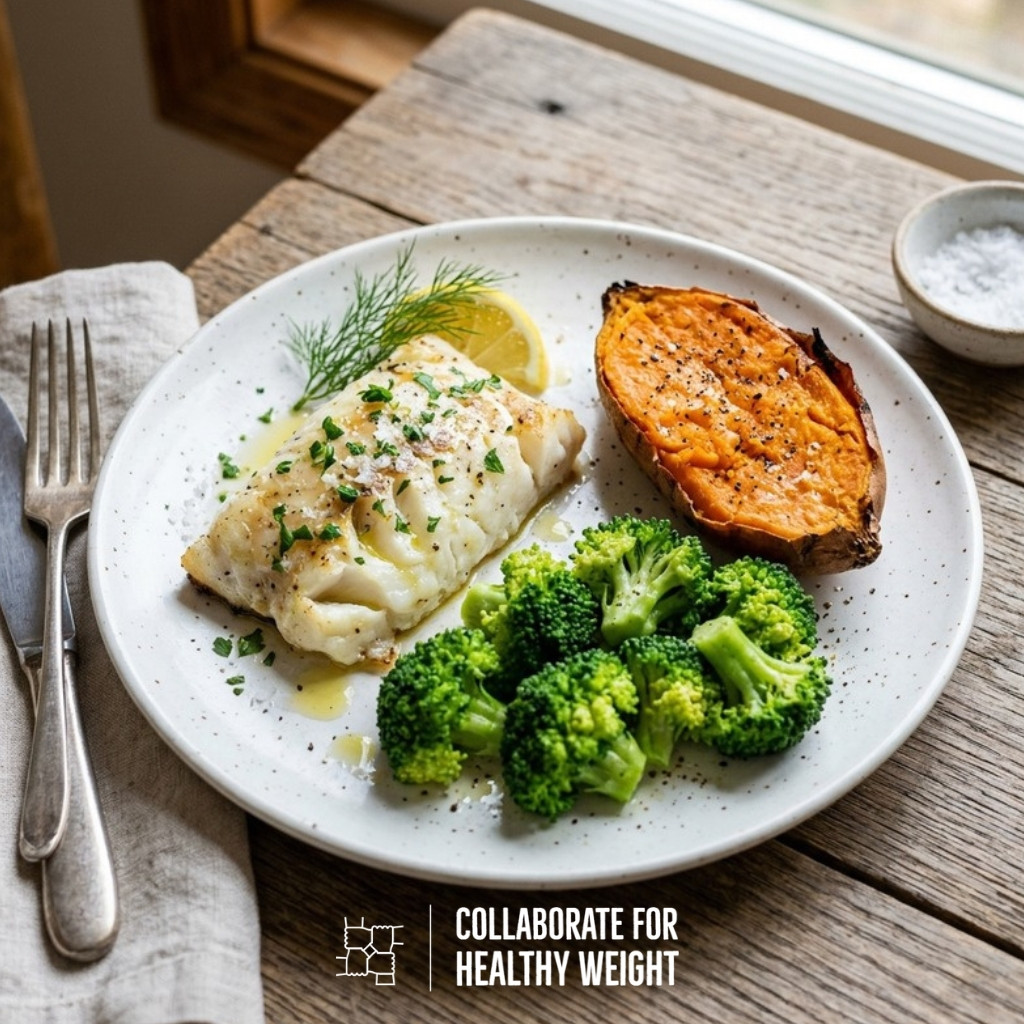
Day 1: Oatmeal, Chicken Black Bean Bowl, and Baked Cod with Sweet Potato
- Breakfast: Blueberry almond oatmeal. 1 1/2 cups rolled oats, cooked with water (351 g), 3/4 cup blueberries (111 g), 1 cup nonfat milk (245 g), 1/2 oz almonds (about 12) (14 g).
- Mid-morning: Apple with cottage cheese. 1 medium apple (182 g), 3/4 cup 1% cottage cheese (170 g).
- Lunch: Chicken and black bean bowl. Roasted skinless chicken breast (4 oz) (113 g), 1/2 cup black beans (86 g), 1 cup cooked brown rice (202 g), 1 cup shredded romaine (47 g), 1/2 cup chopped tomato (90 g), 1 tsp olive oil (4.5 g).
- Mid-afternoon: Carrot sticks with hummus. 1 cup carrot sticks (122 g), 3 tbsp hummus (45 g).
- Dinner: Baked cod with sweet potato and broccoli. Baked cod (5 oz) (142 g), 3/4 cup baked sweet potato (150 g), 1 cup steamed broccoli (156 g), 2 tsp olive oil (9 g).
| Nutrient | Amount |
|---|---|
| Calories | 1,881 |
| Protein | 136 g |
| Fat | 46 g |
| Saturated Fat | 8 g |
| Fiber | 44 g |
| Carbohydrate | 241 g |
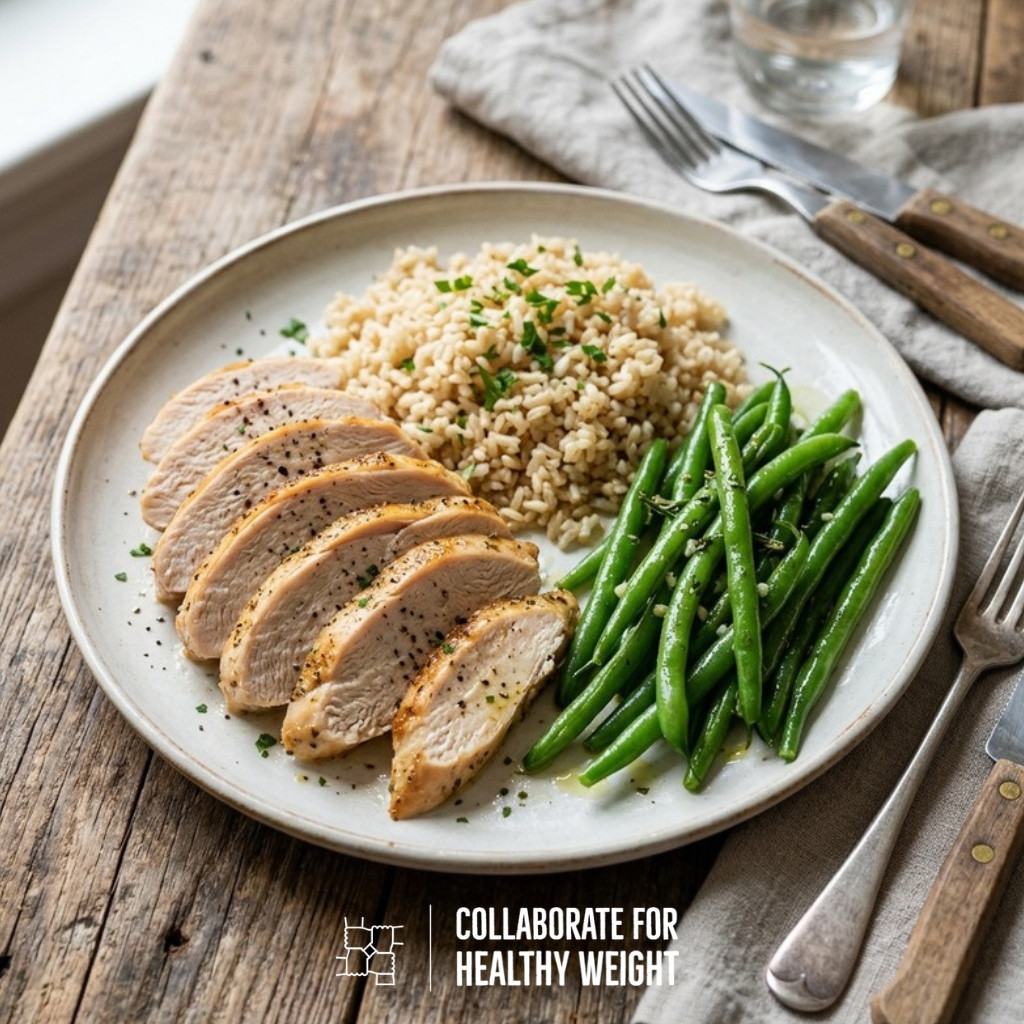
Day 2: Egg White Scramble, Lentil Bowl, and Roasted Turkey with Brown Rice
- Breakfast: Egg white veggie scramble with toast. 4 egg whites (132 g), 1 cup fresh spinach (30 g), 1 cup sliced mushrooms (70 g), 3 slices whole-wheat toast (96 g), 2 tsp olive oil (9 g), 1 medium orange (131 g).
- Mid-morning: Greek yogurt with raspberries. 1 container (170 g) plain nonfat Greek yogurt (170 g), 1/2 cup raspberries (62 g), 1 tsp honey (7 g).
- Lunch: Lentil and vegetable bowl with pita. 3/4 cup cooked lentils (148 g), 1 cup cooked zucchini (180 g), 1/2 cup chopped tomato (90 g), 2 tsp olive oil (9 g), 1 large whole-wheat pita (64 g).
- Mid-afternoon: Pear with almonds. 1 medium pear (177 g), 1/2 oz almonds (about 12) (14 g).
- Dinner: Roasted turkey with brown rice and green beans. Roasted skinless turkey breast (5 oz) (142 g), 1 cup cooked brown rice (202 g), 1 cup green beans (125 g), 2 tsp olive oil (9 g).
| Nutrient | Amount |
|---|---|
| Calories | 1,863 |
| Protein | 125 g |
| Fat | 47 g |
| Saturated Fat | 7 g |
| Fiber | 47 g |
| Carbohydrate | 245 g |
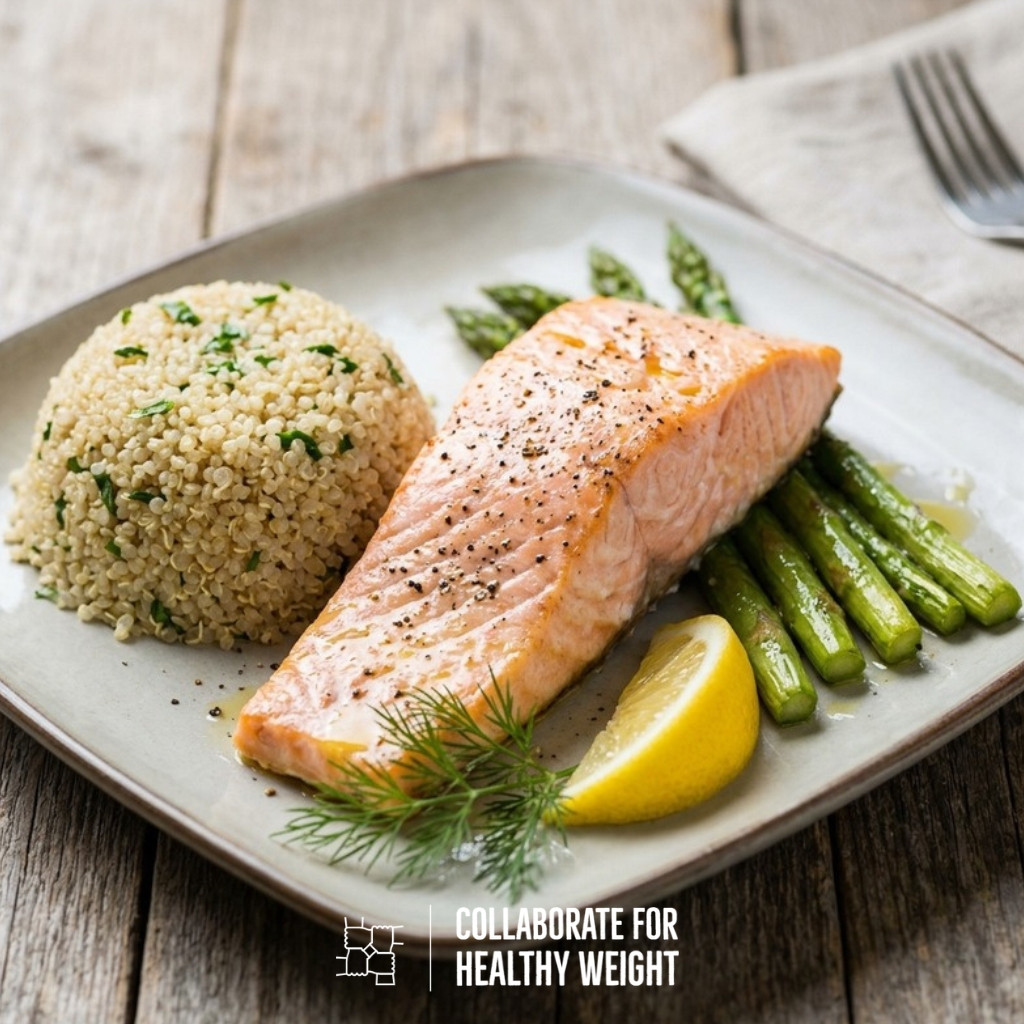
Day 3: Yogurt Parfait, Tuna Pita, and Salmon with Quinoa and Asparagus
- Breakfast: Strawberry yogurt oat parfait. 1 container (170 g) plain nonfat Greek yogurt (170 g), 1 cup sliced strawberries (166 g), 1/2 cup dry rolled oats (40 g), 1 tbsp ground flaxseed (7 g), 1 tsp honey (7 g).
- Mid-morning: Banana toast with honey. 1 small banana (101 g), 2 slices whole-wheat toast (64 g), 1 tsp honey (7 g).
- Lunch: Tuna salad pita with grapes. Light tuna in water, drained (3.5 oz) (100 g), 1/4 cup plain nonfat Greek yogurt (60 g), 1/2 cup diced celery (50 g), 1 large whole-wheat pita (64 g), 1 cup shredded romaine (47 g), 1/2 cup sliced cucumber (52 g), 1 cup grapes (151 g).
- Mid-afternoon: Cottage cheese with pineapple. 3/4 cup 1% cottage cheese (170 g), 1 cup pineapple chunks (165 g).
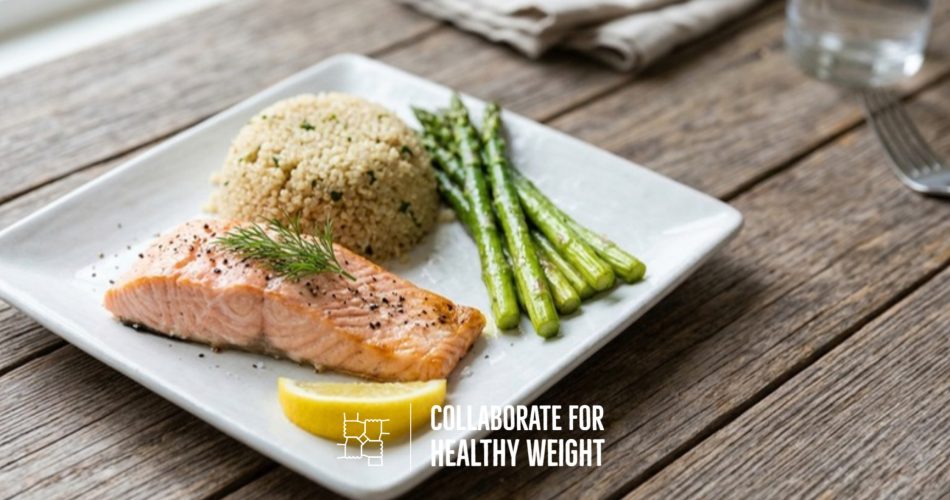
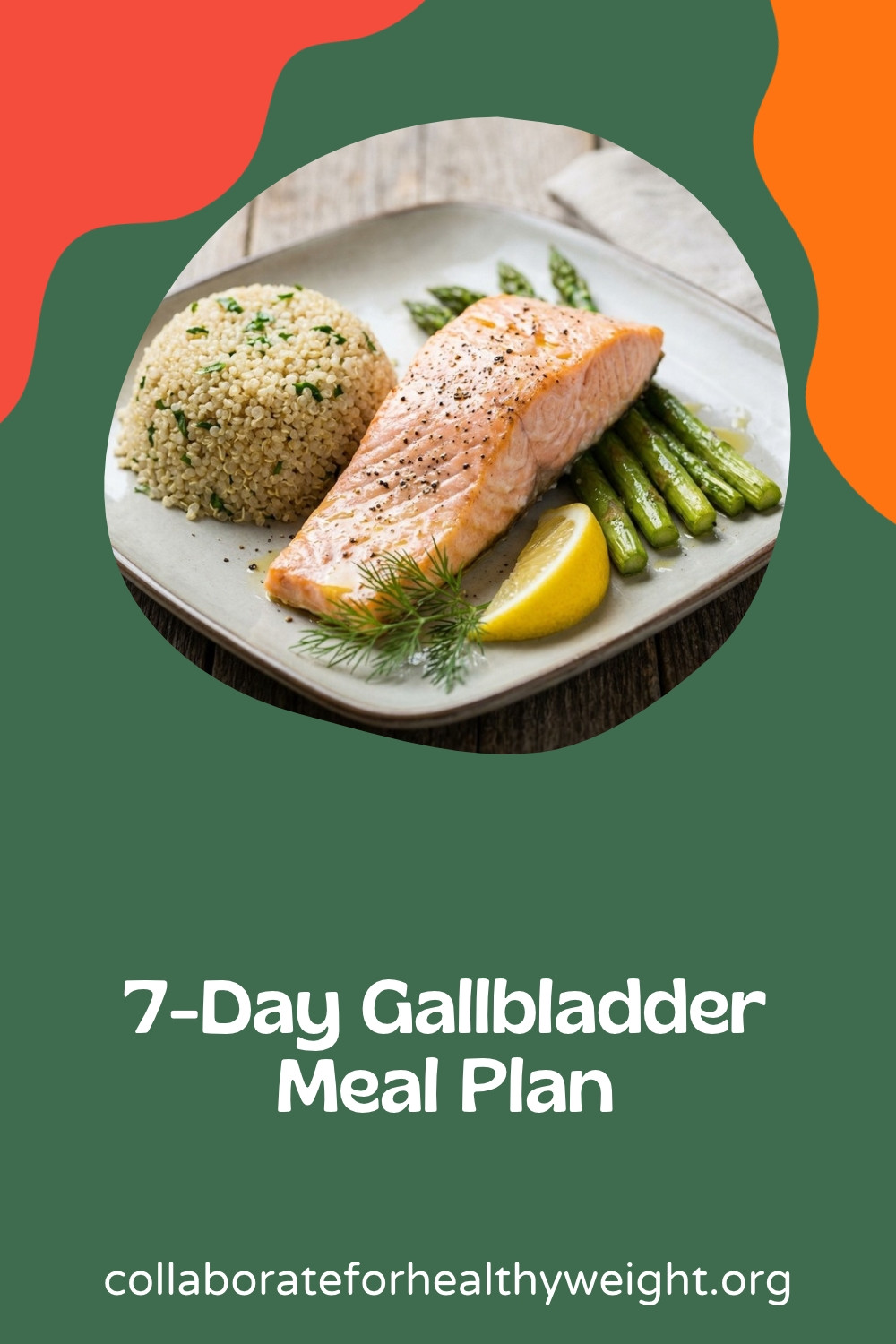
- Dinner: Baked salmon with quinoa and asparagus. Baked wild salmon (4 oz) (113 g), 1 cup cooked quinoa (185 g), 1 cup cooked asparagus (180 g), 2 tsp olive oil (9 g).
| Nutrient | Amount |
|---|---|
| Calories | 1,834 |
| Protein | 137 g |
| Fat | 36 g |
| Saturated Fat | 6 g |
| Fiber | 34 g |
| Carbohydrate | 253 g |
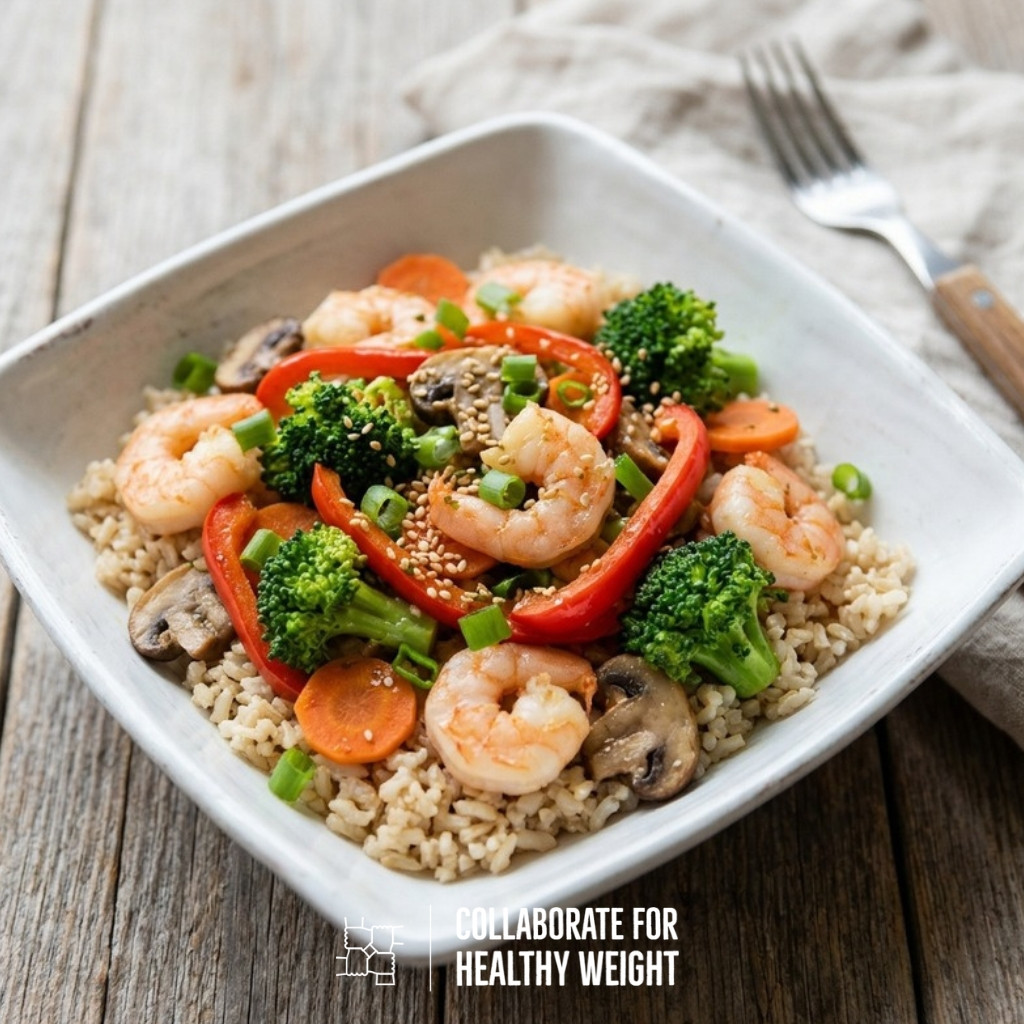
Day 4: Cottage Cheese Toast, Chickpea Salad, and Shrimp and Vegetable Stir-Fry
- Breakfast: Cottage cheese toast with peach. 3 slices whole-wheat toast (96 g), 3/4 cup 1% cottage cheese (170 g), 1 large peach (175 g).
- Mid-morning: Grapes with mozzarella. 1 cup grapes (151 g), 1 oz part-skim mozzarella (28 g).
- Lunch: Chickpea salad with pita. 3/4 cup canned chickpeas, drained and rinsed (114 g), 2 cups shredded romaine (94 g), 1/2 cup chopped tomato (90 g), 1/2 cup sliced cucumber (52 g), 1/2 cup chopped red bell pepper (75 g), 2 tsp olive oil (9 g), 1 tbsp lemon juice (15 g), 1 large whole-wheat pita (64 g).
- Mid-afternoon: Apple and carrot sticks with yogurt dip. 1 medium apple (182 g), 1 cup carrot sticks (122 g), 1/4 cup plain nonfat Greek yogurt (60 g).
- Dinner: Shrimp and vegetable stir-fry with brown rice. Cooked shrimp (4 oz) (113 g), 1 cup cooked brown rice (202 g), 1/2 cup chopped broccoli (78 g), 1 cup sliced red bell pepper (92 g), 1/2 cup sliced carrots (61 g), 1 cup sliced mushrooms (70 g), 2 tsp olive oil (9 g).
| Nutrient | Amount |
|---|---|
| Calories | 1,810 |
| Protein | 104 g |
| Fat | 39 g |
| Saturated Fat | 9 g |
| Fiber | 44 g |
| Carbohydrate | 278 g |
Day 5: Banana Flax Oatmeal, Turkey Wrap, and Baked Haddock with Potato
- Breakfast: Banana flax oatmeal. 1 1/2 cups rolled oats, cooked with water (351 g), 1 small banana (101 g), 1 tbsp ground flaxseed (7 g), 1 cup nonfat milk (245 g).
- Mid-morning: Pear with almonds. 1 medium pear (177 g), 1/2 oz almonds (about 12) (14 g).
- Lunch: Turkey and spinach wrap with strawberries. Roasted skinless turkey breast (4 oz) (113 g), 2 small whole-wheat tortillas (82 g), 1 cup fresh spinach (30 g), 1 small tomato, sliced (62 g), 1 cup strawberries (152 g).
- Mid-afternoon: Greek yogurt with blueberries. 1 container (170 g) plain nonfat Greek yogurt (170 g), 3/4 cup blueberries (111 g), 1 tsp honey (7 g).
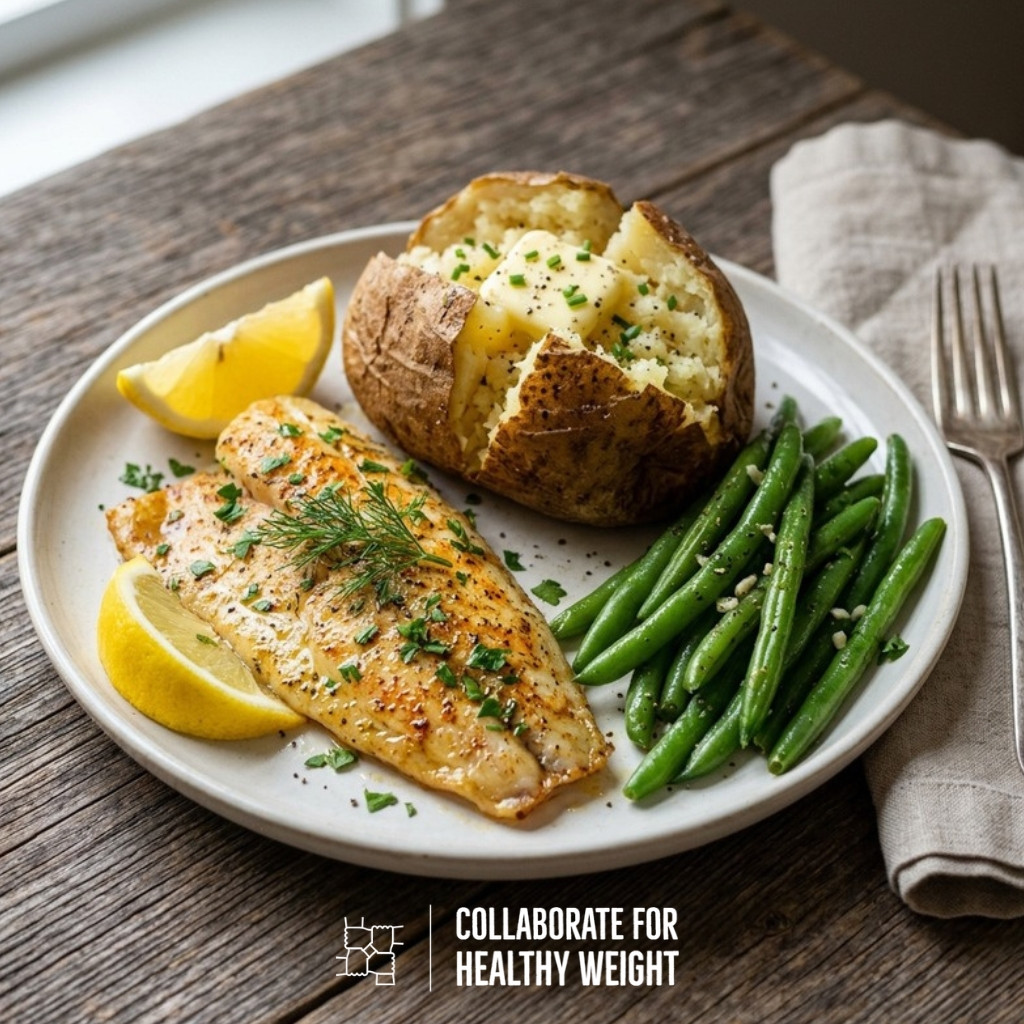
- Dinner: Baked haddock with baked potato and green beans. Baked haddock (5 oz) (142 g), 1 large baked potato with skin (299 g), 1 cup green beans (125 g), 2 tsp olive oil (9 g).
| Nutrient | Amount |
|---|---|
| Calories | 1,853 |
| Protein | 124 g |
| Fat | 39 g |
| Saturated Fat | 9 g |
| Fiber | 43 g |
| Carbohydrate | 263 g |
Day 6: Veggie Omelet, Black Bean and Kale Bowl, and Roasted Chicken with Cauliflower
- Breakfast: Egg white veggie omelet with toast and kiwi. 4 egg whites (132 g), 1 cup fresh spinach (30 g), 1 cup sliced mushrooms (70 g), 1 small tomato, diced (62 g), 1 tsp olive oil (4.5 g), 2 slices whole-wheat toast (64 g), 1 kiwi (69 g).
- Mid-morning: Banana with nonfat milk. 1 small banana (101 g), 1 cup nonfat milk (245 g).
- Lunch: Black bean and kale bowl. 3/4 cup black beans (129 g), 1 cup cooked brown rice (202 g), 1 cup cooked kale (118 g), 1/2 cup chopped tomato (90 g), 1 tsp olive oil (4.5 g).
- Mid-afternoon: Carrot sticks and pita with hummus. 1 cup carrot sticks (122 g), 3 tbsp hummus (45 g), 1 small whole-wheat pita (28 g).
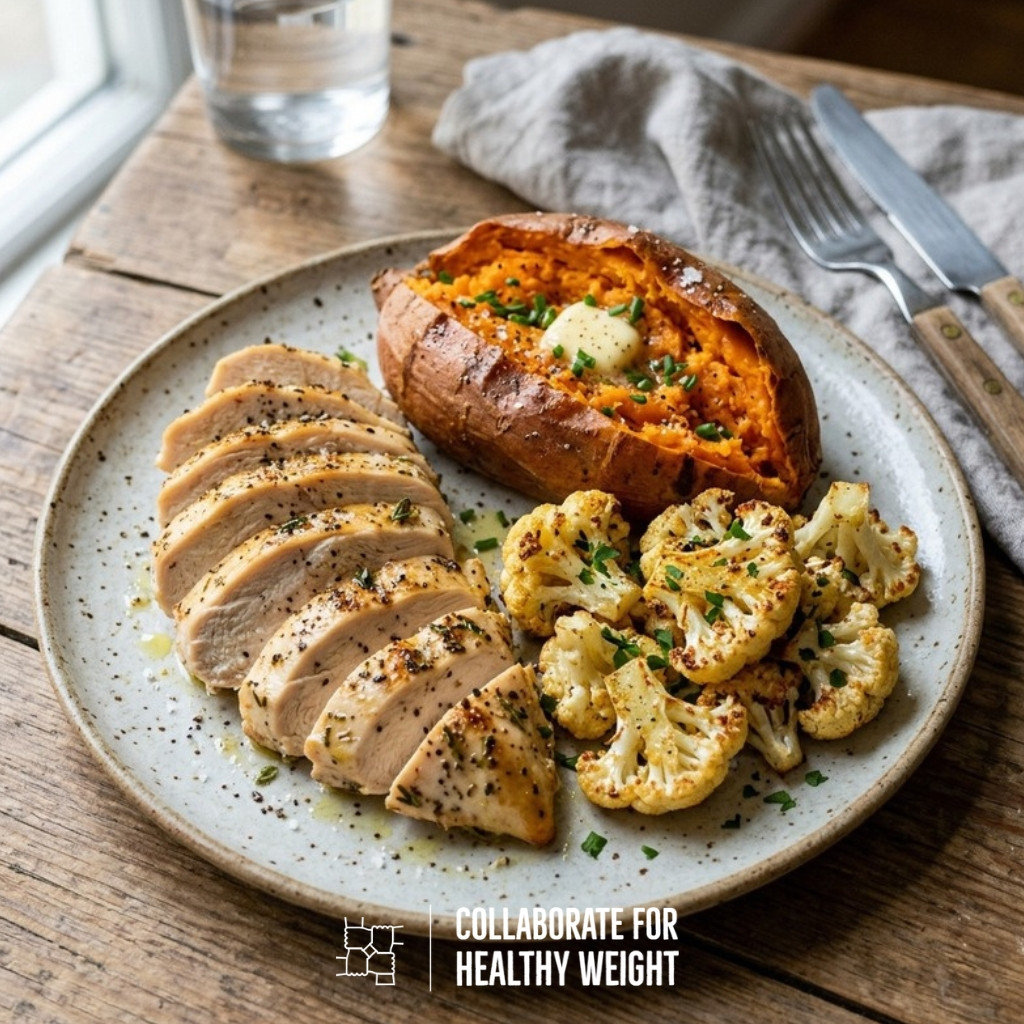
- Dinner: Roasted chicken with sweet potato and cauliflower. Roasted skinless chicken breast (5 oz) (142 g), 1 cup baked sweet potato (200 g), 1 cup cooked cauliflower (124 g), 2 tsp olive oil (9 g).
| Nutrient | Amount |
|---|---|
| Calories | 1,788 |
| Protein | 115 g |
| Fat | 41 g |
| Saturated Fat | 7 g |
| Fiber | 48 g |
| Carbohydrate | 252 g |
Day 7: Almond Yogurt Parfait, Tuna and White Bean Salad, and Halibut with Quinoa
- Breakfast: Raspberry almond yogurt parfait. 1 container (170 g) plain nonfat Greek yogurt (170 g), 3/4 cup raspberries (92 g), 1/2 cup dry rolled oats (40 g), 1/2 oz almonds (about 12) (14 g), 1 tsp honey (7 g).
- Mid-morning: Orange and toast with mozzarella. 1 medium orange (131 g), 1 oz part-skim mozzarella (28 g), 1 slice whole-wheat toast (32 g).
- Lunch: Tuna and white bean salad with pita. Light tuna in water, drained (3.5 oz) (100 g), 1/2 cup canned white beans (131 g), 2 cups shredded romaine (94 g), 1/2 cup sliced cucumber (52 g), 1/2 cup chopped tomato (90 g), 2 tsp olive oil (9 g), 1 tbsp lemon juice (15 g), 1 small whole-wheat pita (28 g).
- Mid-afternoon: Peach with cottage cheese. 1 large peach (175 g), 3/4 cup 1% cottage cheese (170 g).
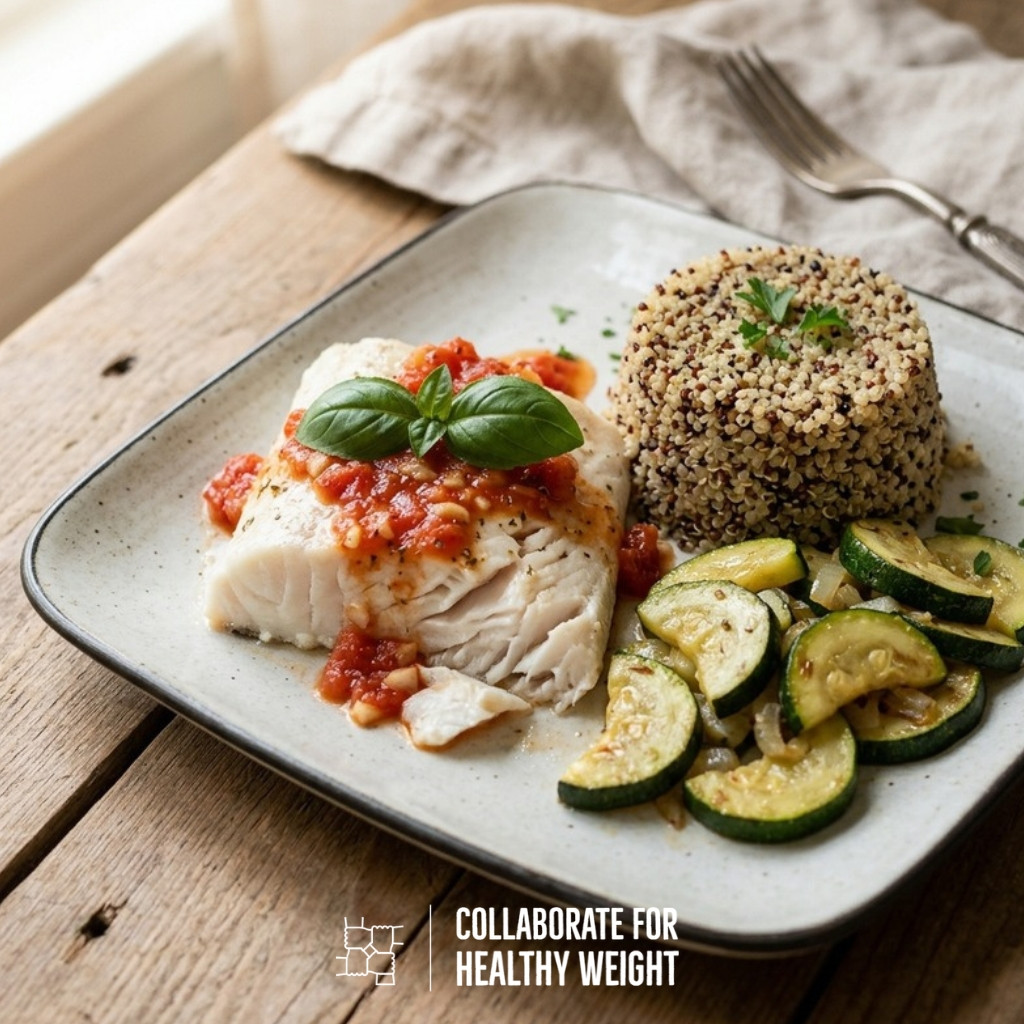
- Dinner: Baked halibut with quinoa, zucchini, and tomato sauce. Baked halibut (5 oz) (142 g), 1 cup cooked quinoa (185 g), 1 cup cooked zucchini (180 g), 3/4 cup canned tomato sauce (183 g), 1 tsp olive oil (4.5 g).
| Nutrient | Amount |
|---|---|
| Calories | 1,759 |
| Protein | 146 g |
| Fat | 42 g |
| Saturated Fat | 9 g |
| Fiber | 41 g |
| Carbohydrate | 211 g |
Weekly Nutrition Summary
| Day | Calories | Protein | Fat | Saturated Fat | Fiber | Carbs |
|---|---|---|---|---|---|---|
| Day 1 | 1,881 | 136 g | 46 g | 8 g | 44 g | 241 g |
| Day 2 | 1,863 | 125 g | 47 g | 7 g | 47 g | 245 g |
| Day 3 | 1,834 | 137 g | 36 g | 6 g | 34 g | 253 g |
| Day 4 | 1,810 | 104 g | 39 g | 9 g | 44 g | 278 g |
| Day 5 | 1,853 | 124 g | 39 g | 9 g | 43 g | 263 g |
| Day 6 | 1,788 | 115 g | 41 g | 7 g | 48 g | 252 g |
| Day 7 | 1,759 | 146 g | 42 g | 9 g | 41 g | 211 g |
| Average | 1,827 | 127 g | 41 g | 8 g | 43 g | 249 g |
Fat stays between 36 and 47 grams every day, and saturated fat stays under 10 grams. Day 3 is the lowest in fat and fiber, which makes it a useful template if you want a lighter day.
Why This Meal Plan Works for Gallstones
Low Fat Without Giving Up Flavor
Harvard Health explains that a low-fat diet may reduce gallbladder contractions, which may keep stones from moving into the bile duct and causing pain attacks. The Cleveland Clinic adds that less saturated fat means the body has to release less bile to digest a meal. The plan gets flavor from lemon juice, tomato, herbs, and roasted vegetables instead of butter, cream, or cheese sauces.
A Steady Weight Instead of a Fast Drop
Both the NIDDK and Harvard Health tie rapid weight loss to gallstone risk. At about 1,830 calories a day, this plan is built to hold weight steady for most adults, not to produce a quick loss. If you need to lose weight, a doctor or dietitian can help you pick a slow, safe pace.
Fiber From Real Food
Every meal includes fruit, vegetables, beans, or whole grains, which follows the NIDDK list of fiber-rich foods. Oats, beans, and fruit also supply soluble fiber, the type the Mayo Clinic suggests adding slowly after gallbladder removal.
A Note on Gallbladder Attacks
The NIDDK describes a gallbladder attack as pain in the upper right abdomen caused by a blocked bile duct, and says sudden pain from a blocked duct needs medical attention right away. Diet can help manage symptoms, but it cannot dissolve stones or treat an attack. Surgery to remove the gallbladder is the usual treatment when stones keep causing problems.
Using This Plan After Gallbladder Removal
The Mayo Clinic says there is no single gallbladder removal diet, but it offers tips for the diarrhea that some people have after surgery. For at least the first week, it advises avoiding high-fat, fried, and greasy foods and fatty sauces and gravies, and choosing low-fat foods with no more than 3 grams of fat per serving. It also suggests adding soluble fiber from oats and barley slowly over several weeks, and eating smaller, more frequent meals with lean protein, vegetables, fruit, and whole grains.
If loose stools show up, these changes make the plan gentler:
- Halve the beans and lentils on Days 1, 2, 4, 6, and 7 and add them back over a few weeks.
- Trim the dairy. The Mayo Clinic lists dairy, caffeine, and very sweet foods as possible diarrhea triggers, so swap the cottage cheese snacks for fruit and use less milk if you notice a pattern.
- Skip the almonds and hummus for the first week, since those are the plan’s highest-fat snacks.
- Keep a simple food journal. The Cleveland Clinic recommends one to identify personal triggers.
The Mayo Clinic advises seeing a healthcare professional if diarrhea persists or worsens, or if you lose weight and feel weak. Your surgeon can also tell you when to move from this gentler version to the full plan.
Foods to Limit on a Gallbladder Diet
The Cleveland Clinic and NIDDK lists agree on the main foods to limit. This table shows what to swap in, using foods from the meal plan.
| Food to Limit | Why It Matters | Swap for |
|---|---|---|
| Fried foods and fast food | High in fat, which the NIDDK says to limit | Baked, roasted, or steamed fish and skinless poultry |
| Butter and lard | Saturated fat, which the Cleveland Clinic says to minimize | 1 to 2 teaspoons of olive oil per meal |
| Full-fat dairy | Adds saturated fat through whole milk, cheese, and yogurt | Fat-free milk, nonfat Greek yogurt, 1% cottage cheese |
| Fatty red meat and processed meats | Higher in saturated fat | Skinless chicken, turkey, fish, beans, and lentils |
| Sugary drinks and sweet sauces | Added sugar is on the NIDDK limit list | Water, sparkling water, and fruit |
| Pastries, crackers, and refined carbs | Refined carbohydrates are on the NIDDK limit list | Whole-wheat bread, oats, brown rice, and quinoa |
For a longer shopping reference, see the gallbladder removal diet grocery list.
7-Day Gallbladder Diet Meal Plan Grocery List
Quantities cover one person for the week, with a small cushion for rounding. Meat and fish amounts are converted from the cooked weights in the menus.
Produce
- Bananas: 3 small
- Apples: 2 medium
- Pears: 2 medium
- Peaches: 2 large
- Oranges: 2 medium
- Kiwi: 1
- Strawberries: 1 pint (2 cups needed)
- Blueberries: 1 pint (1 1/2 cups needed)
- Raspberries: 1 small container (1 1/4 cups needed)
- Grapes: 1 small bunch (2 cups needed)
- Pineapple chunks: 1 small container (1 cup needed)
- Carrots: 1 lb bag
- Romaine lettuce: 1 large head (6 cups shredded needed)
- Fresh spinach: 1 small bag (3 cups needed)
- White mushrooms: 8 oz
- Tomatoes: 4 medium
- Cucumber: 1 medium
- Red bell peppers: 2 medium
- Celery: 1 stalk
- Broccoli: 1 medium head or 1 bag of florets
- Zucchini: 2 medium
- Asparagus: 1 small bunch (about 3/4 lb)
- Green beans: 8 oz fresh or frozen
- Kale: 1 small bunch
- Cauliflower: 1 small head or 1 bag of florets
- Sweet potatoes: 2 medium
- Russet potato: 1 large
- Lemon: 1
Meat, Fish, and Eggs
- Skinless chicken breast: 3/4 lb raw (9 oz cooked needed)
- Skinless turkey breast: 3/4 lb raw (9 oz cooked needed)
- Cod fillet: 6 oz raw
- Haddock fillet: 6 oz raw
- Halibut fillet: 6 oz raw
- Wild salmon fillet: 5 oz raw
- Raw peeled shrimp: 6 oz
- Canned light tuna in water: 2 cans
- Liquid egg whites: 1 carton (about 1 cup needed)
Dairy (fat-free and low-fat)
- Plain nonfat Greek yogurt: 5 individual (6 oz) containers or 1 large tub
- 1% cottage cheese: 1 tub (24 oz)
- Fat-free milk: 1 quart
- Part-skim mozzarella: 1 small piece (2 oz needed)
Grains, Bread, and Beans
- Rolled oats: 1 canister (about 2 1/2 cups dry needed)
- Brown rice: 1 small bag (about 1 1/2 cups dry needed)
- Quinoa: 1 small bag (3/4 cup dry needed)
- Whole-wheat bread: 1 loaf (11 slices needed)
- Whole-wheat pita: 1 pack (3 large and 2 small needed)
- Small whole-wheat tortillas: 2
- Dry lentils: 1/2 cup (3/4 cup cooked needed)
- Canned black beans: 1 can
- Canned chickpeas: 1 can
- Canned white beans: 1 can
Pantry
- Canned tomato sauce: 1 can (8 oz)
- Hummus: 1 small tub (6 tablespoons needed)
- Extra-virgin olive oil: 1 small bottle (1/2 cup needed)
- Almonds, raw or dry-roasted: 1 small bag (2 oz needed)
- Ground flaxseed: 1 small bag (2 tablespoons needed)
- Honey: 1 small jar (5 teaspoons needed)
- Salt, black pepper, dried herbs, and garlic powder: pantry staples
Meal Prep Tips for the Week
- Cook the grains once. Brown rice and quinoa keep for several days in the refrigerator and cover four dinners, two lunches, and a few snacks.
- Roast the poultry in one batch. Roast the chicken and turkey breasts together, slice them, and portion them into containers for Days 1, 2, 5, and 6.
- Buy the fish fresh or frozen. Cod, haddock, halibut, and salmon fillets bake in 12 to 15 minutes with lemon juice and herbs, so cook them the day you eat them.
- Wash and chop vegetables on one day. Romaine, carrots, cucumber, peppers, and mushrooms stay crisp for several days in sealed containers.
- Pre-portion the high-fat extras. Measure the almonds, hummus, and olive oil into small containers so the fat in each meal stays where the menu puts it.
- Use a nonstick pan and a measuring spoon. A teaspoon of olive oil goes a long way, and measuring keeps the daily fat total close to the numbers above.
Frequently Asked Questions About the 7-Day Gallbladder Diet Meal Plan
Can I follow this plan if I still have my gallbladder?
Yes. The menus follow the low-fat, high-fiber advice the NIDDK, Harvard Health, and Cleveland Clinic give for people with gallstones. It is a general template, so ask your doctor or a registered dietitian whether it fits your symptoms.
Will this diet dissolve my gallstones?
No. Harvard Health says diet cannot dissolve stones you already have. A low-fat diet may reduce painful attacks and may let some people delay surgery, but it does not remove the stones.
Is this a weight loss plan?
No. At about 1,830 calories a day it is close to maintenance for many adults. The NIDDK and Harvard Health both link fast weight loss to gallstones, so any weight loss should be slow and supervised.
Why is the fiber so high?
The Cleveland Clinic recommends a high-fiber diet, and the menus are built from fruit, vegetables, beans, and whole grains. The plan averages about 43 grams a day, which is a lot if you are not used to it. Start with the lighter-fiber changes in the after-removal section and build up over a few weeks.
Can I eat whole eggs?
The menus use egg whites, which the Cleveland Clinic lists as a breakfast swap. The sources reviewed for this plan do not forbid whole eggs, so ask your care team how much fat you can handle.
Should I see a doctor or dietitian?
Yes. Sudden pain in the upper right abdomen can mean a blocked bile duct, which needs medical attention right away. A dietitian can adjust the plan around your surgery date, medications, and any other health conditions.
The Bottom Line
This 7-day gallbladder diet meal plan averages 1,827 calories, 127 grams of protein, 41 grams of fat, and 43 grams of fiber a day across five smaller meals, built from the low-fat, high-fiber foods the NIDDK, Harvard Health, Cleveland Clinic, and Mayo Clinic describe. It will not dissolve stones, and it is a starting template, not a prescription. Shop from the list, cook with little fat, raise fiber gradually, and check with your doctor or dietitian, especially if you have had your gallbladder removed or have frequent pain. For related meal plans, see the 7-day gastroparesis meal plan, the pancreatitis diet grocery list, and the Mediterranean diet health benefits.
Nutrition values were calculated from USDA FoodData Central (SR Legacy) using the weights listed in each meal. Brands, ripeness, and cooking methods change the actual amounts, and sodium is not included in the totals.
This article is for educational purposes and is not a substitute for advice from your doctor or a registered dietitian. Gallstones and gallbladder surgery affect people differently, so talk to a healthcare professional before changing how you eat. Seek medical care right away for sudden or severe abdominal pain.