
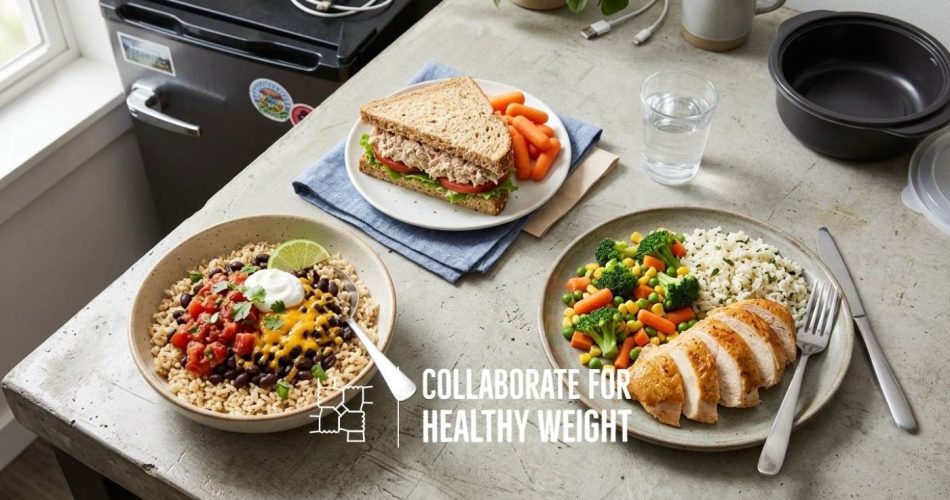
No stovetop, no oven, sometimes not even a full-size fridge, cooking in a dorm comes with real constraints that most meal plans completely ignore. This plan assumes exactly what most dorm rooms actually have: a microwave, a mini-fridge, and maybe an electric kettle, nothing more. Every recipe here works within that reality, since dorms lacking a communal kitchen can feel limiting when trying to eat healthy, but it’s still entirely possible with the right approach. No hot plates or expensive equipment required, just a mini-fridge, a microwave, and a bit of planning.
Budget matters just as much as equipment. This plan is built around realistic grocery costs for a student managing their own food budget, roughly in the range of what many students report spending weekly on groceries when they cook for themselves rather than relying on takeout or a full dining hall plan. Ingredients throughout are chosen specifically because they’re affordable, shelf-stable or freezer-friendly, and don’t require constant fresh grocery runs between a packed class and study schedule.
Meal timing gets specific attention too, since college schedules rarely look like a normal nine-to-five day. Nutritionists recommend eating every two to four hours to manage hunger and avoid overeating later, which matters considerably for students juggling irregular class times, late study sessions, and unpredictable schedules. This plan builds in that spacing with protein-forward snacks between the three main meals rather than assuming a rigid three-meals-a-day structure that doesn’t match real student life.
College Diet Rules: What to Keep Stocked and What to Limit
Keep stocked: Instant oats, peanut butter, Greek yogurt cups, granola, microwave rice cups, canned beans, canned tuna, rotisserie chicken from the grocery store deli, frozen microwave-steamable vegetables, string cheese, hard-boiled eggs (often available pre-cooked and packaged), hummus cups, whole-grain bread and wraps, baby carrots, apples and bananas, almonds, shredded cheese, salsa, and low-sodium canned soup or chili.
Limit: Relying on fast food or delivery as a daily default, since even cutting that spending in half often leaves considerably more money for groceries that support better energy and focus. Sugary drinks and energy drinks, in favor of water and coffee, since drinking your calories adds up quickly without providing real fullness. Skipping meals entirely during busy exam periods, which tends to backfire by triggering overeating later.
Key Rules for Following This Plan
Protein with every snack: Pairing a snack with protein, such as a brown rice cake with peanut butter or fruit with string cheese, helps manage hunger far more effectively than a snack of carbohydrate alone, which matters especially during long stretches of studying.
Arrive early to the dining hall if you have one: If your school includes a dining hall meal plan, arriving soon after it opens gives you the widest and freshest selection before popular healthy options run out.
Get creative in the dining hall: Combining foods from different stations, adding grilled chicken to a salad bar bowl, or building a wrap from sandwich and salad ingredients, often produces a more balanced meal than sticking to one station’s pre-built options.
Stock your room with grab-and-go snacks: Keeping a small stash of shelf-stable, protein-forward snacks in your room means you’re never stuck choosing between vending machine junk food and skipping a meal entirely during a long study session.
Have two or three real sit-down meals daily: Save extended dining hall trips or full meal prep for when you can actually sit and eat, rather than grabbing food on the run for every single meal.
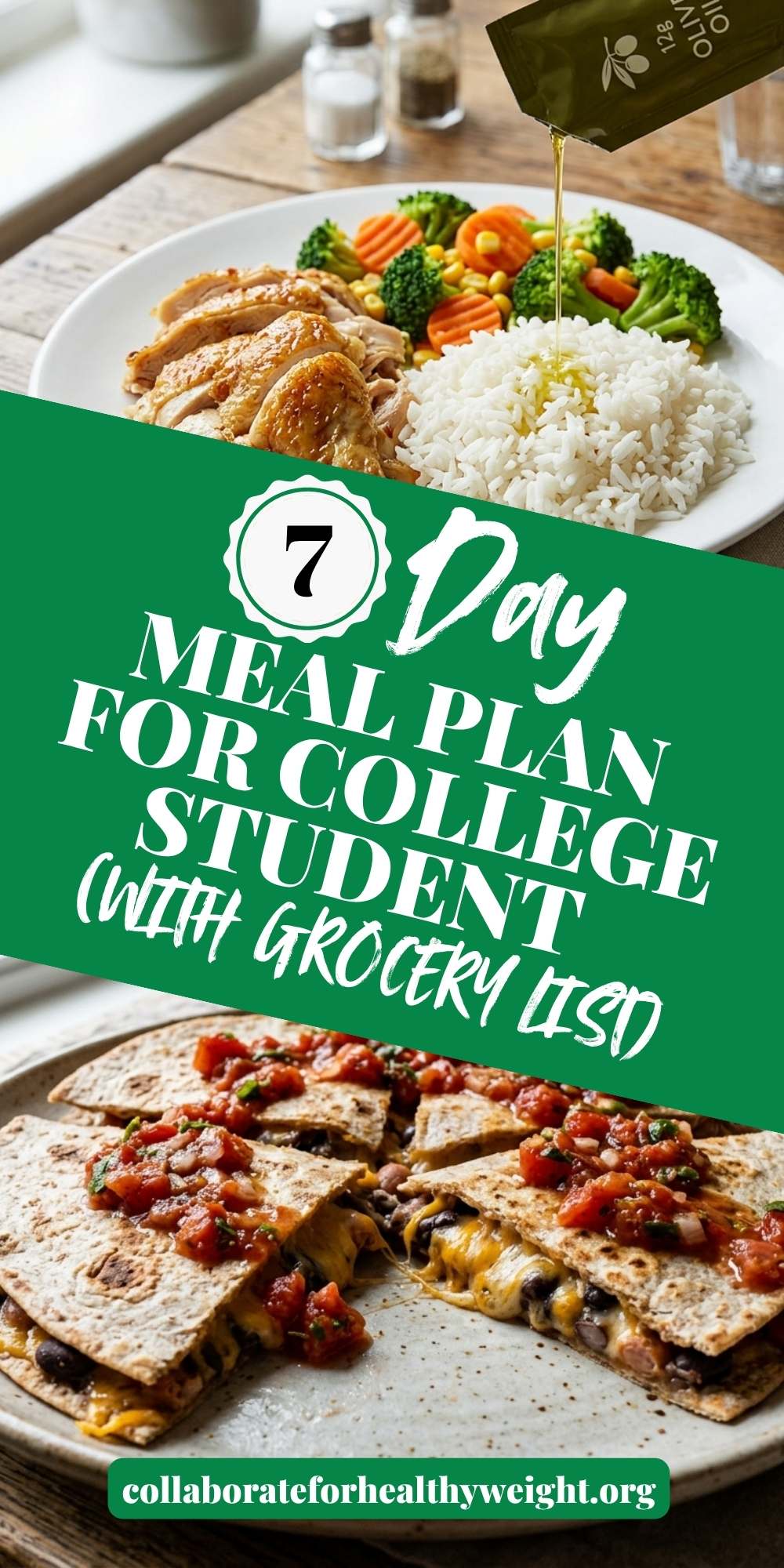
7-Day Healthy College Meal Plan: Daily Menus
Day 1 College Meal Plan
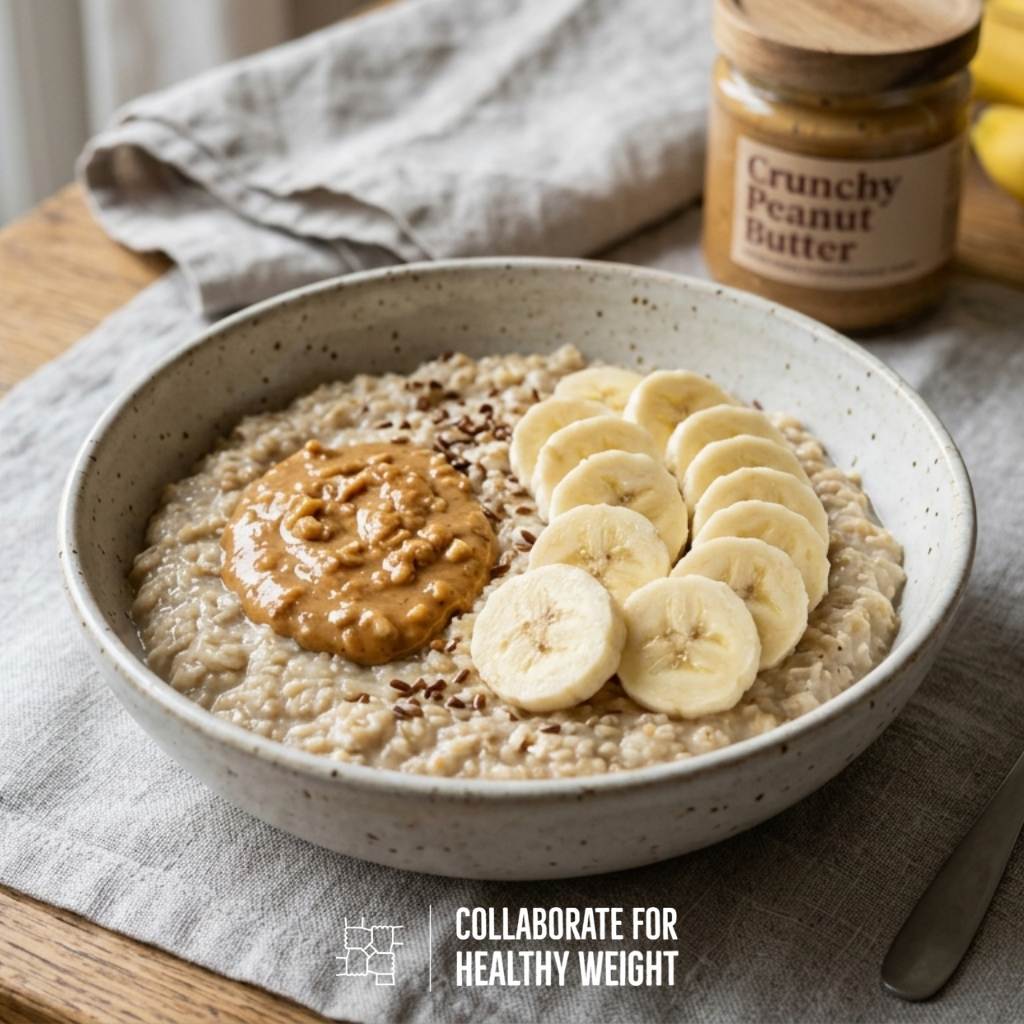
Breakfast: Instant oats (260g cooked, microwave) with peanut butter (25g) and sliced banana (110g).
Lunch: Burrito bowl: microwave rice (180g) with canned black beans (150g), salsa (30g), and shredded cheese (35g), warmed together in the microwave.
Dinner: Rotisserie chicken (190g) with microwave-steamable frozen vegetables (170g) and microwave rice (160g), drizzled with an olive oil packet (12g).
Day 1 approximate totals: Protein: 101g | Fiber: 29g | Calories: 1,743
Day 2 College Meal Plan
Breakfast: Greek yogurt cup (250g) with granola (60g), berries (90g), and almonds (15g).
Lunch: Tuna sandwich: canned tuna (150g) mixed with a mayo packet (18g) on whole-grain bread (80g), with baby carrots (80g) on the side.
Dinner: Hummus (70g) with hard-boiled eggs (130g) and string cheese (28g), served with a microwaved baked potato (210g).
Day 2 approximate totals: Protein: 110g | Fiber: 21g | Calories: 1,567
Day 3 College Meal Plan
Breakfast: Instant oats (260g cooked, microwave) with peanut butter (25g) and apple (130g).
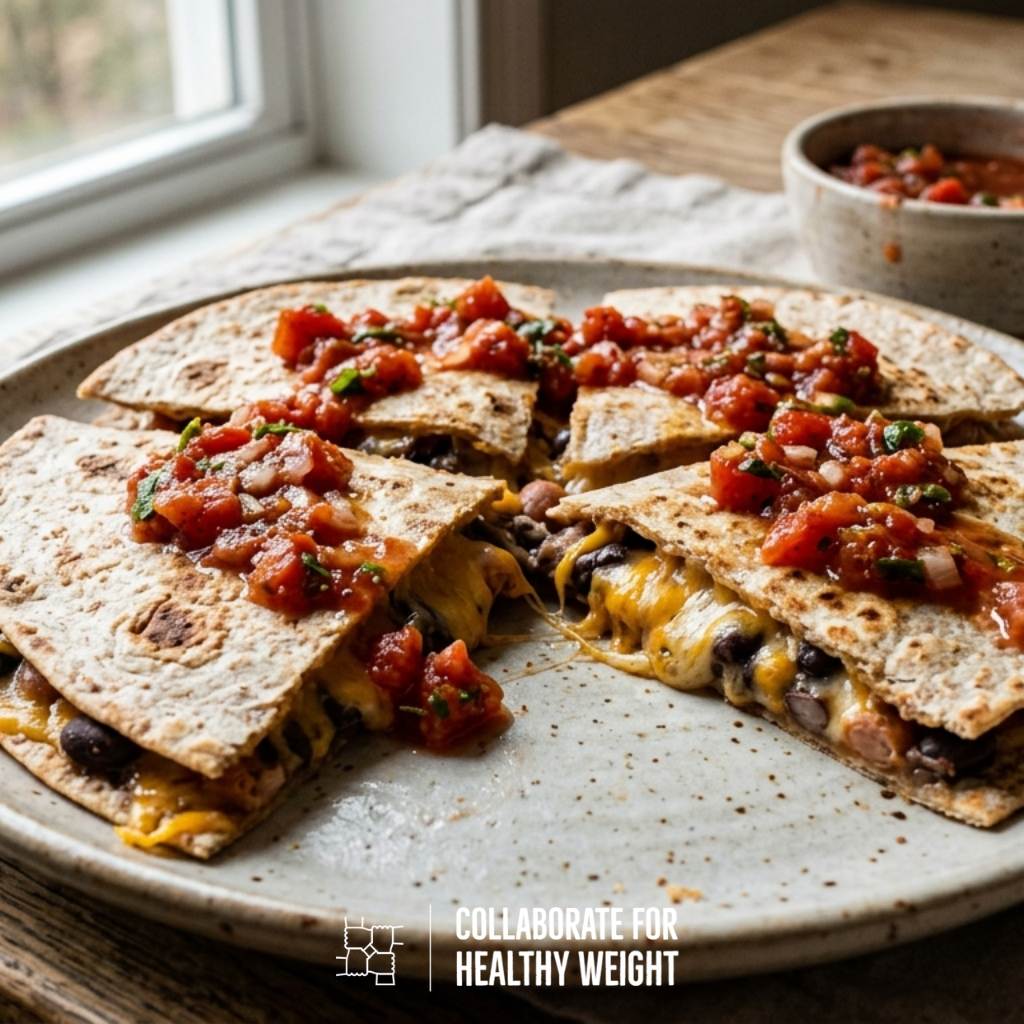
Lunch: Microwave quesadilla: whole-grain tortilla with shredded cheese and canned beans (250g total), microwaved until melted, topped with salsa (35g).
Dinner: Rotisserie chicken (190g) with microwave-steamable frozen vegetables (170g) and microwave rice (160g), drizzled with an olive oil packet (12g).
Day 3 approximate totals: Protein: 123g | Fiber: 21g | Calories: 2,016
Day 4 College Meal Plan
Breakfast: Greek yogurt cup (250g) with granola (60g), berries (90g), and almonds (15g).
Lunch: Microwave chili with beans (230g) topped with shredded cheese (30g).
Dinner: Tuna wrap: canned tuna (150g) mixed with a mayo packet (18g) in a whole-grain wrap, with baby carrots (80g) on the side.
Day 4 approximate totals: Protein: 107g | Fiber: 35g | Calories: 1,527
Day 5 College Meal Plan
Breakfast: Instant oats (260g cooked, microwave) with peanut butter (25g) and sliced banana (110g).
Lunch: Hummus (70g) with hard-boiled eggs (130g) and whole-grain bread (80g), with baby carrots (80g) on the side.
Dinner: Rotisserie chicken (190g) with microwave-steamable frozen vegetables (170g) and a microwaved baked potato (210g), drizzled with an olive oil packet (12g).
Day 5 approximate totals: Protein: 99g | Fiber: 27g | Calories: 1,566
Day 6 College Meal Plan
Breakfast: Greek yogurt cup (250g) with granola (60g), berries (90g), and almonds (15g).
Lunch: Microwave quesadilla: whole-grain tortilla with shredded cheese and canned beans (250g total), microwaved until melted, topped with salsa (35g).
Dinner: Tuna sandwich: canned tuna (150g) mixed with a mayo packet (18g) on whole-grain bread (80g), with baby carrots (80g) on the side.
Day 6 approximate totals: Protein: 127g | Fiber: 17g | Calories: 1,843
Day 7 College Meal Plan
Breakfast: Instant oats (260g cooked, microwave) with peanut butter (25g) and apple (130g).
Lunch: Microwave chili with beans (230g) topped with shredded cheese (30g).
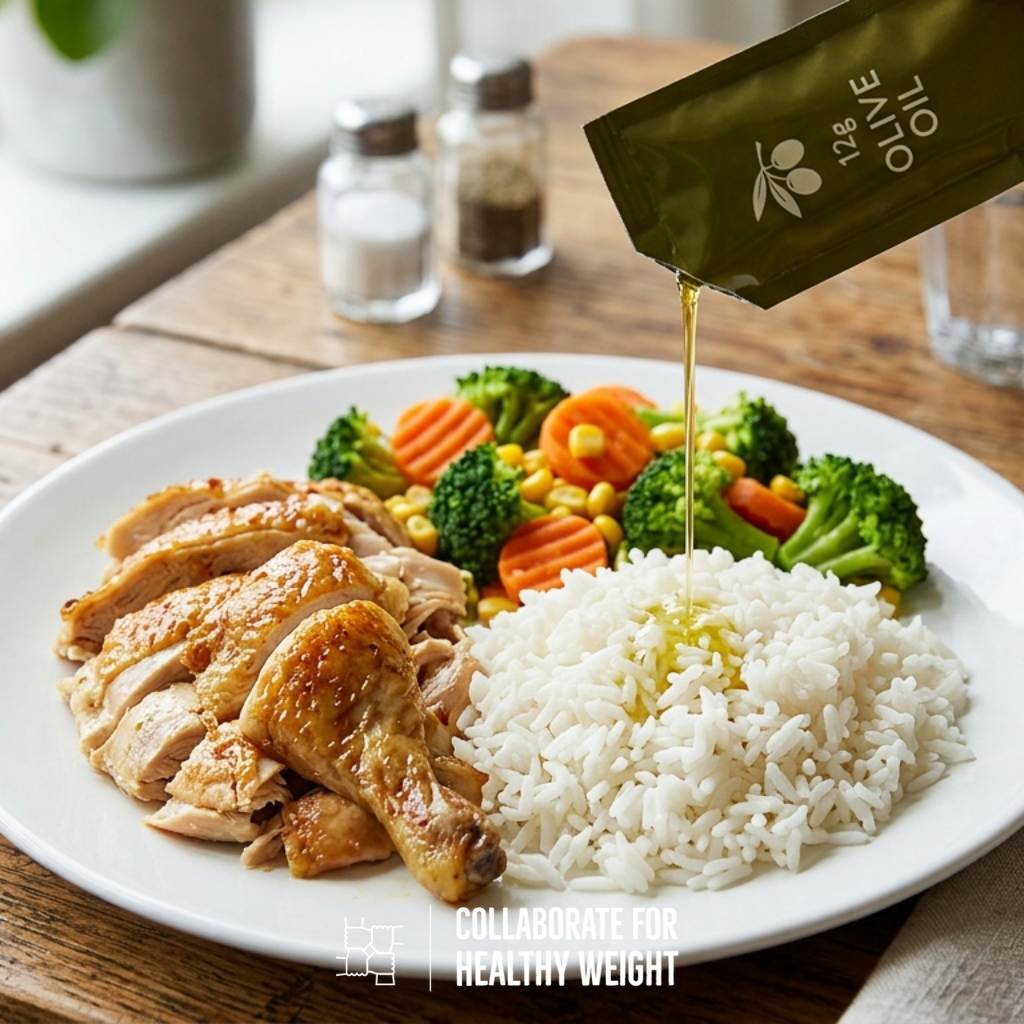
Dinner: Rotisserie chicken (190g) with microwave-steamable frozen vegetables (170g) and microwave rice (160g), drizzled with an olive oil packet (12g).
Day 7 approximate totals: Protein: 101g | Fiber: 34g | Calories: 1,554
7-Day Healthy College Meal Plan at a Glance
| Day | Protein | Fiber | Calories |
|---|---|---|---|
| Day 1 | 101g | 29g | 1,743 |
| Day 2 | 110g | 21g | 1,567 |
| Day 3 | 123g | 21g | 2,016 |
| Day 4 | 107g | 35g | 1,527 |
| Day 5 | 99g | 27g | 1,566 |
| Day 6 | 127g | 17g | 1,843 |
| Day 7 | 101g | 34g | 1,554 |
Protein stays solid throughout, primarily from rotisserie chicken, canned tuna, eggs, Greek yogurt, and beans, all of which require zero cooking skill beyond a microwave. Fiber runs strong most days thanks to beans, whole grains, and fresh produce that doesn’t require any prep beyond washing. Calories range from 1,527 to 2,016 across the week, which fits a fairly wide range of activity levels common among college students, and portions can flex up for anyone who’s more active or has higher calorie needs.
What to Expect on This College Meal Plan
Days 1 to 3: Getting into a rhythm with dorm cooking, knowing what to grab from the mini-fridge, how long the microwave takes for each item, typically takes a few days to feel automatic rather than like extra effort layered on top of an already busy schedule.
Days 4 to 5: The convenience of having grab-and-go protein snacks already stocked starts paying off, particularly during longer study sessions when the alternative would otherwise be vending machine food or skipping a meal entirely.
Days 6 to 7: By the end of the week, most students have identified which two or three meals are the easiest to repeat given their specific schedule and dorm setup, and grocery shopping becomes considerably faster once you know exactly what to grab.
College Grocery List for 7 Days
Protein
Rotisserie chicken, 3 (or one large chicken portioned across the week)
Canned tuna, 4 cans
Canned black beans, 2 cans
Canned chili with beans, 2 cans
Hard-boiled eggs, pre-cooked and packaged, 1 dozen
Greek yogurt cups, 4
Hummus cups, 3
String cheese, 1 pack
Shredded cheese, 1 bag
Grains
Instant oats, single-serve packets or 1 canister
Microwave rice cups, 1 box
Whole-grain bread, 1 loaf
Whole-grain wraps, 1 packet
Granola, 1 bag
Vegetables
Frozen microwave-steamable vegetable bags, 4 bags
Baby carrots, 1 bag
Microwave-ready baked potatoes, 2
Fruit
Bananas, 3
Apples, 2
Berries, 1 small container
Pantry and Extras
Peanut butter (no added sugar), 1 jar
Almonds, 1 small bag
Salsa, 1 jar
Mayo packets or 1 small jar
Olive oil packets or 1 small bottle
College Meal Prep: How to Prepare for the Week
Sunday setup, 20 to 30 minutes: Portion instant oats into single servings if not already pre-packaged. Divide the rotisserie chicken into portions and store in the mini-fridge or freezer. Pre-wash and portion baby carrots into snack-size bags.
Mid-week check-in: Rotate frozen vegetables and check that fridge items like hard-boiled eggs and Greek yogurt are still fresh, since mini-fridges have limited space and it’s easy to lose track of what’s tucked in the back.
The Bottom Line
This 7-day college meal plan works entirely within dorm constraints, no stovetop, no oven, just a microwave and mini-fridge, while still delivering strong protein and fiber on a realistic student budget. Building in protein-forward snacks between meals matters as much as the meals themselves, given how irregular college schedules tend to be. Once you’ve got two or three of these meals down as easy repeats, healthy eating in a dorm stops feeling like a constant obstacle and starts feeling like just another part of your routine.
All nutritional values are approximate estimates based on USDA FoodData Central data. This article does not constitute medical advice. Individual calorie and nutrient needs vary based on activity level, body size, and personal health goals.


